.svg)


10 Terracotta Jali and Tile Combinations for Modern Indian Homes
ByAditi Bardhan

Mon , Aug 17 , 2026

Read Time: 5 Min


 Copied!
Terracotta jali has always felt close to Indian homes. It gives shade, lets air pass through and adds a warm handmade look to walls. In modern homes, it is no longer used only in old-style courtyards or traditional facades. It now works on balconies, in entrances, sit-outs, living rooms, pooja rooms and exterior walls too.
The tile you pair with the jali decides the final look. Beige tiles can make the space brighter. Stone-look tiles can make it feel natural. Grey elevation tiles can make the same terracotta jali look more modern. That is why terracotta jali and tile combinations need to be planned together, not separately. However, how well it performs depends on the jali pattern, opening size, wall direction and installation. This guide covers practical terracotta jali design ideas for Indian homes, with tile pairings that feel warm, useful and easy to live with.
Why Terracotta Jali Works in Modern Indian Homes
A terracotta jali for the home works because it is both useful and decorative. It can filter sunlight, create privacy and break a plain wall without fully closing the space. For Indian weather, this makes sense. A jali can help a balcony, courtyard or entrance feel more open while still giving some cover. It also adds texture without needing heavy wall panels or too many decorative pieces.
A good terracotta jali wall design also blends well with tiles. You can pair it with plain floors, textured walls, patterned accents or earthy surfaces. The natural orange-brown tone works with cream, beige, grey, white, stone, wood and terracotta shades. For modern Indian home design, the best use of jali is usually simple. Keep the pattern clean, choose the tile carefully and avoid mixing too many strong materials in one area.
10 Terracotta Jali and Tile Combination Ideas
A jali should not look like a separate block added to the wall. It should feel connected to the floor, wall and furniture around it. These terracotta jali with tiles ideas can help you plan different areas of the home.
Terracotta Jali with Beige Floor Tiles for a Bright Balcony
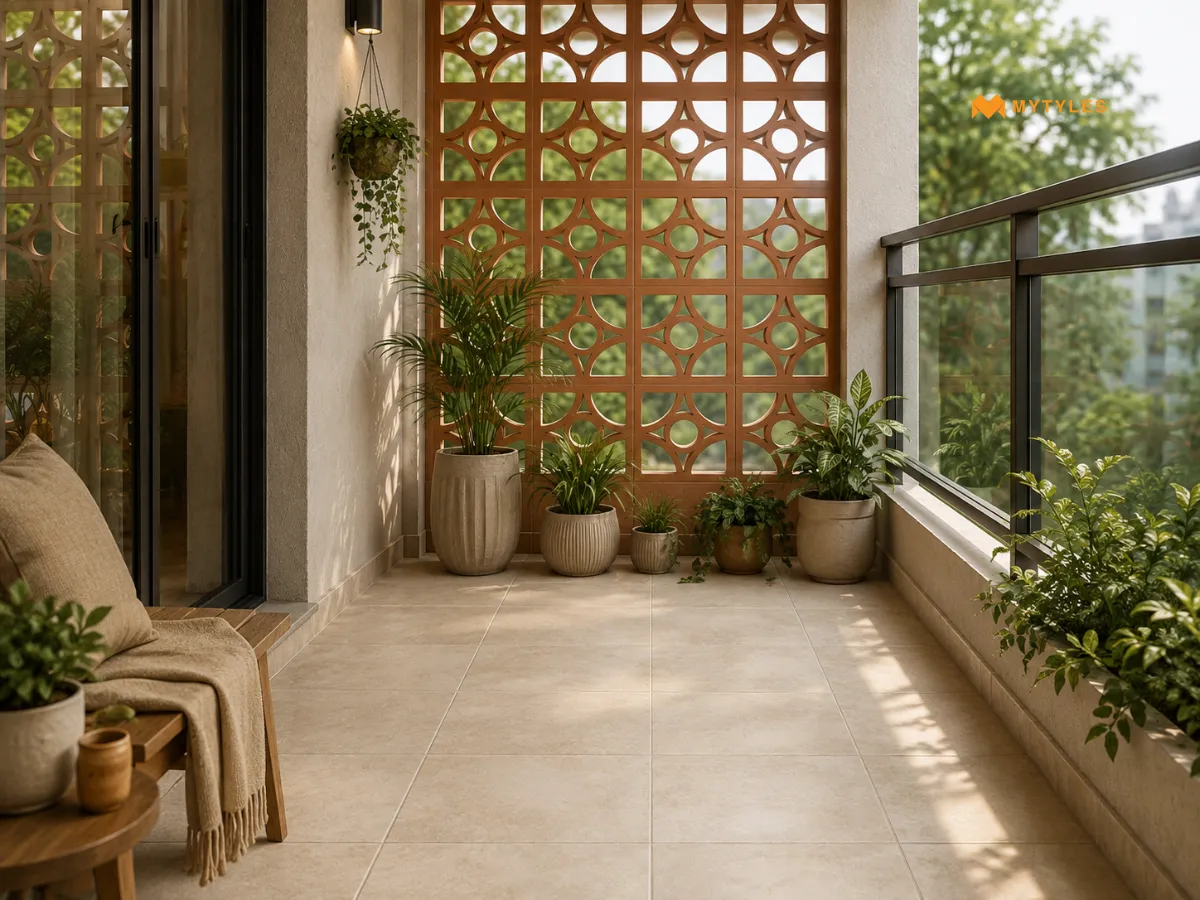
Terracotta looks warm, while beige floor tiles keep the balcony light. This pairing works well for apartment balconies that need a softer look without making the floor feel dark. Use this terracotta jali and floor tile combination when the balcony has planters, cane chairs or a simple seating bench. The jali can give partial screening from the outside, but it will not block the view completely. For wet balconies, choose floor tiles with enough grip and make sure the slope allows water to drain properly.
Terracotta Jali with Stone-Look Tiles for an Exterior Wall
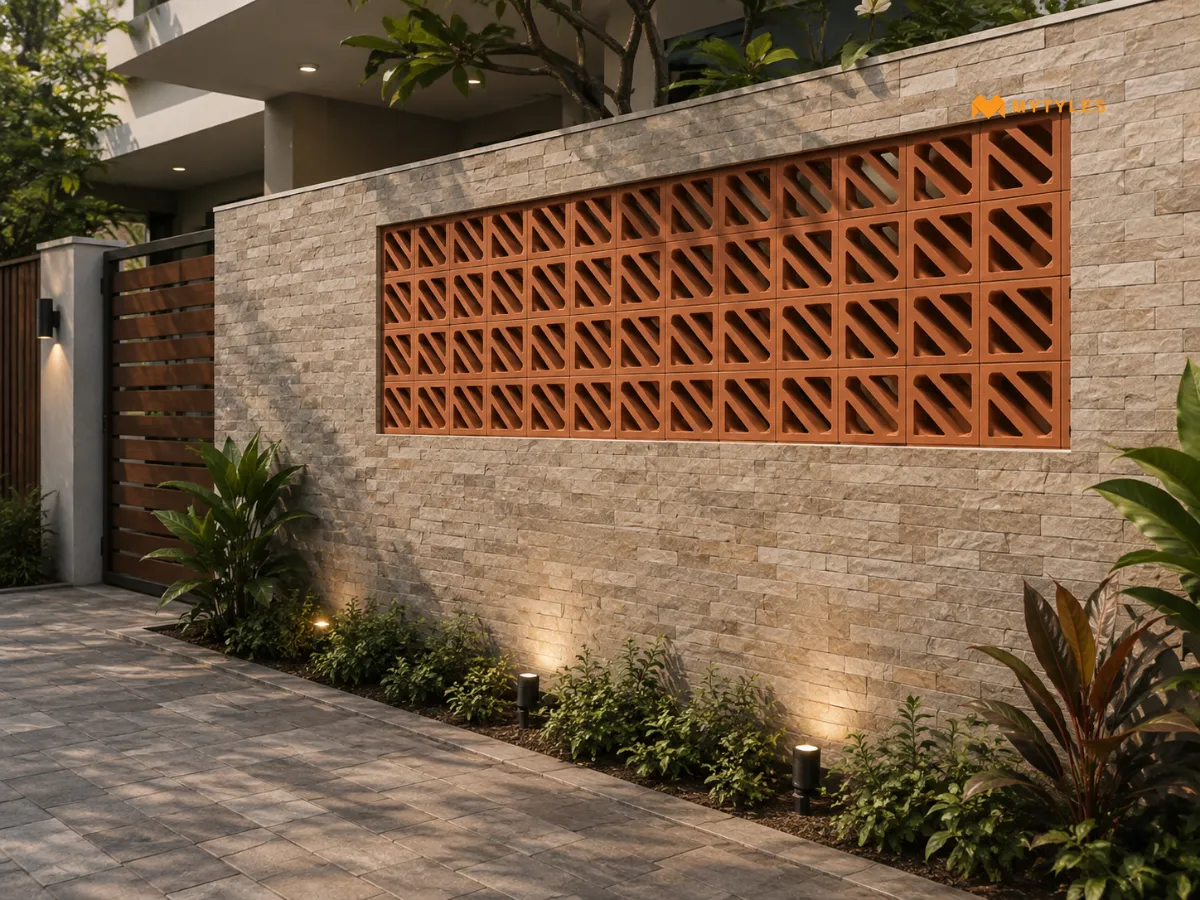
For exterior walls, terracotta and stone-look tiles make a strong pair. The jali adds warmth, while the stone surface gives the wall a natural base. This works well for gate walls, side elevations, garden walls and entrance facades. If you are using terracotta jali for exterior wall areas, keep the stone tile shade soft. Beige, grey, slate and sand tones usually work better than very dark colors.
Terracotta Jali with Ivory Tiles for a Modern Courtyard
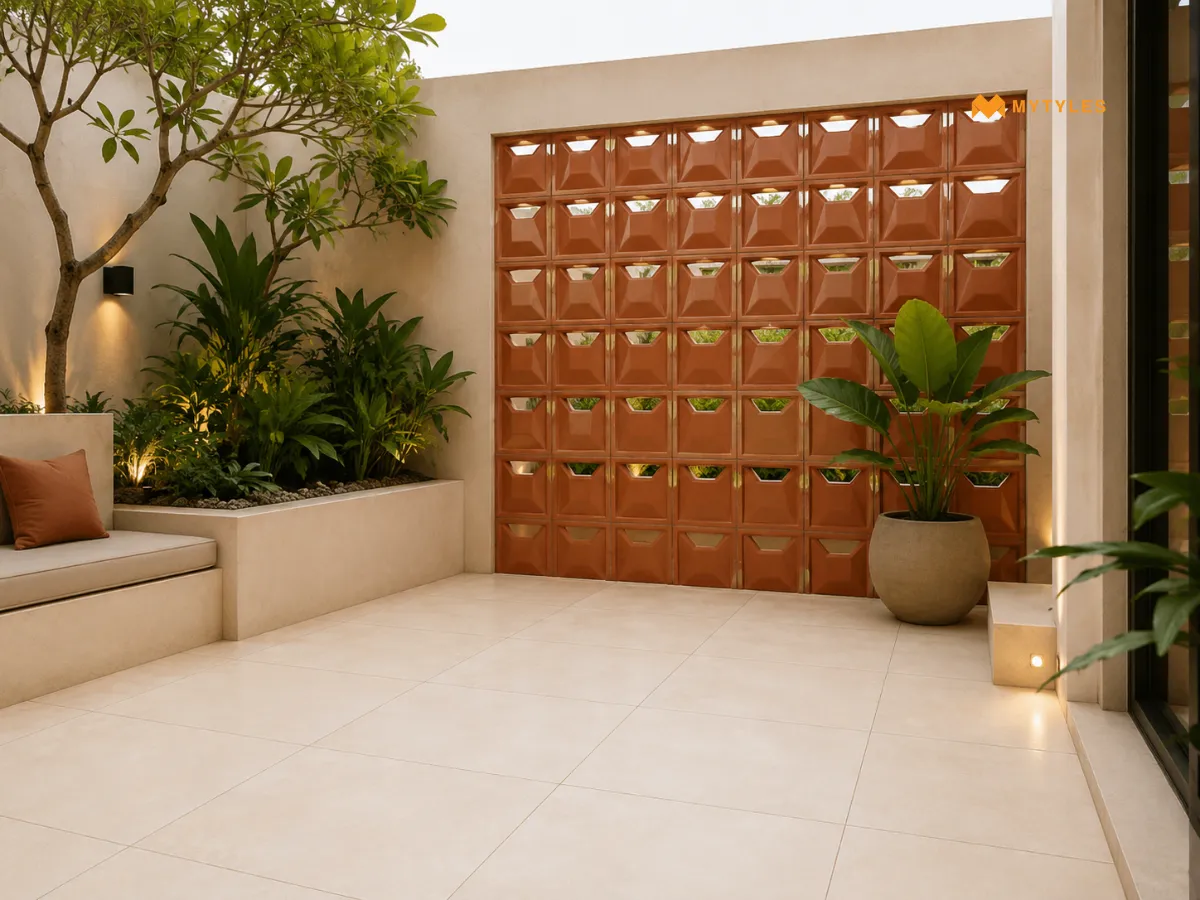
Ivory tiles make terracotta look cleaner and more modern. This pairing works well in open courtyards where the space needs light and warmth together. Use courtyard tiles in ivory, cream or soft beige if the jali wall is large. This keeps the floor from looking heavy. Add simple plants or a low seating ledge to complete the space.
Terracotta Jali with Rustic Floor Tiles for an Earthy Sit-Out
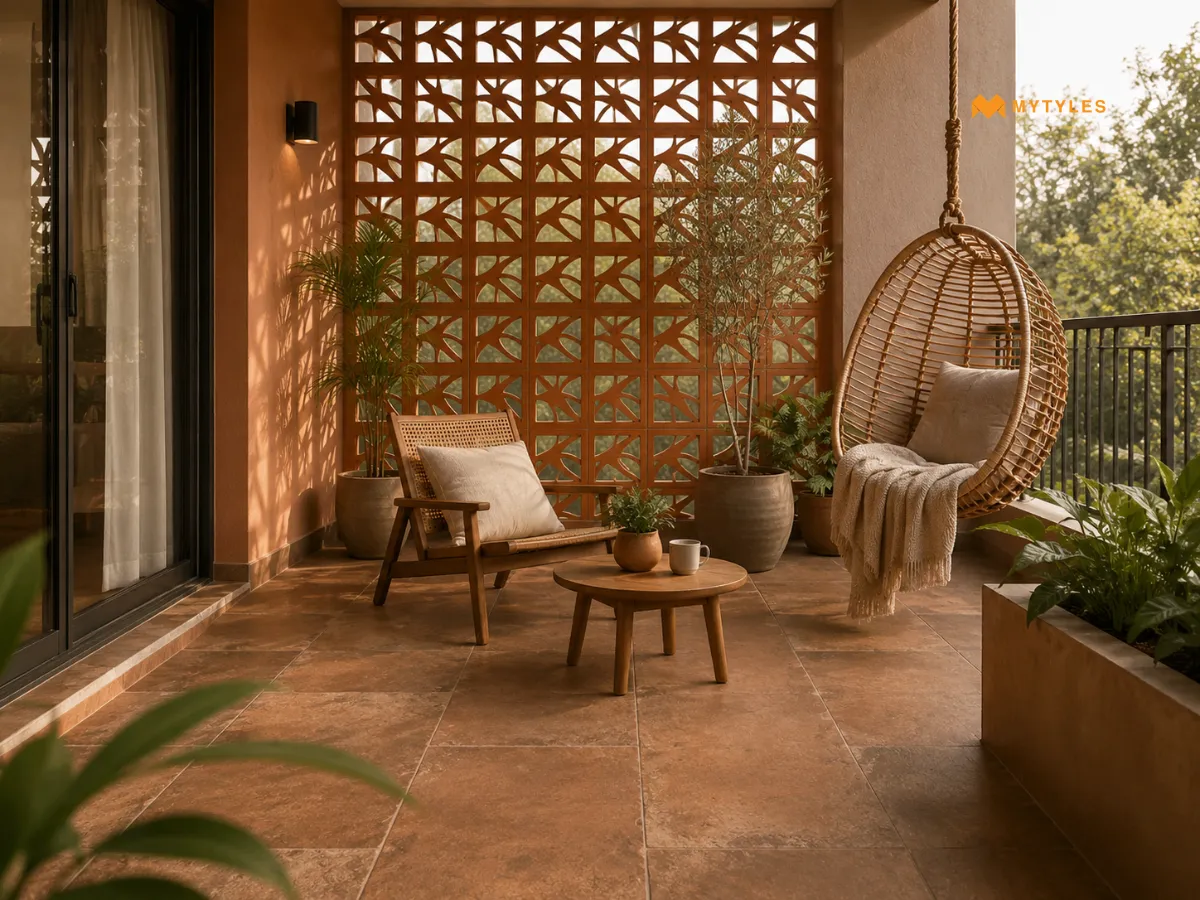
For a sit-out, terracotta jali pairs well with rustic tiles. The finish feels natural and practical for semi-open spaces. This idea suits verandas, balconies, terrace corners and garden-facing sit-outs. Use matt or textured earthy wall tiles around the area if you want the look to stay grounded. Avoid too many glossy surfaces because they can reduce the natural feel.
Terracotta Jali with White Wall Tiles for a Contemporary Entrance
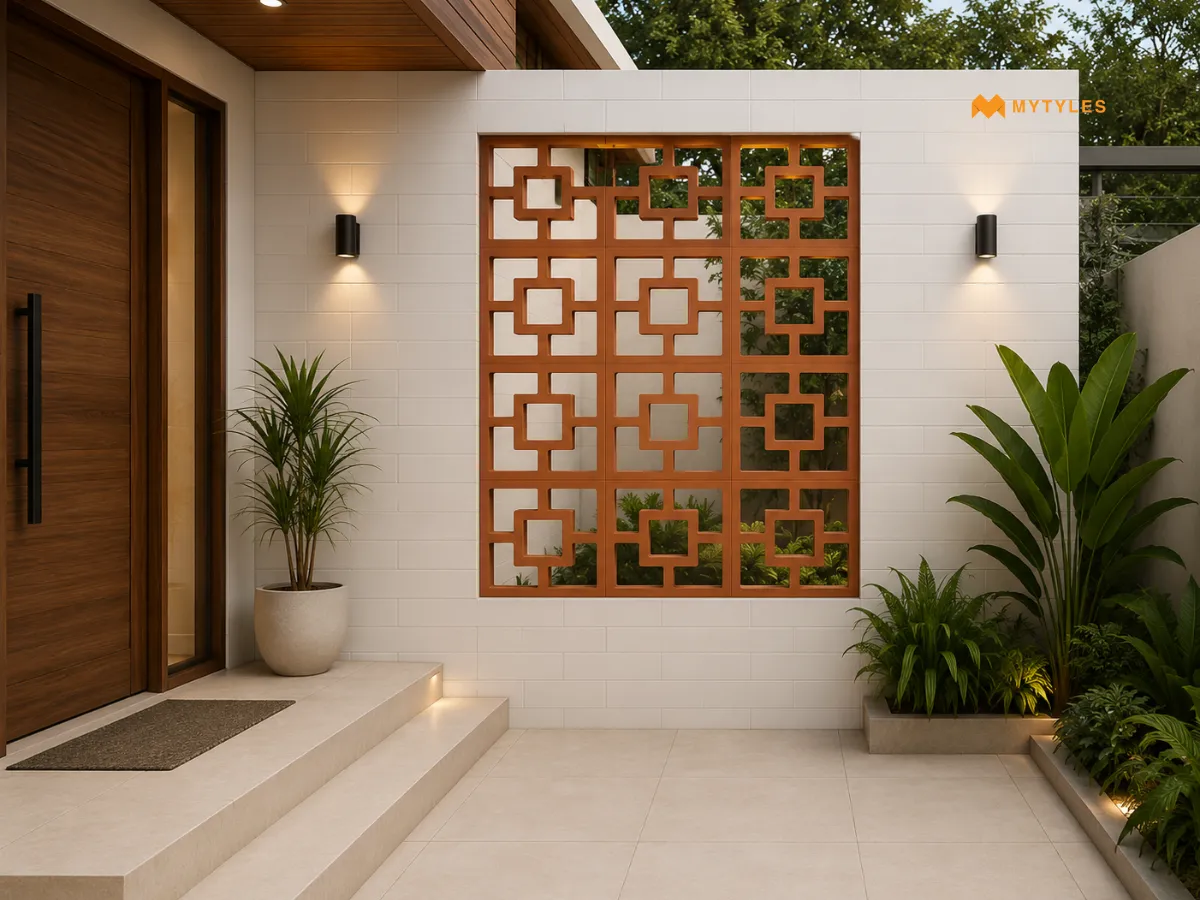
White tiles can make terracotta jali look sharper. The contrast feels clean and works well near entrances or foyer walls. Use simple exterior wall tiles in white or off-white if the jali is the main detail. This combination suits homes where the entrance needs warmth but should still look modern. Keep the flooring plain so the jali and white wall do not compete with a busy floor pattern.
Terracotta Jali with Wood-Look Tiles for a Warm Living Room Divider
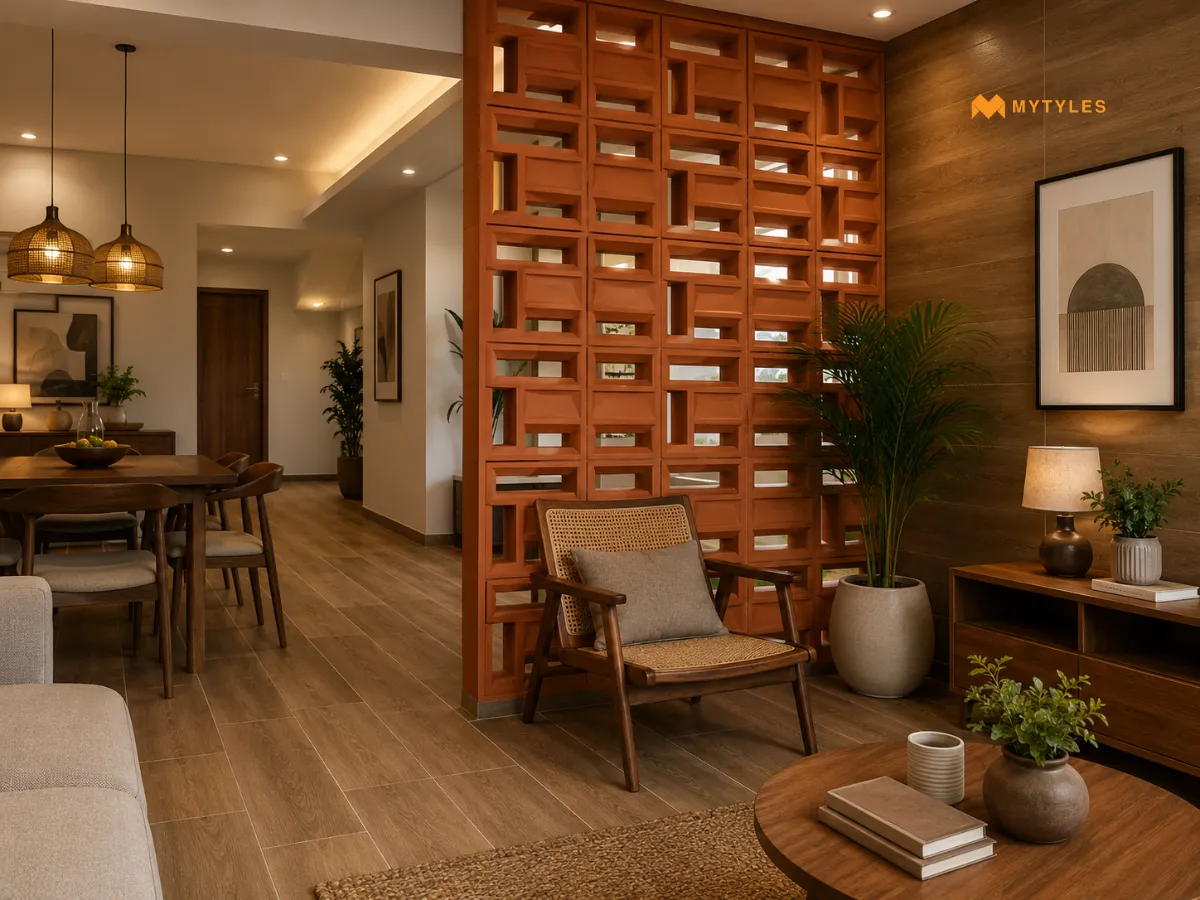
A terracotta jali can also work inside the home as a soft divider. Pair it with wood-look tiles to create a warm living room corner. Use this idea between a living and dining area, near a pooja corner or beside a reading space. Simple living room wall tiles in wood tones can make the divider feel more connected to the room. This pairing works best with warm lights and neutral furniture.
Terracotta Jali with Patterned Tiles for a Traditional Balcony
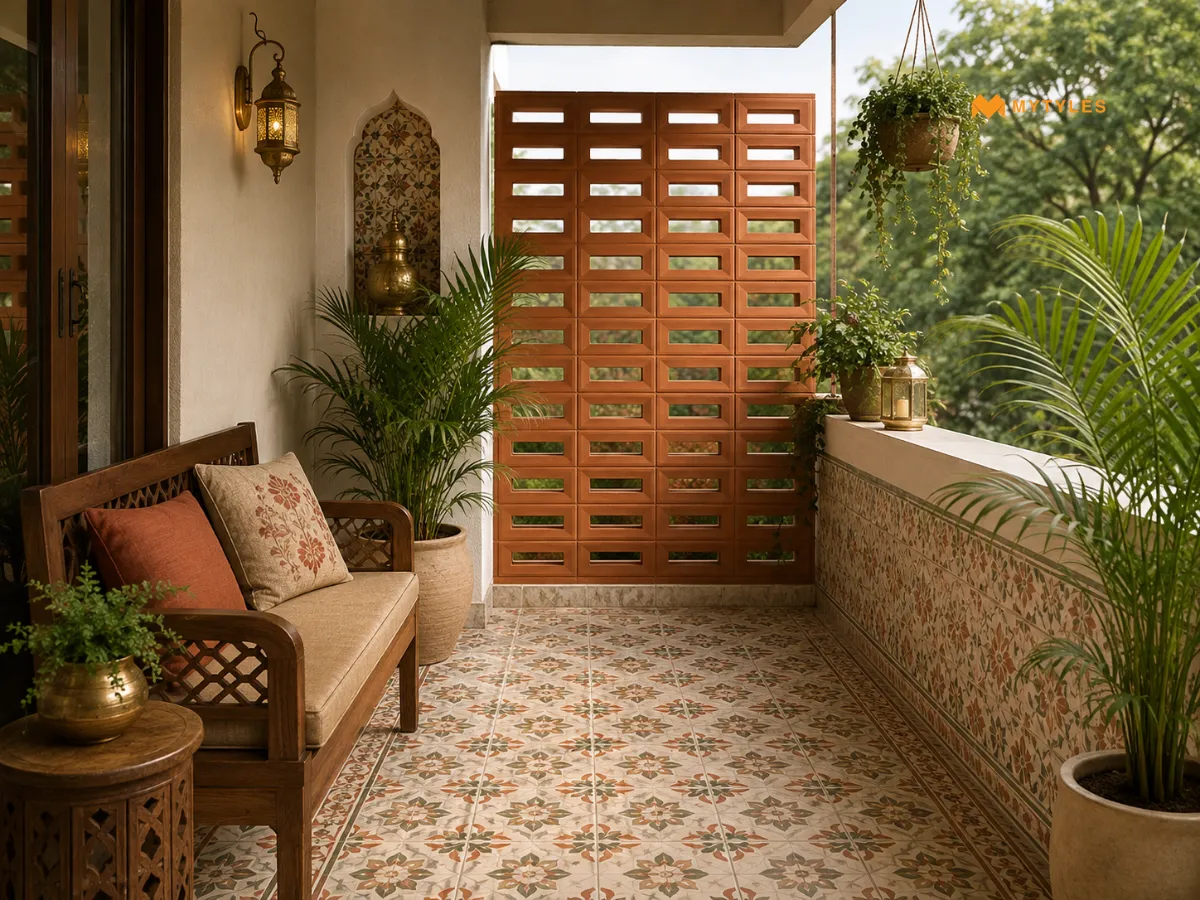
A traditional balcony can handle more patterns. Terracotta jali looks good with patterned floor or wall tiles when the colors are controlled. Use this idea for a balcony that has brass lights, plants, wooden seating or Indian-style furniture. If you are using terracotta jali for balcony walls, pick patterned tiles with cream, brown, muted green or terracotta details. Avoid adding too many prints on both the floor and wall.
Terracotta Jali with Grey Elevation Tiles for a Modern Facade
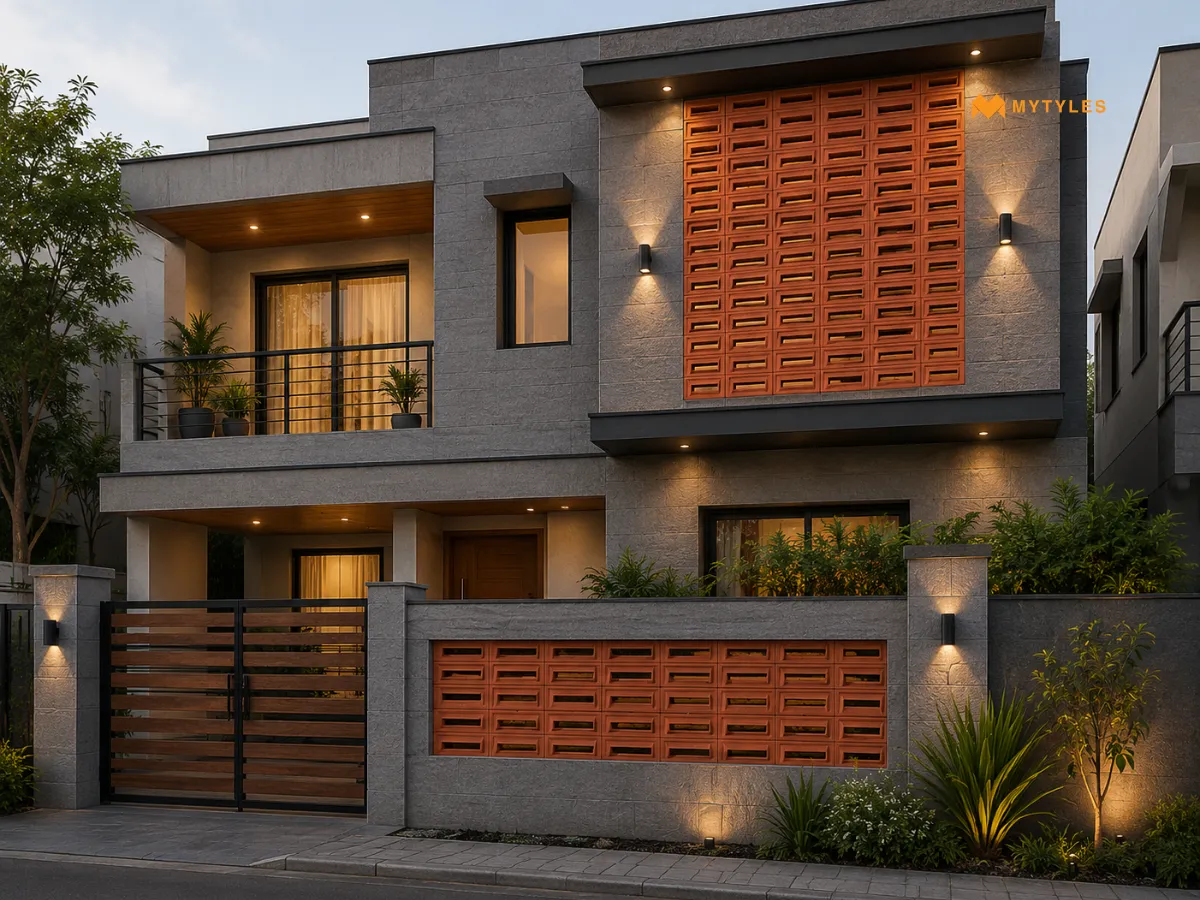
Grey and terracotta can look very balanced together. Grey keeps the facade clean, while terracotta prevents it from looking cold. Use elevation wall tiles in grey, charcoal or concrete tones with jali panels on selected sections. This works well for modern facades, balcony fronts and exterior side walls. The jali should be used in clear blocks, not randomly across the facade.
Terracotta Jali with Marble-Look Tiles for a Pooja Room
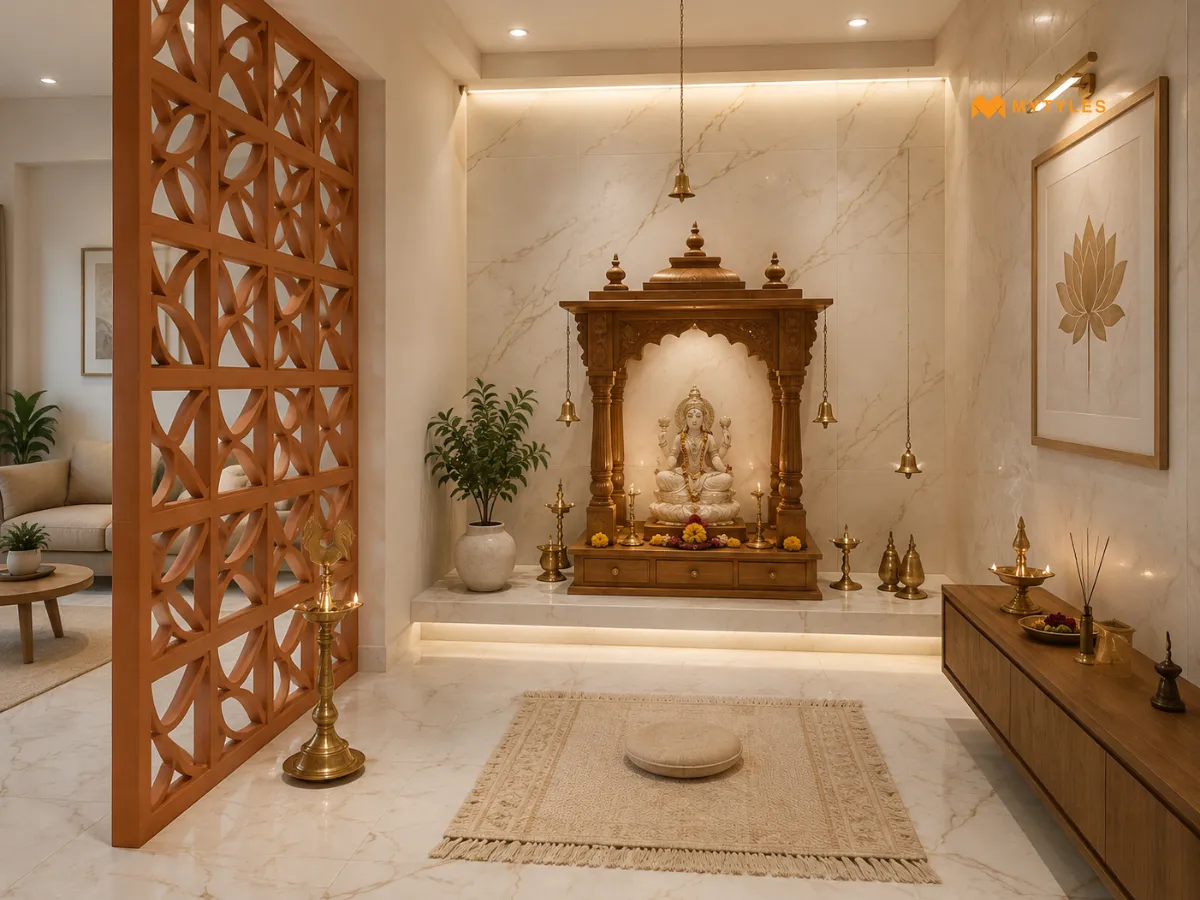
Terracotta jali can bring warmth to a pooja room, while marble-look tiles keep the space light and clean. Use simple pooja room tiles in white, ivory or beige marble looks. The jali can be placed behind the mandir, on one side wall or as a partition. However, keep enough space around diyas, incense sticks and lamps so heat, smoke or ash does not directly touch the jali or tile surface. This pairing feels calm and works well in both small and large pooja spaces.
Terracotta Jali with Earthy Tiles for a Monochrome Courtyard
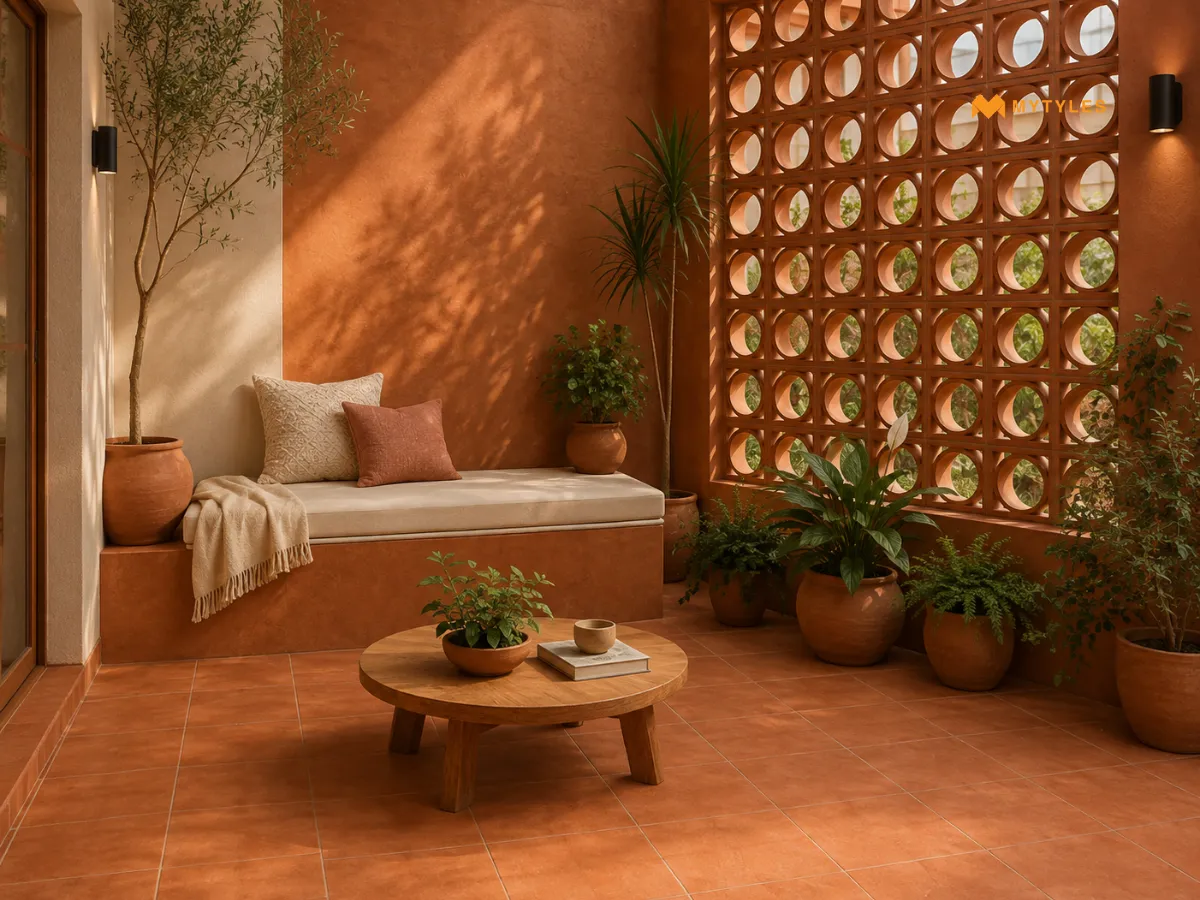
For a bold earthy look, pair terracotta jali with terracotta tiles. This creates a single-tone courtyard or sit-out with a strong Indian feel. Use this idea only where the space gets enough light. If everything is earthy and warm like terracotta, it breaks the look with plants, cream seating or a light wall. Otherwise, the area can feel too heavy. This is one of the better terracotta jali and wall tile combinations for courtyards that need a natural finish.
Modern Terracotta Jali Designs to Consider
A jali pattern should match the home style. Some homes need simple lines, while others can handle floral or detailed blocks. These modern terracotta jali design options can help you choose the right look.
Geometric Terracotta Jali
Geometric patterns suit modern homes because they look clean and structured. Squares, diamonds and repeated angular shapes work well on balconies, entrance walls and exterior screens. This is a safe option if the surrounding tiles are plain.
Floral Clay Jali
A floral clay jali design works well in pooja rooms, courtyards and traditional corners. The pattern feels softer than geometric jali and pairs nicely with ivory, beige or marble-look tiles. Use it in small sections so the wall does not look too decorative.
Linear Jali Patterns
Linear jali patterns are good for modern homes that need a simple screen. They suit living room dividers, balcony fronts and facade panels. A linear jali wall design looks best with plain wall tiles or stone-look surfaces.
Large-Format Jali Blocks
Large-format jali blocks look cleaner because there are fewer pattern breaks. They are useful for modern facades and big balcony walls. Use them when the home already has a simple exterior. Too many small patterns may look busy on a large wall.
Mixed Open-and-Solid Jali Layouts
A mix of open and solid jali blocks gives better control over privacy and airflow. This works well for balconies, courtyards and semi-open sit-outs. Keep the tile pairing simple here. Since the jali layout already has movement, plain floor or wall tiles usually work better.
Create Earthy Indian Corners with Terracotta Jali and Tiles
Terracotta jali works best when it is matched with the right tile, not used alone. Beige tiles make it feel bright. Stone-look tiles make it feel natural. Grey tiles make it look modern. Terracotta tiles give it a strong earthy feel. For Indian homes, the safest approach is to keep one main material as the focus.
If the jali pattern is strong, keep the tiles simple. If the tiles have texture or pattern, choose a cleaner jali block. You can browse MyTyles for balcony wall tiles, exterior tiles, courtyard tiles and other tile options that pair well with terracotta jali. Pick the combination based on light, airflow, wall size and how the space is used every day.

Which Tiles Look Best with Terracotta Jali?

Terracotta jali works well with beige, ivory, white, grey, stone-look, rustic, wood-look and terracotta tiles. Light tiles make the space look brighter, while stone-look or rustic tiles give a more natural finish. Choose the tile based on the wall location, floor use, sunlight and cleaning needs.
Can Terracotta Jali Be Used on Exterior Walls?
Yes, terracotta jali can be used on exterior walls, but the support, fixing and exposure need to be checked first. It works for facades, balcony fronts, garden walls and entrance screens when installed correctly. Pair it with exterior wall tiles or elevation tiles that are suitable for outdoor conditions.
Is Terracotta Jali Suitable for Balcony Walls?
Terracotta jali can work on balcony walls because it allows air and light to pass through. It may also give partial screening, but it will not fully block the outside view. Pair it with beige, rustic, patterned or stone-look tiles after checking balcony size, rain exposure and fixing support.
How Do You Match Floor Tiles with Terracotta Jali?
To match floor tiles with terracotta jali, start with the jali tone and the space size. Beige, cream and ivory floors keep the area light. Rustic or clay-tone floors feel earthy. For balconies or courtyards, also check grip, water drainage and whether the tile is suitable for wet use.
Can Terracotta Jali Be Used Inside a Living Room?
Yes, terracotta jali can be used inside a living room as a divider, backdrop or soft screen. It works near dining areas, pooja corners or seating spaces. Make sure the frame is planned properly, and pair it with wood-look, beige or plain wall tiles so the room does not look crowded.
Which Colors Go Well with Terracotta Jali?
Terracotta jali goes well with beige, cream, ivory, white, grey, brown, olive green and natural wood tones. Light neutrals make it look cleaner, while rustic shades give a stronger earthy look. For modern homes, grey or white surfaces can balance the warm terracotta color well.
Are Terracotta Clay Jalis Suitable for Modern Homes?
Yes, terracotta clay jalis can suit modern homes when the pattern and placement are kept simple. Geometric, linear and large-format jali blocks work well for balconies, facades, courtyards and partitions. Check the structure, fixing method and surrounding tile choice before using them in exposed or high-use areas.

ABOUT THE AUTHOR
Aditi Bardhan
Aditi Bardhan is a professional content writer with over five years of experience creating SEO-focused, research-backed content across diverse industries. She specialises in the tile and surface materials space, writing for homeowners, architects, interior designers, and trade professionals. Her work combines technical research, design awareness, and a strong understanding of customer needs, helping readers make clearer and more confident choices. Through her content, Aditi simplifies complex material concepts, highlights practical design benefits, and helps brands build trust and authority in the tile and construction industry.