.svg)


Top Terrazzo Tile Design Ideas for Stylish Indian Homes
ByNandana Priya

Tue , Jul 21 , 2026

Read Time: 5 Min


 Copied!
Imagine a floor that never quite looks the same from one tile to the next, each one unique by design. That is terrazzo in its simplest description, chips of marble or quartz set into a base, scattered rather than arranged, every tile carrying its own quiet variation.
Trends move fast, and what looks current this year can feel out of place a few years later, but terrazzo tile carries a slightly different story. Step closer to a terrazzo floor or wall and run your hand across it. The chips feel slightly raised and a bit cool to touch. That texture is what keeps terrazzo relevant today in stylish Indian homes.
Keep reading for 10 terrazzo tile design ideas that break down how they work across different rooms in Indian homes.
1.Speckled Terrazzo for Living Room Flooring
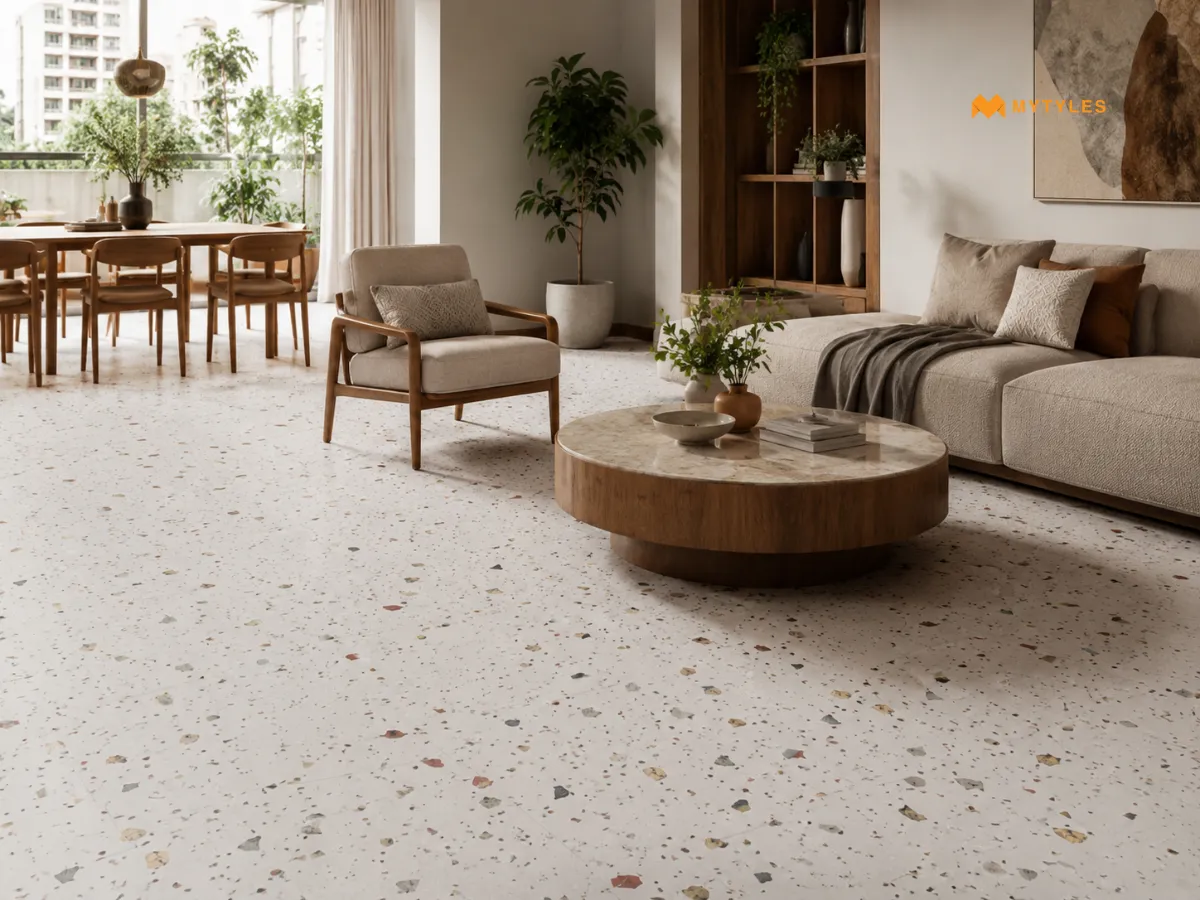
Speckled terrazzo remains the most recognisable version of the tile, with fine chips of stone or glass scattered across the base surface. It looks busy up close and calm from a distance, which is exactly what makes it work in a living room.
For Indian homes with open-plan living and dining spaces, speckled terrazzo living room flooring adds texture without demanding attention. Light-colored speckled terrazzo tiles for living rooms tend to suit smaller spaces since they keep the floor visually light. Simple decor and wooden furniture pair naturally with the tiles, without pulling focus away from the floor.
2.Pastel Terrazzo for Bedroom Feature Walls
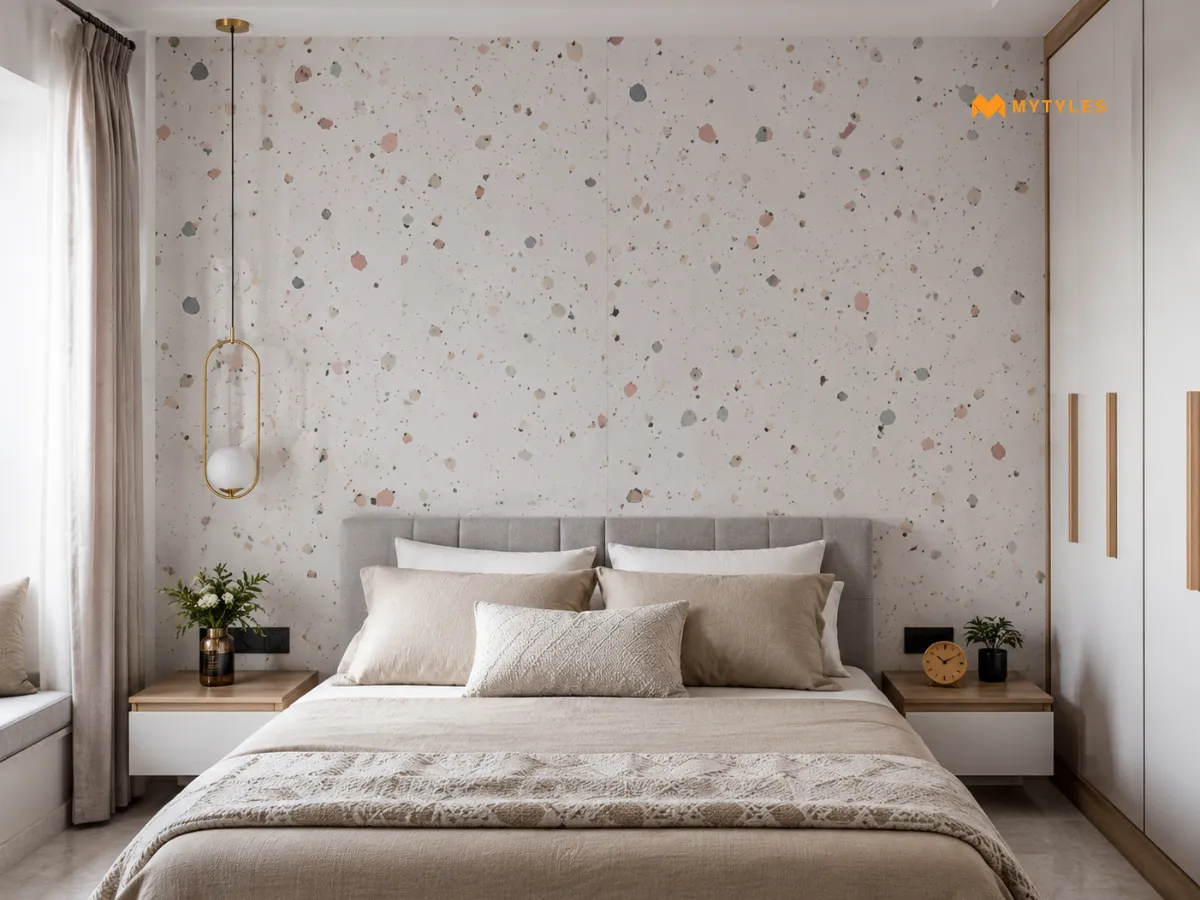
Bedrooms call for a softer look, and pastel terrazzo tiles deliver that. Instead of large surfaces, this style tends to work best as a feature wall behind the headboard. Here, the muted blues, pinks, or sage tones can sit quietly against white or beige surroundings.
Combine the terrazzo tiles with warm lighting to get the best result. This design is typically applied in bedrooms that lean toward a calm, understated aesthetic rather than a maximalist one.
3.Terrazzo Flooring For Balconies and Corner Spaces
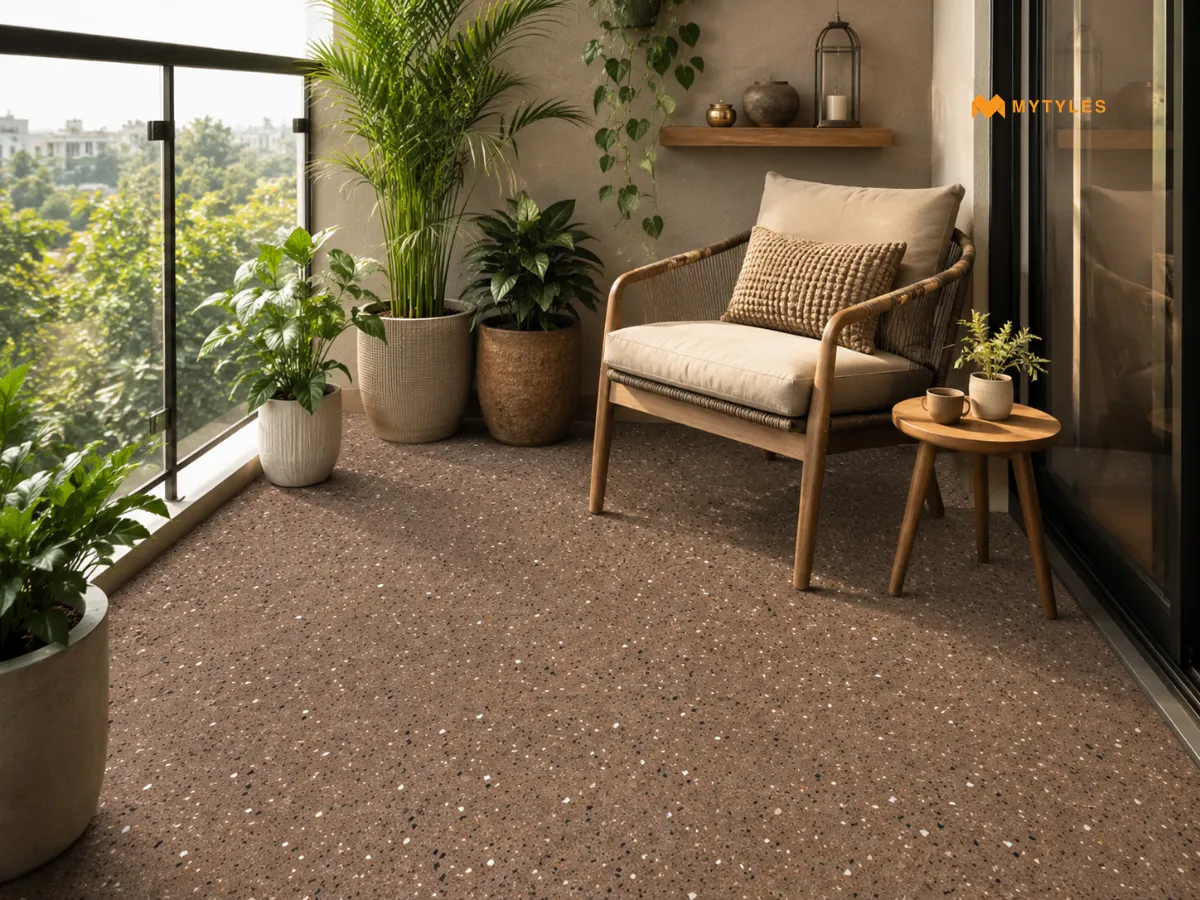
Balconies in Indian homes are often compact, and terrazzo flooring is well-suited to these smaller breathing spaces. The speckled or fragmented surface of terrazzo balcony tiles tends to disguise water marks and dust more effectively, which matters for a space that stays exposed to the outdoors.
Terrazzo tile designs also work well in corner spaces, spots that are too small for a full design statement. A neutral terrazzo tone in these areas keeps the space feeling connected to the rest of the home.
4.Monochrome Terrazzo for Kitchen Backsplashes
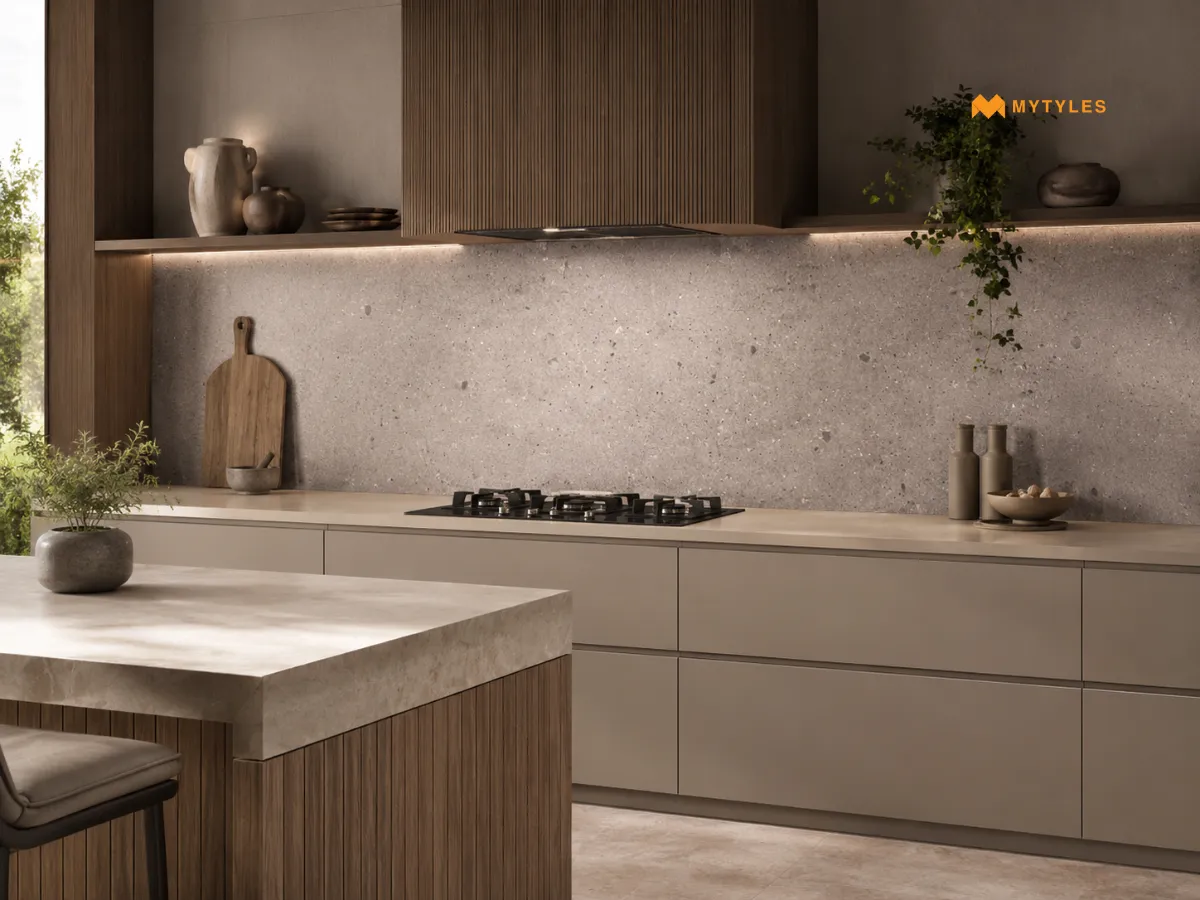
Monochrome terrazzo is built from chips of marble or quartz within a single color family, giving the surface a calmer, more controlled look compared to the mixed-tone versions. The grey or beige terrazzo kitchen backsplash tiles tend to suit both modern and traditional kitchen layouts.
This monochrome terrazzo works particularly well in kitchens where cabinets or countertops already carry a bolder color or pattern. As kitchen backsplashes face steam, heat, and oil, it's better to check the suitability across the grout, adhesive, and finish, along with how manageable the surface is to clean.
5.Marble Chip Terrazzo for Bathroom Floors
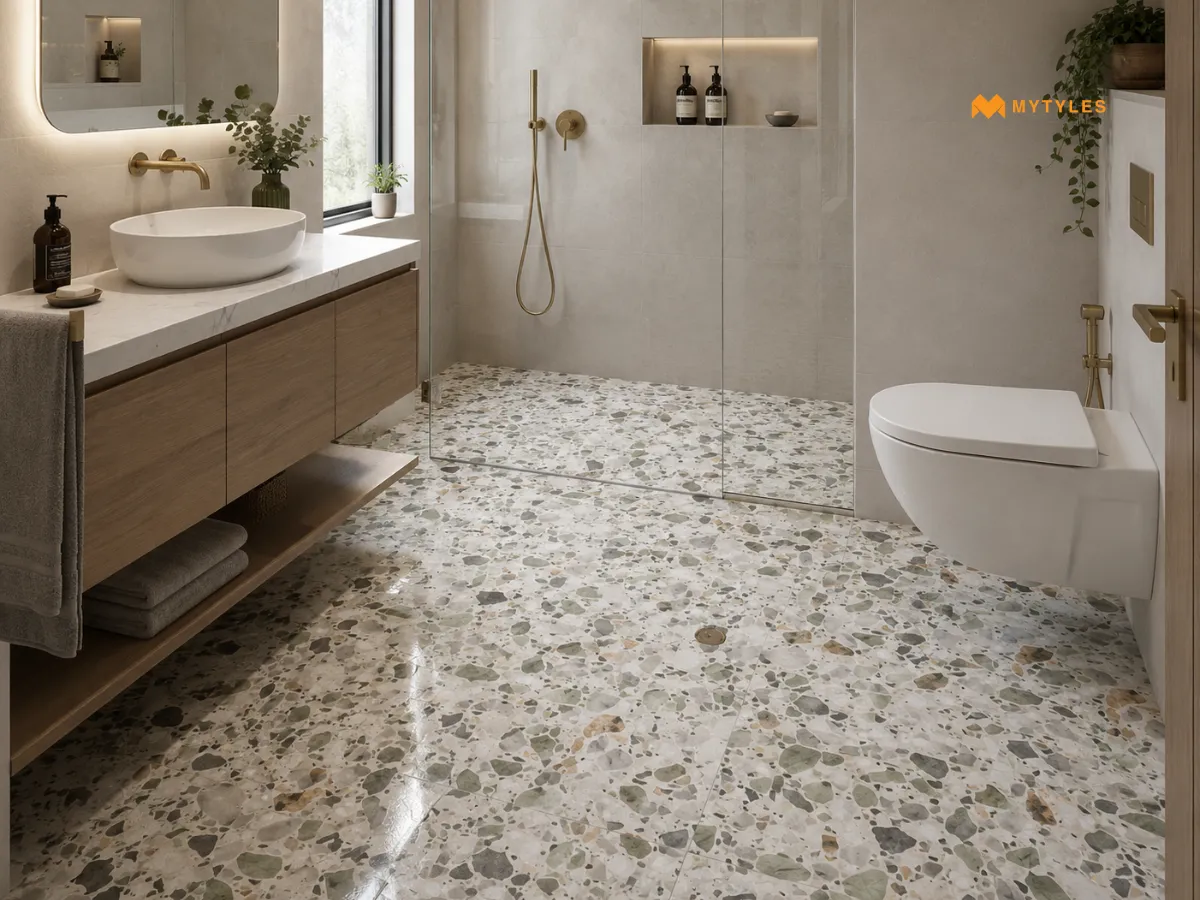
Marble chip terrazzo is a good option for bathroom floors. When larger fragments of marble are used, the terrazzo tiles for bathrooms give a slightly richer look. Since the floors face water every day, it is important to check the slip resistance rating and product suitability.
For Indian bathrooms, marble chip terrazzo flooring in lighter tones tends to make the space feel brighter, as the bathrooms often receive limited natural light.
6.Terrazzo Borders for Entryways
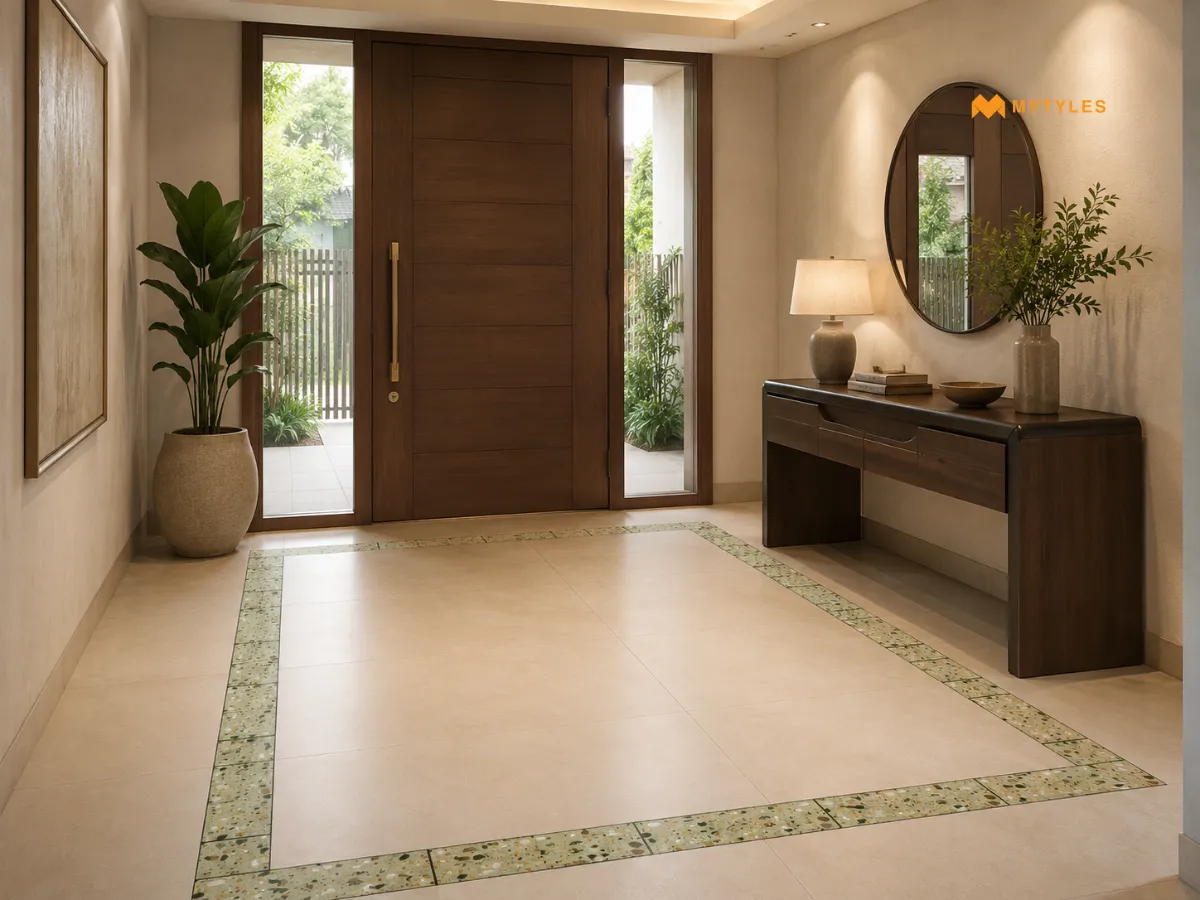
An entryway sets the tone for the rest of the home, and terrazzo floor tiles are one of the simpler ways to mark that transition. Instead of covering the full floor, a terrazzo border frames the entry area, often running along the edge of a plain tile floor.
A neutral terrazzo border in grey or beige tends to blend easily with most flooring choices. This still gives the entryway a distinct, slightly finished feel.
7.Terrazzo Tiles for Dining Area Flooring
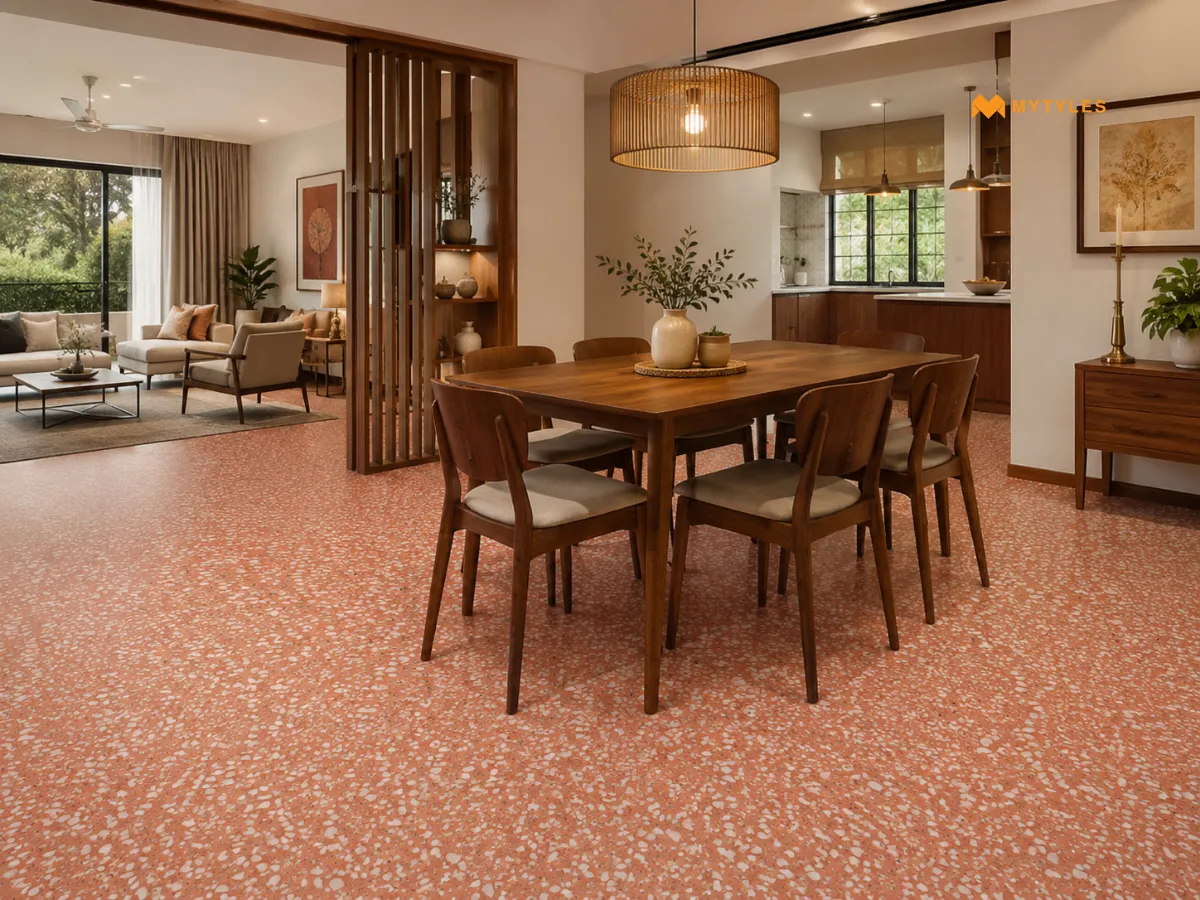
Dining areas deal with a lot of daily use, from moving chairs to the occasional spill. Terrazzo tiles are a sensible choice here, since the fragmented patterned floor tiles hide small dust and spills better than a plain surface would.
Warmer terrazzo tones pair nicely with wooden dining furniture. If your dining space flows into the kitchen or living room, keeping the same tone across all three helps the whole area feel connected.
8.Large-Chip Terrazzo for Statement Walls
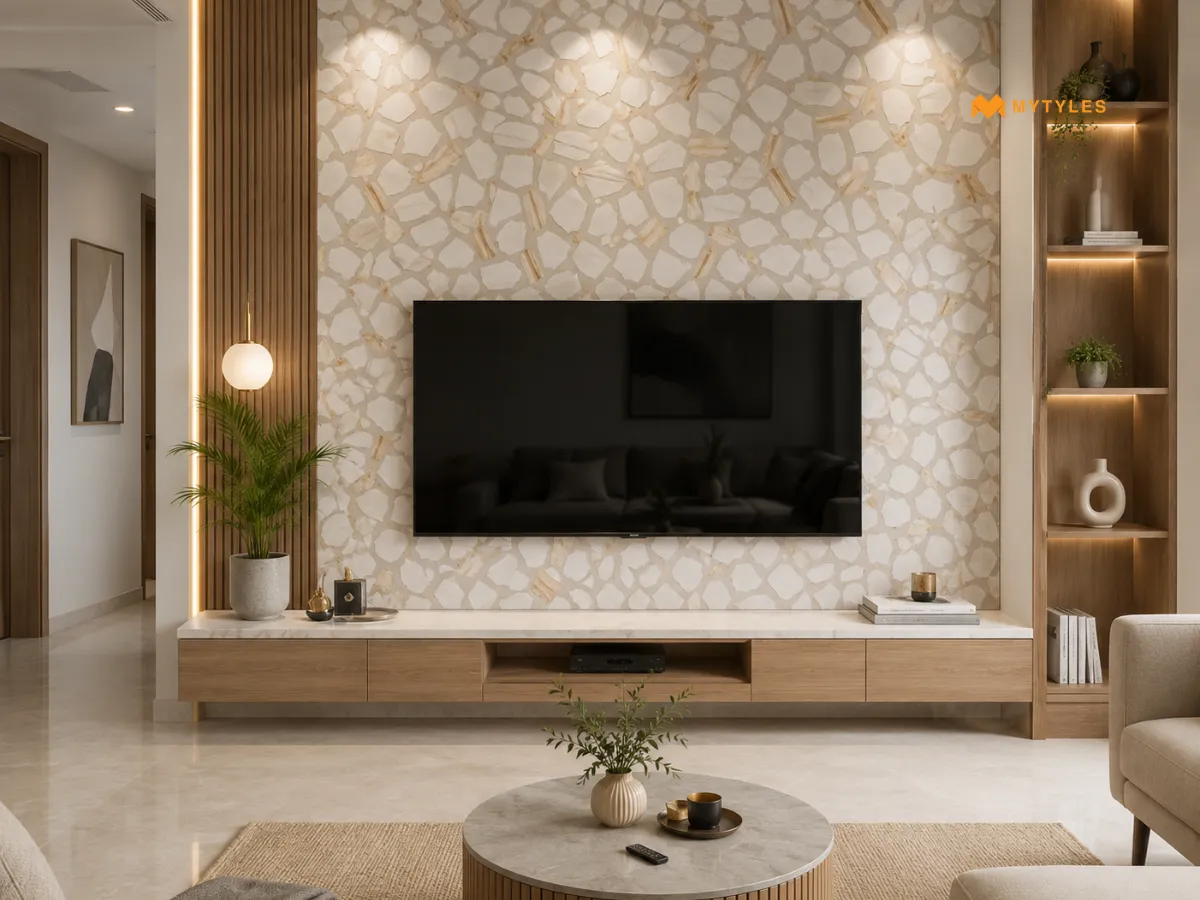
Terrazzo spends most of its time underfoot, so putting it on a wall changes how it appears entirely. Large-chip terrazzo wall tiles, with bigger fragments set into the surface, create a bold look.
A single wall finished this way, whether as a feature wall, behind a television unit or running alongside a staircase, tends to hold attention on its own. The design works best in small doses.
9.Terrazzo Flooring for Compact Apartment Spaces
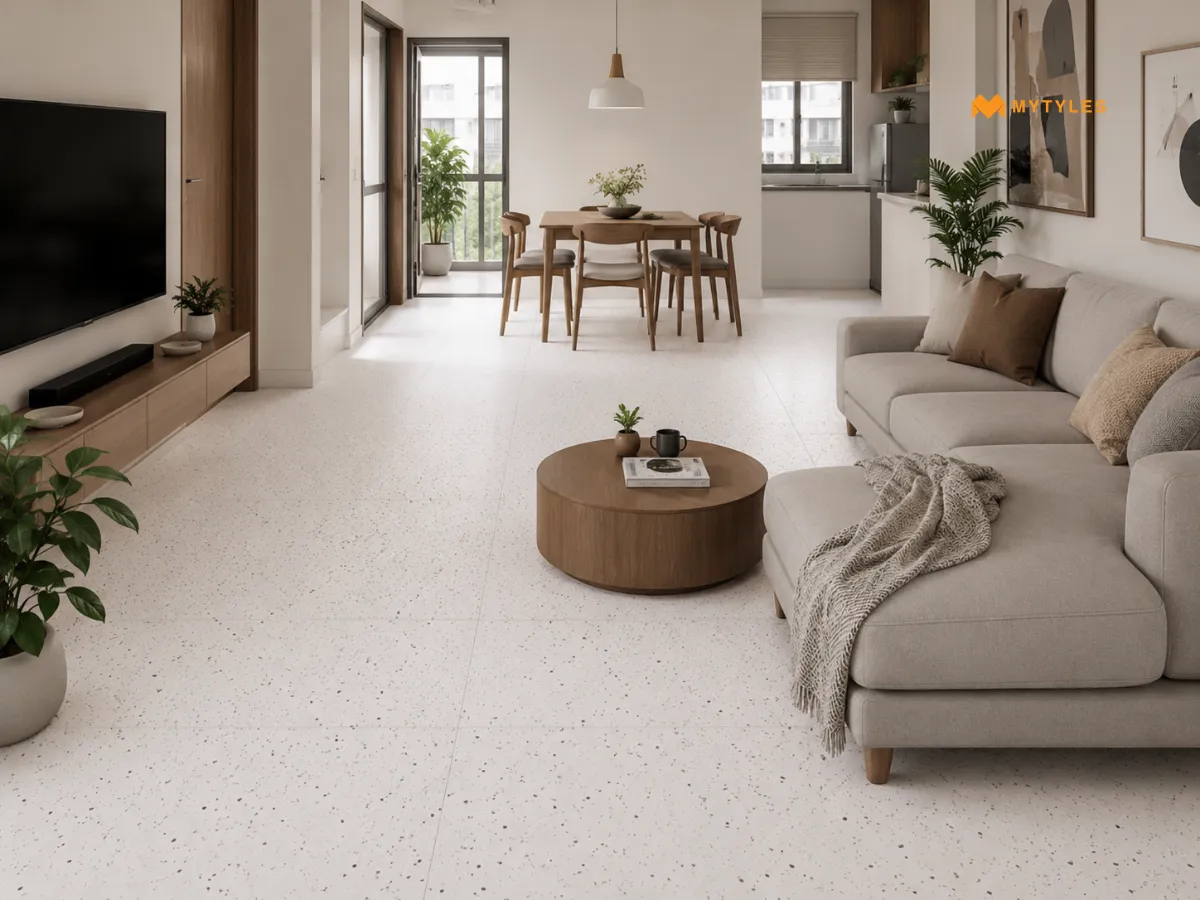
If you are working with a smaller apartment, terrazzo floor tiles are a better pick. Its fragmented pattern does not break up the room the way a strong directional pattern would, so the space feels more continuous.
Go for lighter terrazzo shades if your apartment does not get much natural light, since they help brighten the room. Carrying the same tone across connected rooms also makes the whole apartment feel a bit more open.
10.Terrazzo Tiles for Vanity and Washbasin Walls
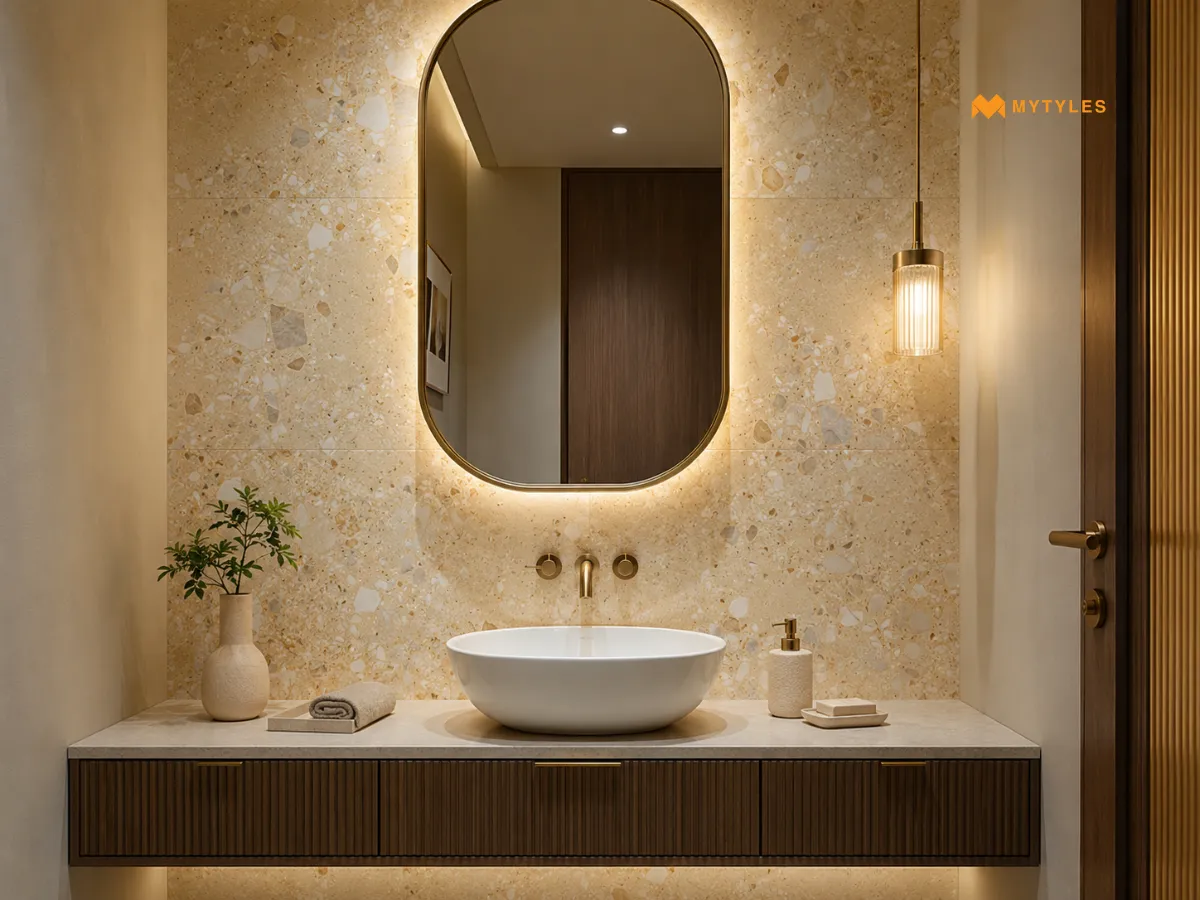
The wall behind a washbasin rarely gets much attention, yet it stays visible every single day. A speckled or pastel modern terrazzo tile design in this spot changes the appearance. They add a small but noticeable detail to the purely functional corner.
This idea works especially well in guest bathrooms or powder rooms, where even a small detail makes a difference.
Factors to Consider When Selecting Terrazzo Tiles
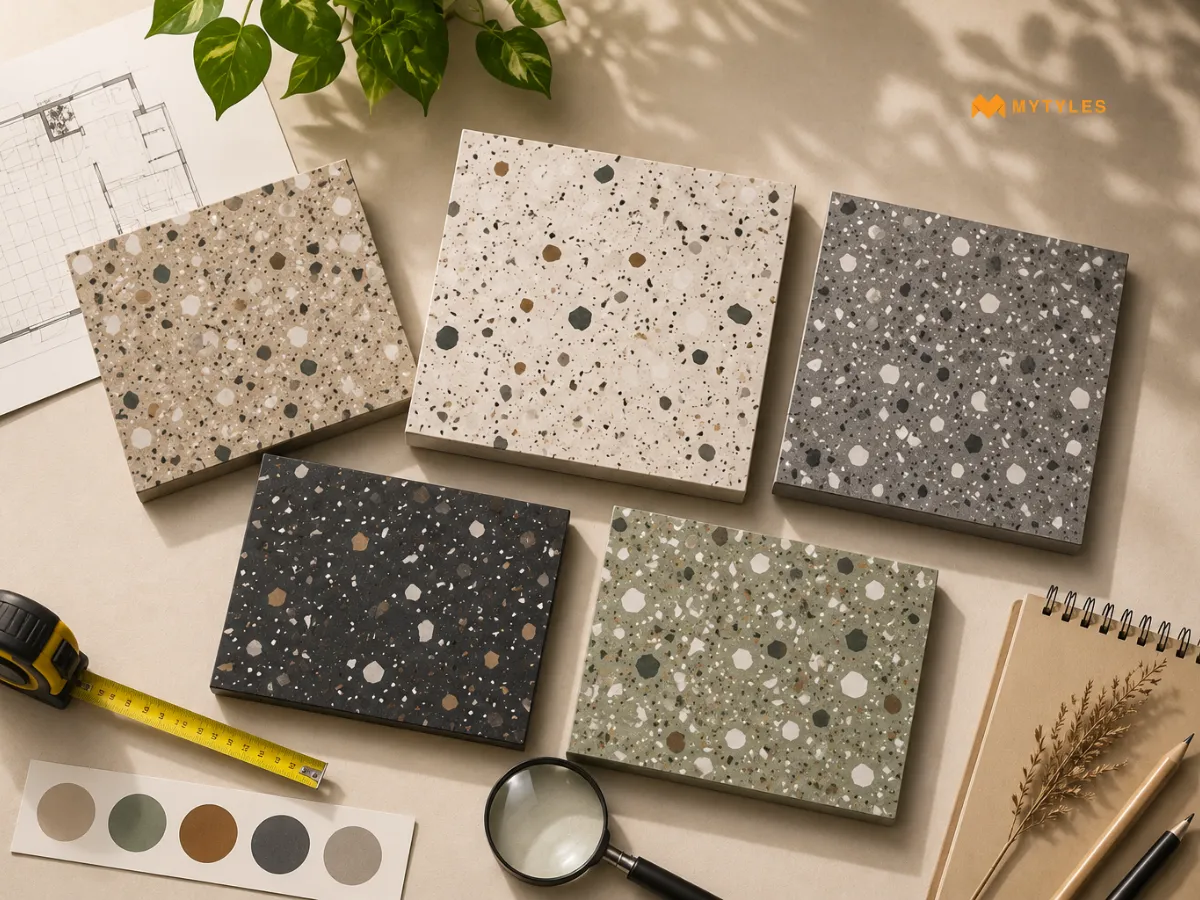
A few practical points can make the selection process of terrazzo tiles a little easier.
- Check the tile in natural light: Terrazzo chips can look slightly different under various lighting. If possible, view a sample in your space with the natural lighting before deciding.
- Keep the chip size in proportion to the room: Smaller rooms tend to feel more balanced with fine, closely scattered chips, while larger rooms have enough space to carry bigger, more spaced out fragments.
- Base tone and light: A room that stays dim through the day tends to open up visually with a lighter terrazzo base underfoot. Good natural light gives more room to work with; darker tones hold up fine there.
- Where the tile is going: A terrazzo tile built for flooring doesn't always perform the same way once it's on a wall or outdoors. Confirming this before ordering saves a mismatch later, particularly for wet or exposed areas.
Terrazzo Meets Everyday Living
Terrazzo tiles work across nearly every part of an Indian home, from entryway borders to full bathroom floors. Chip size, tone, and placement each play a role in how a terrazzo surface eventually looks and performs in daily use.
Speckled patterns, large chip finishes, and everything in between make up MyTyles' terrazzo tile options, each with detailed specifications to help narrow down what fits a specific room. The full terrazzo tile collection can be explored either at the MyTyles experience centre or through the website.

Will Terrazzo Tiles Still Look Modern In Today's Homes?

Yes, terrazzo tiles continue to suit many contemporary interiors because they are available in a wide range of colors, chip sizes, and patterns. A softer color palette works well in minimal spaces, while bolder combinations can create a stronger visual impact. The overall look depends on how the tile is paired with walls, furniture, and lighting.
Can The Same Terrazzo Tile Be Used On Both Floors And Walls?
Yes, the same terrazzo floor tiles may be used on both floors and walls when the product is suitable for each application. Using one tile across multiple surfaces can create a more continuous appearance, especially in bathrooms, kitchens, or open-plan spaces. It is important to check the product specifications before using the same tile on different surfaces.
What Is The Difference Between Small-Chip And Large-Chip Terrazzo Tiles?
The main difference lies in the size of the stone fragments visible on the surface. Small chips create a finer and more uniform appearance, while larger chips make the pattern more noticeable. The right option depends on the room size, the overall design style, and how prominent you want the tile pattern to appear.
Which Colors Work Well For Terrazzo Tiles In Indian Homes?
Neutral shades such as white, grey, beige, and cream are commonly chosen because they blend easily with different interior styles. Colorful terrazzo tiles can also be used where a stronger decorative effect is preferred. The final color choice depends on the room size, available natural light, furniture, and the overall color palette of the space.
Can Terrazzo Tiles Be Used In Modern Indian Homes?
Yes, modern terrazzo tile designs can complement a wide range of interior styles when paired with simple finishes and balanced color combinations. They are often used in living rooms, kitchens, bathrooms, balconies, and feature walls. The final appearance depends on the chip size, color combination, and the surrounding materials used in the space.
Where Do Terrazzo Tile Designs Work Best In A Home?
Terrazzo tile designs can be used in living rooms, kitchens, bathrooms, balconies, and selected feature walls, depending on the product suitability. Some people prefer using terrazzo as a statement floor, while others use it on a backsplash or a single wall. The application usually depends on the pattern scale and the amount of visual detail desired.
Will Terrazzo Tiles Make A Home Look Dated?
Not necessarily. Terrazzo tiles for living room spaces and other areas can suit both traditional and contemporary interiors when the color combination, chip size, and layout are selected thoughtfully. Pairing terrazzo with simple furniture, neutral walls, and natural materials can help create a balanced look that remains relevant across different design styles.

ABOUT THE AUTHOR
Nandana Priya
With a strong interest in design, creativity, and emerging tile trends, I enjoy turning ideas from the world of tiles and interiors into engaging, meaningful reads. My writing focuses on creating well-researched content that helps readers understand design choices with more clarity and confidence. I bring together research, design awareness, and digital marketing insights to craft content that is relevant, easy to follow, and thoughtfully written for todays homeowners and design-conscious readers.