.svg)


Athangudi Tiles: Traditional Beauty for Modern Homes
ByAditi Bardhan

Wed , May 20 , 2026

Read Time: 5 Min


 Copied!
Athangudi tiles come from the village of Athangudi in Tamil Nadu’s Chettinad region, where local makers shaped a craft with a global backstory. Chettiar merchants once brought home imported tiles, marble and other materials for their mansions; when repairs became costly, village artisans began making their own version with local sand, cement and oxide colors. The craft is often traced to the late 19th and early 20th centuries, with some sources calling it a 200-year-old tradition. Today, these tiles are loved for floral motifs, geometric borders and bold handmade color. In this blog, we will walk you through the beauty, making, design appeal and practical use of Athangudi tiles and how they can bring traditional character into today’s interiors.
Why Athangudi Tiles Still Work in Modern Homes
Athangudi tiles still work in modern homes because they bring craft, color and character into spaces. These tiles get their color from oxide pigments and their strength from a cement-based mix. You’ll often see them in deep reds, blues, greens and yellows, with floral motifs, borders, checks and geometric layouts. Since artisans pour each tile onto a glass base, small color shifts and surface variations are common. That’s what gives every Athangudi tile design its own character.
- Adds Heritage Without Looking Outdated: Modern Athangudi tiles look beautiful with white walls, wood furniture, brass touches and simple layouts. The tile brings the heritage feel, while the cleaner setting keeps the space current.
- Provide Plenty Of Design Choice: Athangudi tile designs come in floral, geometric, checkered and border styles, so you can choose a bold, soft or decorative look.
- Looks Good And Lasts Well: As Athangudi floor tiles, they bring color and pattern without needing much else around them. When laid and finished properly, they hold up everyday flooring.
Best Athangudi Tiles Design Ideas for Modern Interiors
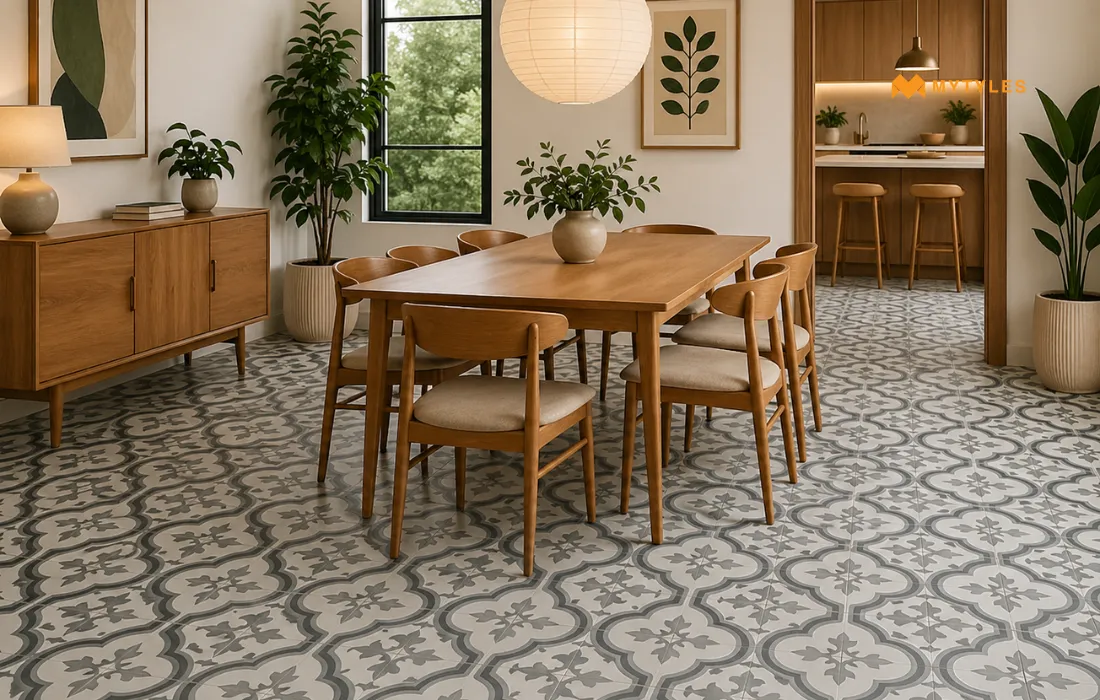
Athangudi tiles have many design styles, but the right choice depends on the look you want: floral, geometric, checked, bordered or plain. Traditional collections usually carry bright reds, greens, blues and yellows, while newer designs are also available in softer shades and simpler patterns. Floral, geometric, plain and patterned Athangudi tiles give homeowners more room to match them with different interior styles.
- Floral Designs: A classic Athangudi tile design with flowers, vines or petal forms. Pick this when you want a softer, decorative floor.
- Geometric Designs: Squares, diamonds, lines and repeated grids give a neater look. These suit homes that need patterns without too much ornament.
- Checkered Designs: A two-color check keeps the floor old-school but not loud. Red-cream, black-white, green-cream and blue-white combinations work well.
- Border Designs: Borders give the floor a finished edge. Use them with plain centre tiles or with a lighter repeated pattern.
- Plain Athangudi Tiles: Plain colors are useful when the room already has printed fabrics, carved furniture or detailed walls.
- Muted Modern Patterns: Modern Athangudi tiles in grey, cream, rust, sage, dusty blue or soft yellow are easier to pair with today’s furniture.
- Bold Patterned Floors: Bright Athangudi tile designs suit homes that can carry color. Use them when the floor is meant to stand out.
How to Use Athangudi Tiles Flooring in Different Spaces
Athangudi tile flooring should be planned by room size, foot traffic and pattern scale. Large rooms can carry bigger motifs. Compact rooms need smaller repeats, fewer colors and cleaner borders. Before fixing the tiles, check the layout on the floor once so the Athangudi tile pattern runs in the right direction.
- Living Room: Use a full-floor layout if the room is wide. For smaller halls, use plain centre tiles with a patterned border.
- Kitchen: Choose darker Athangudi tiles for kitchens, or smaller prints, as they show fewer marks. For backsplashes, smaller floral or grid patterns look neater than large motifs.
- Walls: Use Athangudi wall tiles on one wall section, not all four walls. They work well behind a wash counter, pooja unit, console or breakfast corner.
- Bedroom: Keep the floor calmer. Choose soft colors, simple repeats and less contrast so the room does not feel busy.
- Verandah & Courtyard: Use deeper colors with clean, defined borders here. Since the space is open and filled with light, the pattern will read more clearly, and the floor can take on a bolder character without making the room feel heavy.
- Bathroom: Use simple patterns and check slip resistance before installation. Avoid very glossy finishes on wet floors.
Popular Athangudi Tile Colors, Patterns, and Textures
.webp)
Athangudi tiles are easy to spot by their deep oxide colors. You’ll often see deep red, bottle green, mustard yellow, cobalt blue, cream, white, brown and black sitting together on one floor. The designs usually lean on floral motifs, geometric repeats, borders, checks and mosaic-style layouts. Many current collections also include plain colors and softer modern patterns, so you don’t have to choose only loud heritage prints.
- White Athangudi Tiles: Athangudi tiles in white color are useful when you want the floor to feel lighter. White rarely stays alone in these designs. It usually appears with blue, green, black or red, where it gives the pattern breathing space. In small rooms, white-based Athangudi tiles can stop the floor from looking too packed.
- Blue Athangudi Tiles: Blue Athangudi tiles bring a cooler note to the floor. They look especially good in floral, star, diamond and grid patterns. Pair blue with white for a crisp look, or with yellow and green if you want something closer to a heritage palette.
- Red Athangudi Tiles: Red Athangudi tiles have the strongest old-house feel. Red works beautifully in checks, floral medallions, borders and red-cream combinations. It also hides dust better than very pale shades, which makes it practical for busier areas.
- Traditional Yellow Athangudi Tiles: Traditional yellow Athangudi tiles add warmth straight away. Yellow looks rich with red, green, brown and black, especially in floral and border patterns. It gives the floor a festive mood without needing much decor around it.
- Floral Patterns: Floral Athangudi tiles use petals, vines, rosettes and leafy shapes. They suit people who like a softer, more decorative floor.
- Geometric Patterns: Go for diamonds, squares, grids or star shapes when you want the floor to look neat, not fussy. These patterns still have character, but they don’t feel as heavy as floral designs.
- Texture & Finish: Athangudi tiles aren’t meant to look factory-perfect. You may notice soft color movement, slight edge changes or tiny surface differences. It makes the floor feel crafted, not printed.
How to Style Athangudi Tiles in a Modern House
Athangudi tiles need simple styling, not extra decoration. Their patterns already bring enough color and detail, so the room should stay clean around them. Use soft wall colors, neat furniture, natural fabrics and a few warm finishes. Contemporary interiors tend to have Athangudi tiles only in some parts of the room, so they don't overwhelm the space.
- Use A Soft Base Around The Tile: Keep the walls, ceiling and skirting simple. Light colors such as ivory, beige, warm white, light grey and light green make the tile pattern stand out.
- Let The Floor Set The Color Story: Choose a dominant color from the tile and use it lightly throughout the room. This keeps the space connected without making it look too matched.
- Keep The Area Open: Don’t cover the tile with large rugs, bulky furniture or too many accessories. The more floor you leave visible, the stronger the tile looks.
Bring Home The Charm of Athangudi Tiles
Athangudi tiles bring together craft, color and strong design value for today’s homes. Their floral motifs, geometric layouts, rich shades and handmade finish make them suitable for statement floors, kitchens, courtyards, pooja areas and living spaces. The right tile choice depends on pattern size, room light, color balance and daily use. Use large patterns in open areas, lighter tones in quieter rooms and borders when you want the floor to look complete. MyTyles lists modern Athangudi tile options in different colors, sizes and finishes, including matt and satin choices for modern homes. Browse patterned tiles, heritage-style shades and easy-to-style finishes made for Indian homes, and choose a floor that feels warm, strong and well thought out.
Expert Reviewed by Biren Agrawalla
Biren Agrawalla, the Founder of MyTyles with over 10 years of experience across tile, retail, and home decor. Driven by a passion for tiles and a deep understanding of customer behaviour, he has spent his career transforming how people discover and buy tiles online. Biren combines practical retail insight with modern digital solutions to make tile shopping smarter, more intuitive, and design focused. At MyTyles, he champions a customer first approach, ensuring every experience from browsing to buying is reliable, seamless, and inspiring.

Are Athangudi Tiles Good For Flooring?

Yes, Athangudi tiles are a good flooring choice when you want color, pattern and a handmade look. They suit living rooms, dining areas, corridors, kitchens and courtyards. Choose darker shades for busy areas and softer tones for calm rooms. Plan the layout before fixing, as borders and repeated patterns need proper alignment.
Are Athangudi Tiles Good For Modern Homes?
Yes, Athangudi tiles suit modern homes when the color and pattern stay balanced. Use bold designs in open rooms and softer shades in compact spaces. They pair well with plain walls, wood, cane, brass, cotton and linen. For a cleaner look, avoid mixing too many prints around an already patterned floor.
Which Athangudi Tiles Design Is Best?
The best Athangudi tile design depends on room size, light and style. Floral patterns give a softer look, geometric patterns feel cleaner, checks add a vintage touch and borders give the floor a neat frame. For modern homes, muted colors, smaller repeats and simple border layouts are usually easier to style.
What Colors Are Popular In Athangudi Tiles?
Popular Athangudi tile colors include red, blue, yellow, green, white, cream, brown and black. Red gives a classic floor look, blue feels cooler, yellow adds warmth and white keeps the pattern lighter. Many designs mix two or three shades through floral, checkered, border and geometric layouts for a richer finish.
Can Athangudi Tiles Be Used In Kitchens?
Yes, Athangudi tiles can be used in kitchens with the right finish, shade and pattern size. Darker colors and tighter patterns hide daily marks better than very pale floors. For kitchen flooring, check slip resistance, sealing needs and cleaning care before installation. A simple repeat often works better than a large busy motif.
How Do You Maintain Athangudi Tiles?
Clean Athangudi tiles regularly with a damp mop and a mild, pH-neutral cleaner. Avoid harsh chemicals, acidic liquids, bleach, and rough scrubbing pads, as these can dull or damage the surface. Wipe spills quickly to prevent stains. For long-term care, follow the seller’s recommended sealing, polishing, and maintenance instructions carefully.
Where Can I Buy Athangudi Tiles Online?
You can buy Athangudi tiles online through tile sellers that clearly list size, finish, color, price and pattern details. MyTyles offers Athangudi tile options with different finishes, including matt and satin choices for Indian homes. Before ordering, compare price per sq. ft., delivery, sample images and pattern repeat.

ABOUT THE AUTHOR
Aditi Bardhan
I'm Aditi Bardhan, a professional content writer with over five years of experience creating SEO-driven, research-backed content across multiple industries. I specialise deeply in the tile and surface materials industry, crafting high-converting content for homeowners, architects, interior designers, and trade professionals. My work is grounded in technical research, design understanding, and consumer behaviour insights, enabling me to simplify complex concepts, highlight material benefits, and help brands build authority in the tile and construction space.