.svg)


Floor Tile Patterns That Can Change the Look of Your Home
ByAditi Bardhan

Thu , Jul 16 , 2026

Read Time: 5 Min


 Copied!
A floor can look plain or well-planned depending on the way the tiles are laid. The same tile may look simple in one layout and more expensive in another. That is why floor tile patterns matter as much as tile color, size and finish.
In Indian homes, floors have to handle daily walking, mopping, furniture movement, dust and wet areas. So the pattern should not only look good in photos. It should also work with the room size, furniture placement and cleaning needs.
Some patterns make small rooms feel wider. Some add movement to a plain floor. Some give a clean modern look, while others feel warm, classic or decorative. This guide covers practical floor tile pattern ideas that can change the way your home looks without changing the full interior.
How Floor Tile Patterns Change The Look Of A Room
Floor tile designs for Indian homes can change how a room looks without changing the tile itself. A plain tile may look basic in one layout, but cleaner or more premium when the pattern, grout line and tile direction are planned well. This is why tile laying patterns matter in living rooms, kitchens, passages, balconies and open Indian home layouts.
- A diagonal tile layout can make small rooms look wider because the tile lines move across the space.
- A straight pattern can make long rooms feel more balanced, especially in passages and open living areas.
- Herringbone tile pattern, brick bond and chequered layouts add movement to plain floors.
- Simple tiles can look better when the floor tile layout ideas match the room size and furniture placement.
- Bold patterned floor tiles can create a clear focus in foyers, balconies, pooja corners or dining areas.
- One common pattern can help connect open living, dining and kitchen areas.
- The same room can feel modern, warm, classic or decorative depending on the tile patterns for the floor you choose.
9 Best Floor Tile Patterns For Indian Homes
Floor tile patterns can make the same tile feel cleaner, richer or more decorative. For Indian homes, the pattern should match the room size, furniture, cleaning needs and daily use. Simple layouts suit living rooms and open floors, while foyers, balconies and dining corners can carry more detail. Below are the top tile patterns for floors that work well for Indian homes.
Straight Lay Tile Pattern For A Clean Look
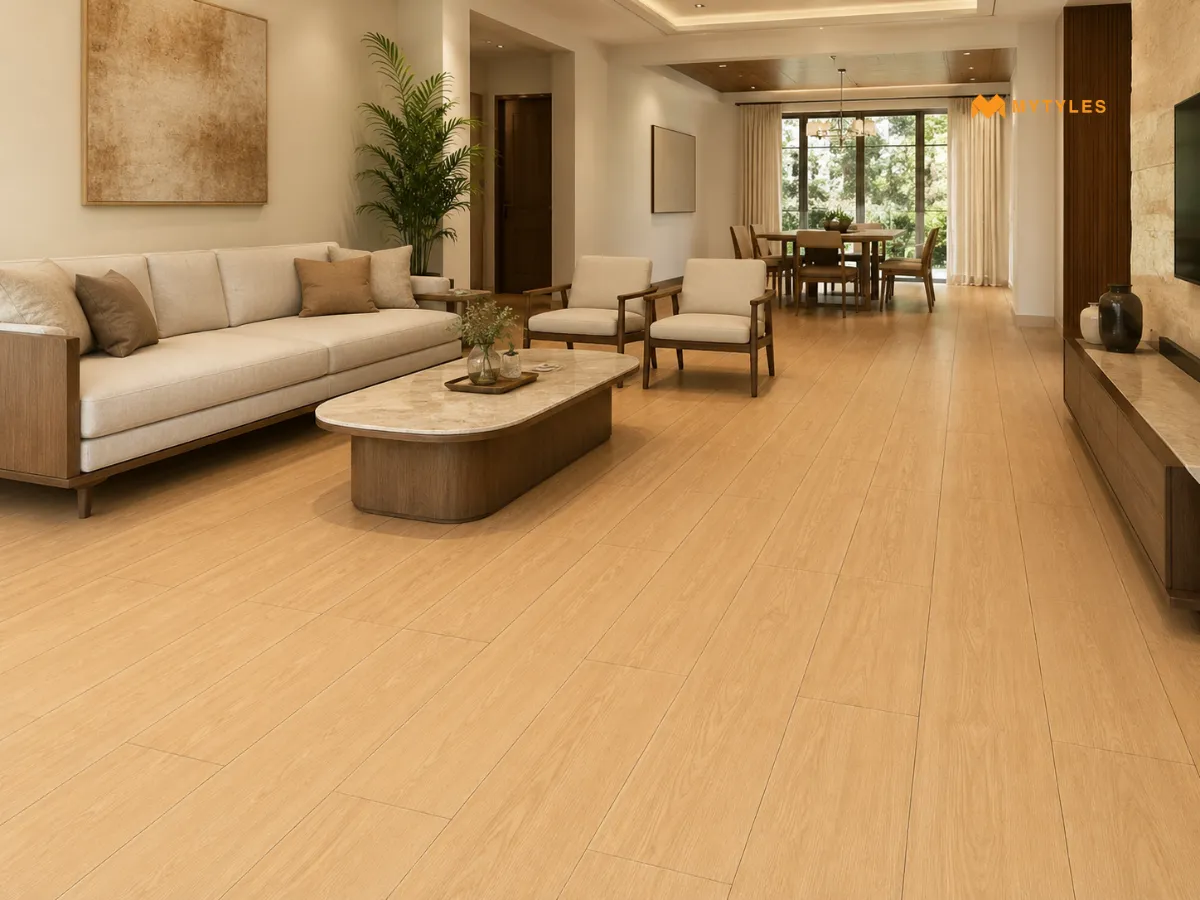
A straight lay tile pattern is the simplest layout. Tiles are placed in straight rows, one after another. It works well when you want the floor to look clean and easy on the eyes. This pattern is a good choice for living rooms, bedrooms and open floors. It also suits marble-look floor tiles and large-format tiles because the layout does not distract from the surface design. A straight lay is useful when the room already has many details, such as heavy furniture, wall panels or patterned curtains. It works well for bathroom floor tiles, kitchens and regular home floors.
Diagonal Tile Layout To Make Small Rooms Look Wider
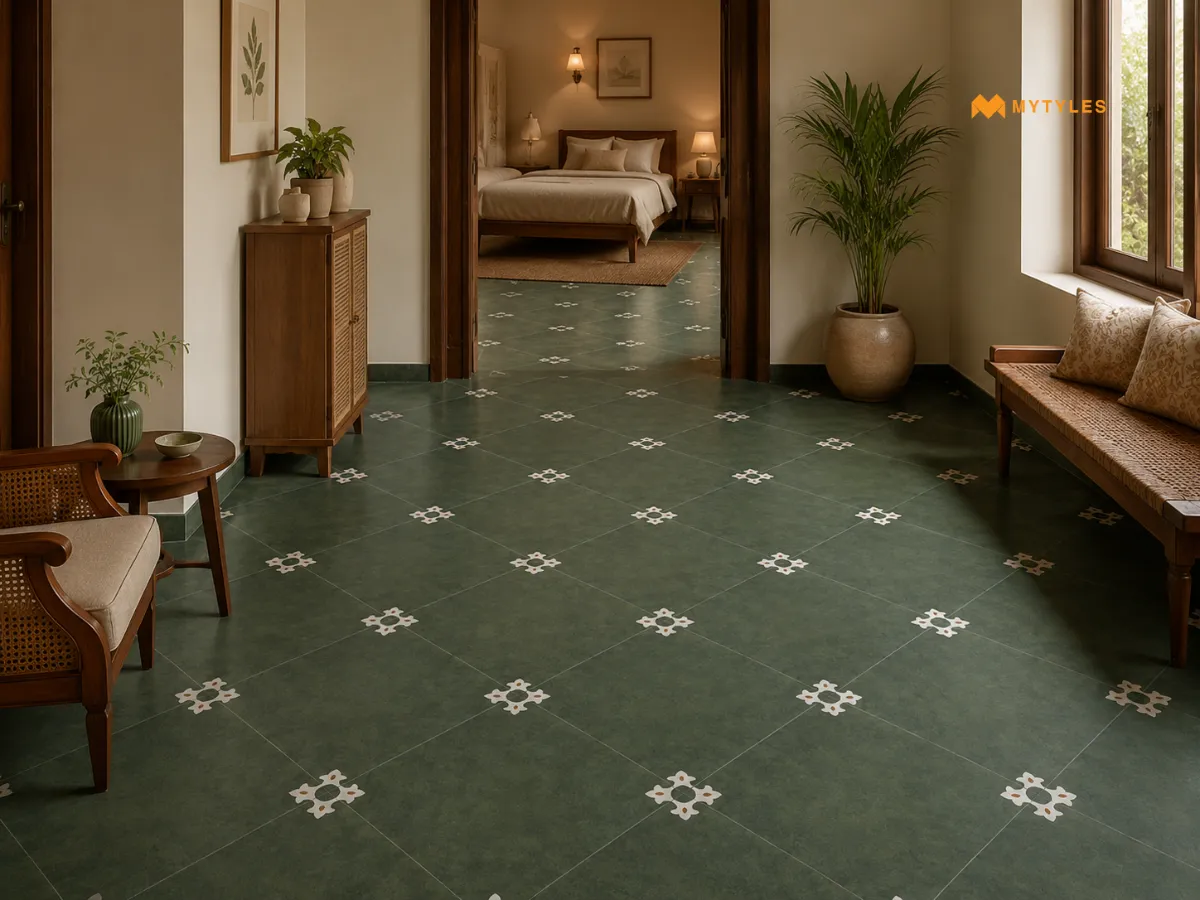
A diagonal tile layout places tiles at an angle instead of straight across the room. This can make compact rooms feel wider because the eye follows the angled lines. It works well in passages, balconies, small bedrooms and compact living areas. Plain, marble-look and neutral tiles look good in this pattern. This layout may need more cutting at the edges, so it should be planned properly before installation. It is a good option when you want the floor to look different without choosing a loud tile.
Herringbone Tile Pattern For A Premium Look
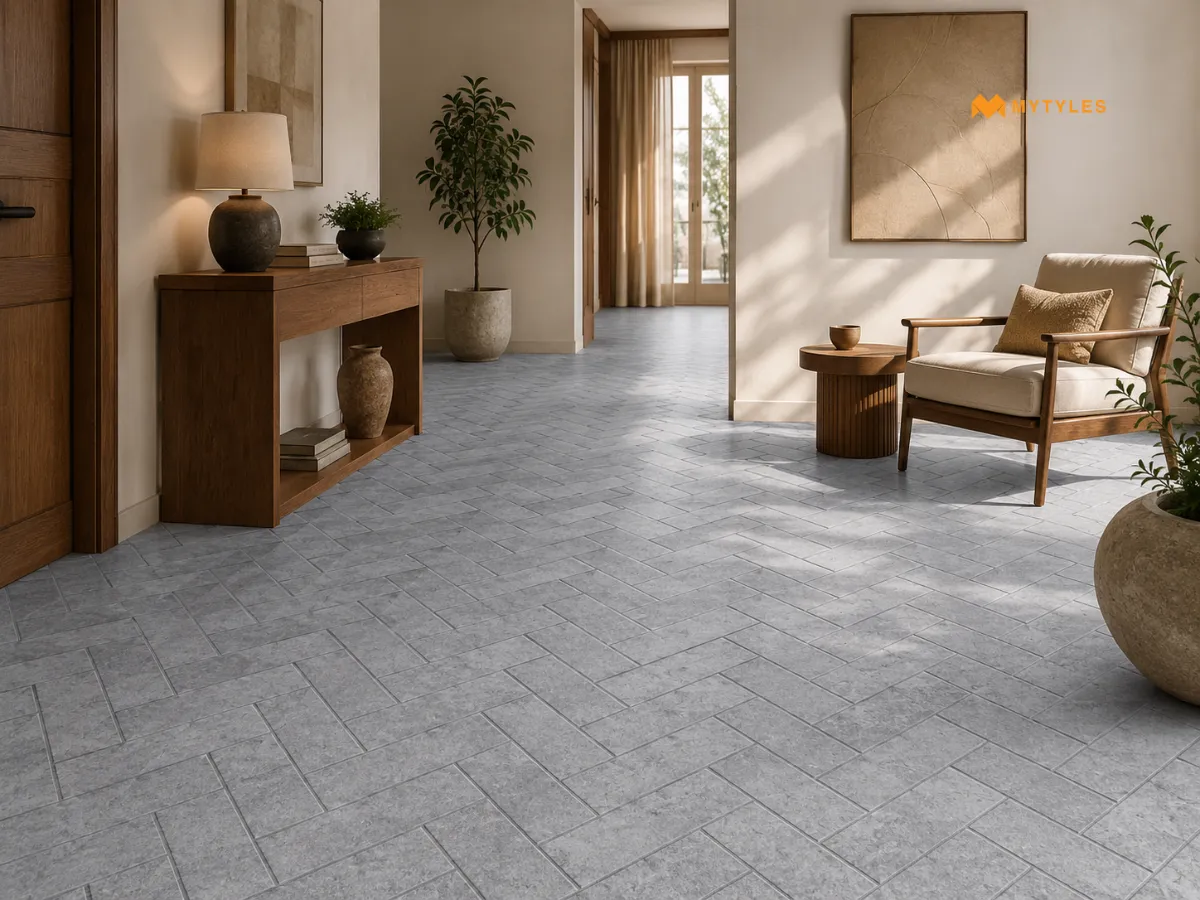
A herringbone tile pattern uses rectangular tiles placed in a zig-zag style. It gives the floor movement and a more designed look. This pattern works well in bedrooms, foyers, dining corners and small lounge spaces. It looks especially good with wooden-look floor tiles because the layout gives a warm and rich feel. Herringbone can make even a simple tile look more expensive. Keep the wall and furniture simple if the floor pattern is strong. Too many competing designs can make the room feel busy.
Brick Bond Tile Pattern For A Relaxed Home Look
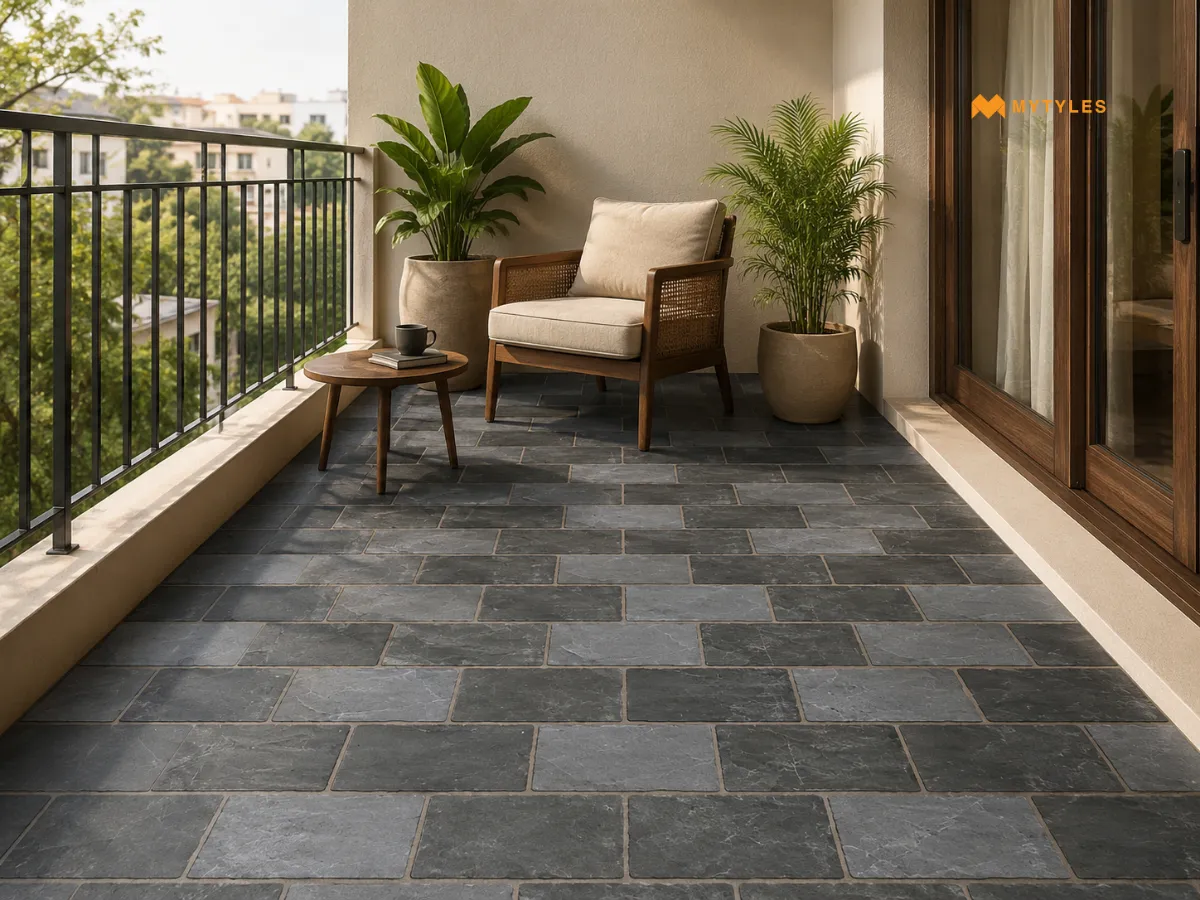
A brick bond tile pattern is laid like a brick wall, with each tile slightly shifted from the one below it. It feels casual and easy to live with. This layout works in kitchens, balconies, bedrooms and passages. It suits rectangular tiles, stone-look tiles and wooden-look tiles. Brick bond is a good choice when you do not want the floor to look too formal. It gives a warm, lived-in look and pairs well with simple furniture, plants and natural shades.
Chequered Floor Tiles For A Bold Classic Style
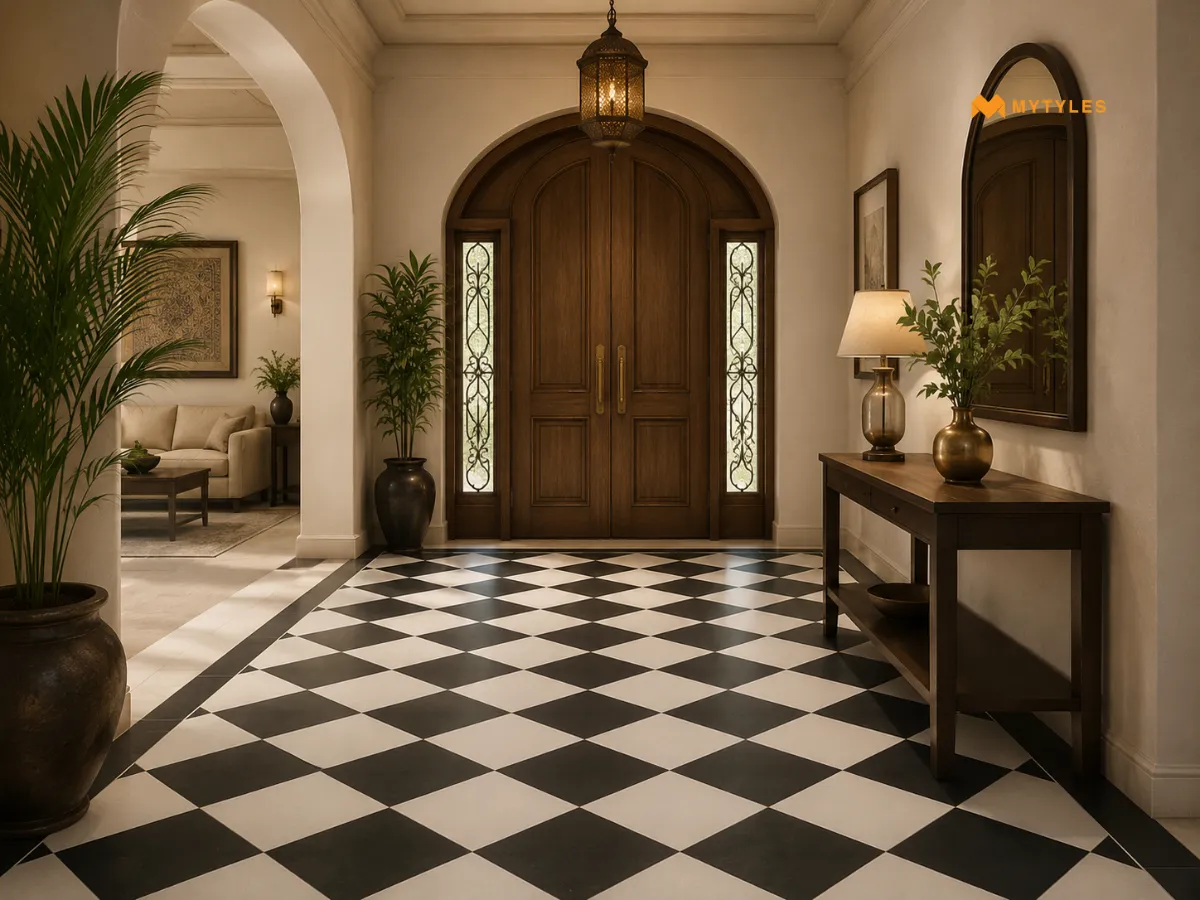
Chequered floor tiles can make a space look bold without needing many other design elements. The common black-and-white pattern feels classic, but softer combinations also work well. You can use beige and brown, grey and white, or cream and terracotta for a calmer look. This pattern suits foyers, kitchens, balconies and dining spaces. Chequered floors are strong visually, so use them where the room can handle the pattern. Keep the walls and furniture simple to avoid a crowded look.
Basket Weave Tile Pattern For Decorative Floors
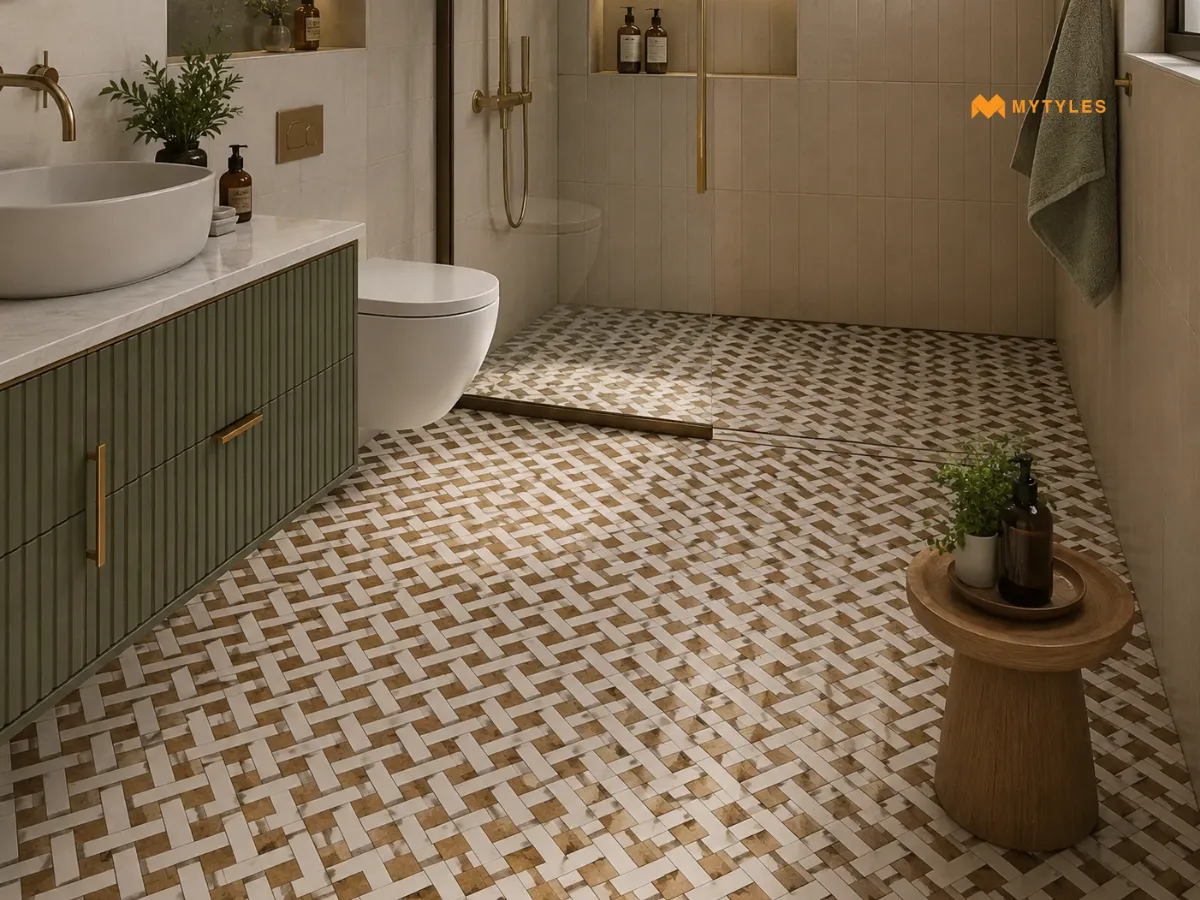
A basket weave tile pattern gives the floor a woven look. It is more decorative than straight lay but not as loud as some geometric designs. This pattern works best in smaller areas like bathrooms, powder rooms, foyers and corners where the floor is seen clearly. Basket weave adds detail without needing extra decor. It works well when the wall tiles are plain and the room needs one interesting surface.
Modular Tile Pattern For A Custom Floor Layout
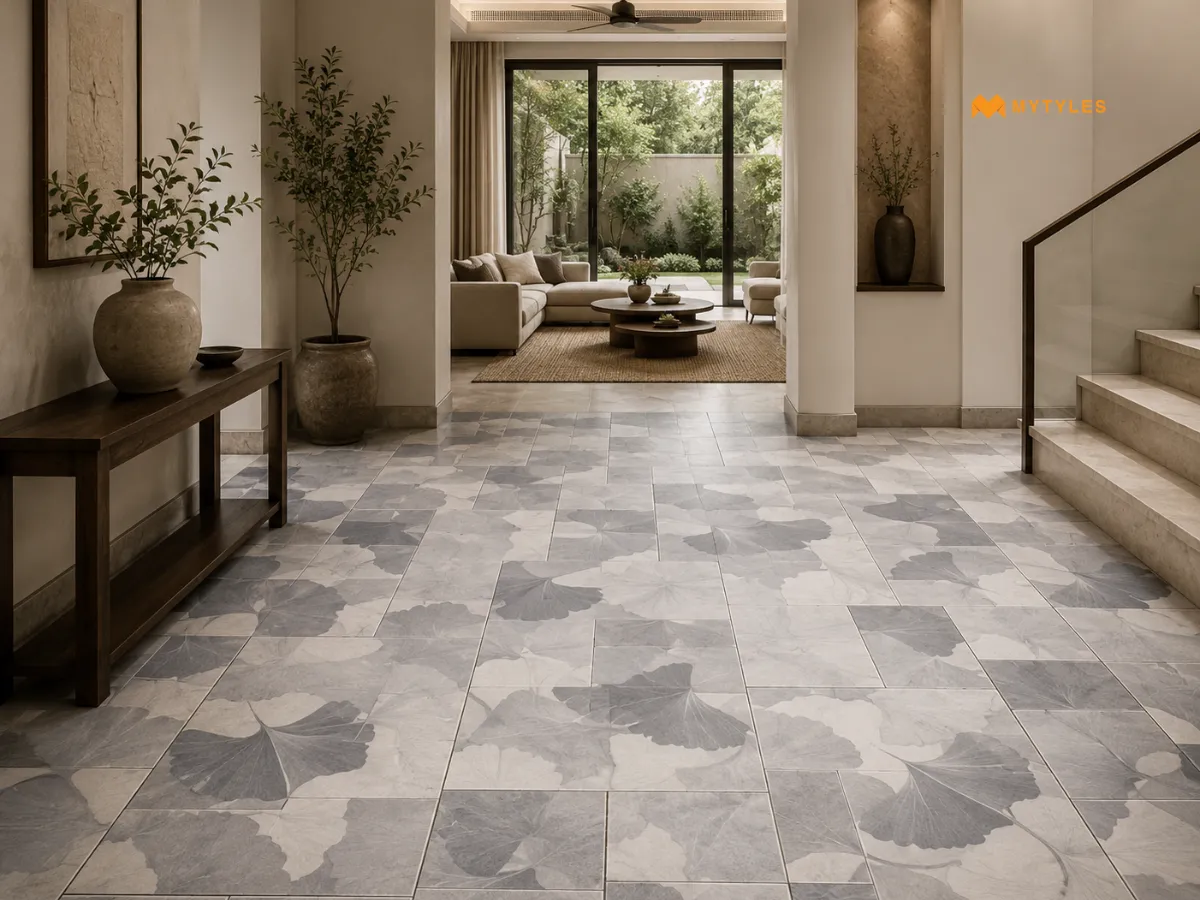
A modular tile pattern uses more than one tile size to create a planned floor layout. It looks more custom than a regular straight pattern. This style works best in large living rooms, villas, patios and open areas where the pattern has enough space to show properly. Modular layouts need careful planning because the sizes must match well. When done right, they give the floor a designer-style finish without making it look random.
Geometric Floor Tiles For A Modern Home
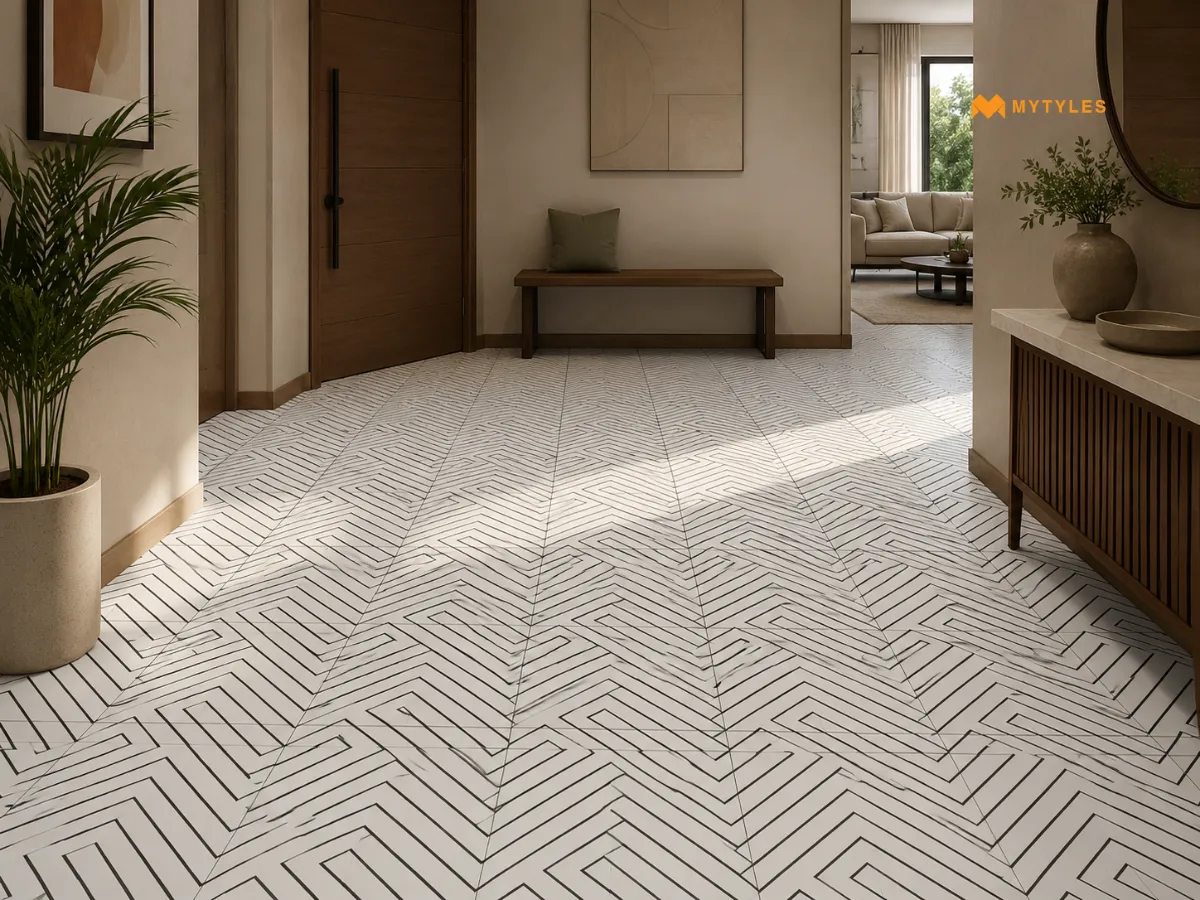
Geometric floor tiles are useful when you want the floor to stand out. They can include hexagon, diamond, cube, line or repeated shape patterns. These tiles work well in kitchens, balconies, bathrooms, entryways and small highlight areas. They are also good when the walls are simple and the floor needs some detail. For Indian homes, use geometric floors in selected spaces. A full home with strong geometric flooring can feel too much.
Moroccan Floor Tiles For A Statement Floor
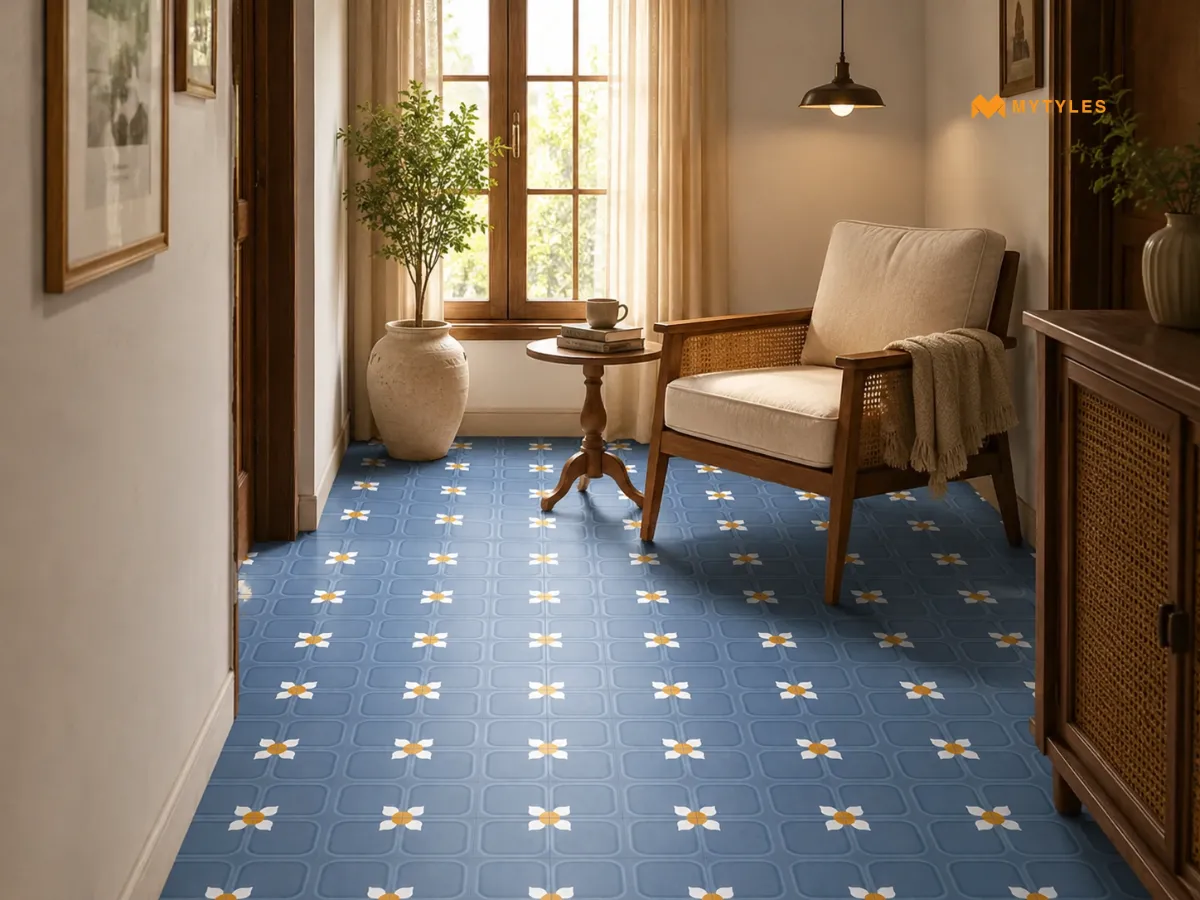
Moroccan floor tiles bring color, pattern and character to a space. They work well on balconies, in kitchens, pooja corners, passages and reading corners. These tiles look best with neutral walls, wooden furniture and simple lighting. They can make a small area feel more personal without adding many accessories. Use Moroccan tiles where the pattern can be seen clearly. Avoid covering them with too much furniture.
How To Choose The Right Floor Tile Pattern
The right floor tile pattern depends on the room size, tile shape and how the space is used every day. Small rooms look better with lighter patterns and fewer cuts. Larger rooms can carry stronger floor tile design patterns if the furniture layout is planned well.
- Start with the room size before choosing the pattern.
- Match the pattern with the tile size and shape.
- Use easy-clean layouts for kitchens and matt finishes for wet areas.
- Keep grout close to the tile color for a cleaner floor.
- Place bold patterns only where they can be seen clearly.
- Check furniture placement before finalising the layout.
Floor Tile Pattern Mistakes To Avoid
Even a good tile can look wrong if the layout is not planned properly. Most mistakes happen when the floor tile pattern idea is chosen only by design, without checking room size, grout color, cuts, wet floor safety and furniture placement.
- Do not use very busy patterns in small rooms.
- Avoid using too many different patterns in one home.
- Do not ignore grout color because it can change the full look.
- Avoid glossy tiles on bathroom, balcony and wash-area floors.
- Check edge cuts near doors, walls and corners before fixing.
- Do not use tiny patterns in large rooms without proper planning.
- Make sure the pattern will not get hidden under heavy furniture.
Choose A Floor Pattern That Works With Your Home
Good floor tile patterns for homes are not always the boldest ones. The right pattern should suit the room size, tile shape, furniture layout and daily use. Choose the layout before buying the tiles. Once the tile is fixed, the pattern becomes part of the room for years. Shop unique floor tile patterns online at MyTyles, or visit the Experience Centre if you want to see them before deciding. Check the size, finish, color and pattern once, then choose the layout that feels right for your home. A little planning can make even simple tiles look more finished and more suited to your home.

Which Floor Tile Pattern Is Best For Small Homes?

For small homes, straight lay and diagonal tile layouts usually work well. Straight lay keeps the floor simple, while diagonal layouts can make compact rooms feel wider. Use light-colored tiles and matching grout to reduce visible lines. Avoid very busy patterns in small rooms because they can make the floor look crowded.
Which Floor Tile Pattern Gives A Premium Look?
Herringbone, modular and large-format straight lay patterns can give a premium look. Herringbone adds movement, while large marble-look tiles keep the floor clean and rich. These patterns work well for bedrooms, foyers and living room floor tiles.
Are Patterned Floor Tiles Good For Living Rooms?
Patterned floor tiles can work in living rooms if the space has enough size and light. Use soft patterns for the full floor and stronger patterns only in selected areas. For busy living rooms, straight lay marble-look tiles or subtle geometric floors are safer than loud designs that may clash with furniture.
Which Tile Laying Pattern Is Best For Kitchens?
Brick bond, straight lay and geometric tile patterns work well in kitchens. Straight lay is easy to clean and looks neat. Brick bond gives a relaxed look with rectangular tiles. Geometric tiles can be used if the cabinets and countertop are simple. Choose matt or anti-skid floor tiles for better grip.
Is Herringbone Tile Pattern Good For Floors?
Yes, herringbone tile pattern is good for floors, especially in bedrooms, foyers, dining corners and small living areas. It works best with rectangular tiles and wooden-look tiles. The pattern adds movement without needing a loud tile design. Proper installation matters because the cuts and alignment are easy to notice.
Which Floor Tile Pattern Is Easiest To Maintain?
Straight lay is usually the easiest floor tile pattern to maintain because the layout is simple and the grout lines are easier to follow during cleaning. Large or medium tiles with matching grout can also reduce visible dirt lines. Avoid very small or detailed patterns in areas that need frequent mopping.
Which Pattern Works Best With Marble-Look Floor Tiles?
Straight lay works best with marble-look floor tiles, especially in larger sizes. It allows the marble veins to show clearly without breaking the surface too much. Diagonal layout can also work in smaller rooms. For a more premium look, check the vein direction before fixing the tiles.
Can I Use Different Floor Tile Patterns In Different Rooms?
Yes, you can use different floor tile patterns in different rooms, but keep the overall home flow in mind. Use one main pattern for large connected spaces and stronger patterns only in smaller areas. Too many different layouts can make the home look broken, especially in open living and dining spaces.

ABOUT THE AUTHOR
Aditi Bardhan
Aditi Bardhan is a professional content writer with over five years of experience creating SEO-focused, research-backed content across diverse industries. She specialises in the tile and surface materials space, writing for homeowners, architects, interior designers, and trade professionals. Her work combines technical research, design awareness, and a strong understanding of customer needs, helping readers make clearer and more confident choices. Through her content, Aditi simplifies complex material concepts, highlights practical design benefits, and helps brands build trust and authority in the tile and construction industry.