.svg)


9 Chequered Floor Tile Ideas Bringing Vintage Charm Back To Indian Homes
ByNabiya Naqvi

Fri , Aug 14 , 2026

Read Time: 5 Min


 Copied!
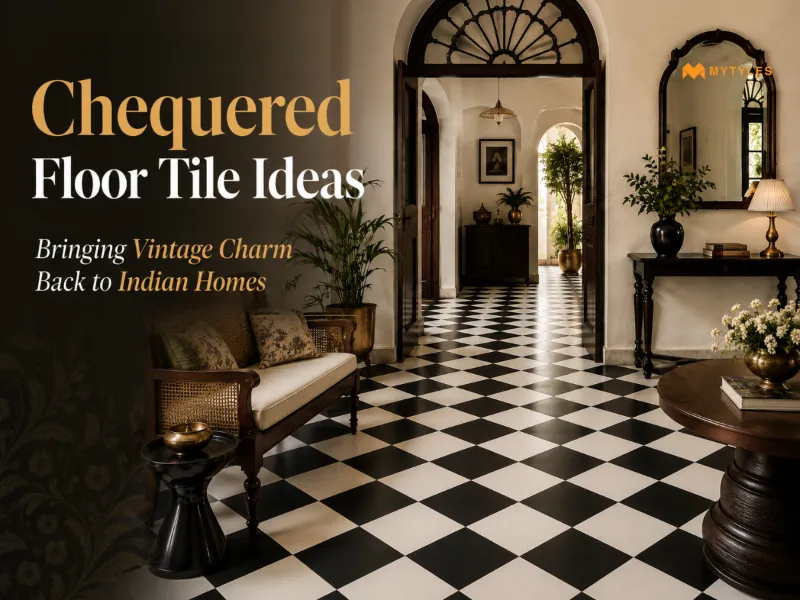
Interiors of Indian homes are evolving quickly. New tile trends are constantly emerging. But some designs remain timeless and complement even modern setups. Classic chequered floor ideas are making a comeback in Indian interiors. The bold impact of tile floors in contrasting tones has brought this trend back to life. Traditionally, chequered patterns were mostly of black and white because they are an extreme contrast of colors that catches attention. But depending on the style and color combination of your space, you can choose any other contrast.
Why Are Chequered Floor Tiles Popular Again?
Some patterns have a staying power that trends simply cannot replicate. Vintage floor tile ideas keep returning to Indian interiors because they bring something that modern minimal spaces rarely have on their own: a floor that holds attention. Chequered tile designs for the home do that work quietly. The contrast is built into the tile itself, which means the walls and furniture can stay simple while the floor carries the character of the entire room.
That is exactly why retro tile designs for floors are showing up alongside contemporary Indian furniture and fittings right now. The combination works with most of the home designs because the pattern is confident enough to sit next to anything without clashing against it.
Chequered Floor Tile Ideas For Indian Homes
The same pattern reads completely differently depending on the room, the color combination, and the tile size. Here are 9 chequered floor tile ideas that show how versatile this design can be across an Indian home.
Classic Black and White Entryway
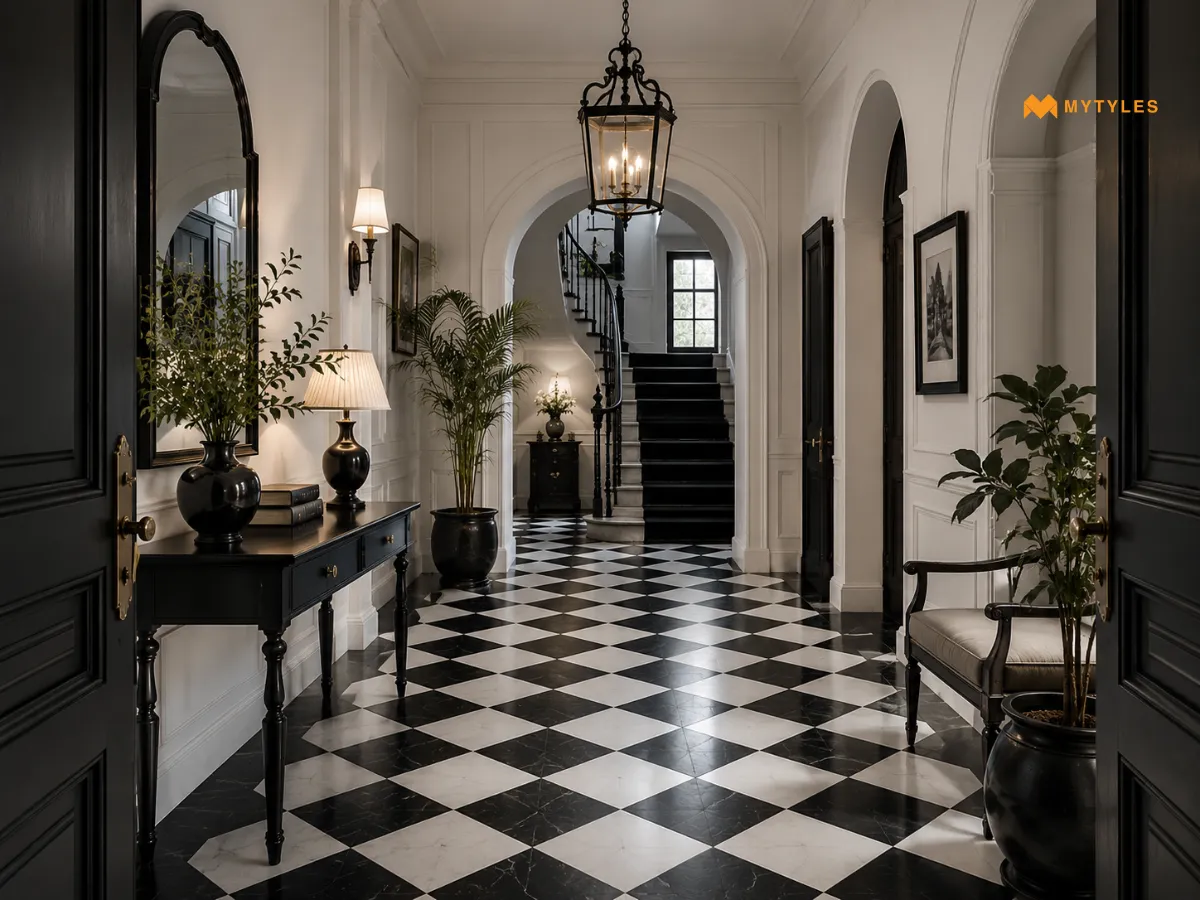
The entrance sets the tone for everything behind it. A classic chequered flooring layout in black and white in the foyer makes an immediate impression that most plain tile entries simply cannot. The pattern signals a deliberate design decision from the moment someone steps inside.
A straight chequered tile pattern works well in formal entrance lobbies where symmetry suits the architecture. In more relaxed entryways, a diagonal chequered tile layout adds movement and makes the space feel a bit wider than it actually is. Keep the walls plain and the furniture minimal. The floor is doing all the work here and does not need any competition.
Warm Beige Checkerboard Living Room
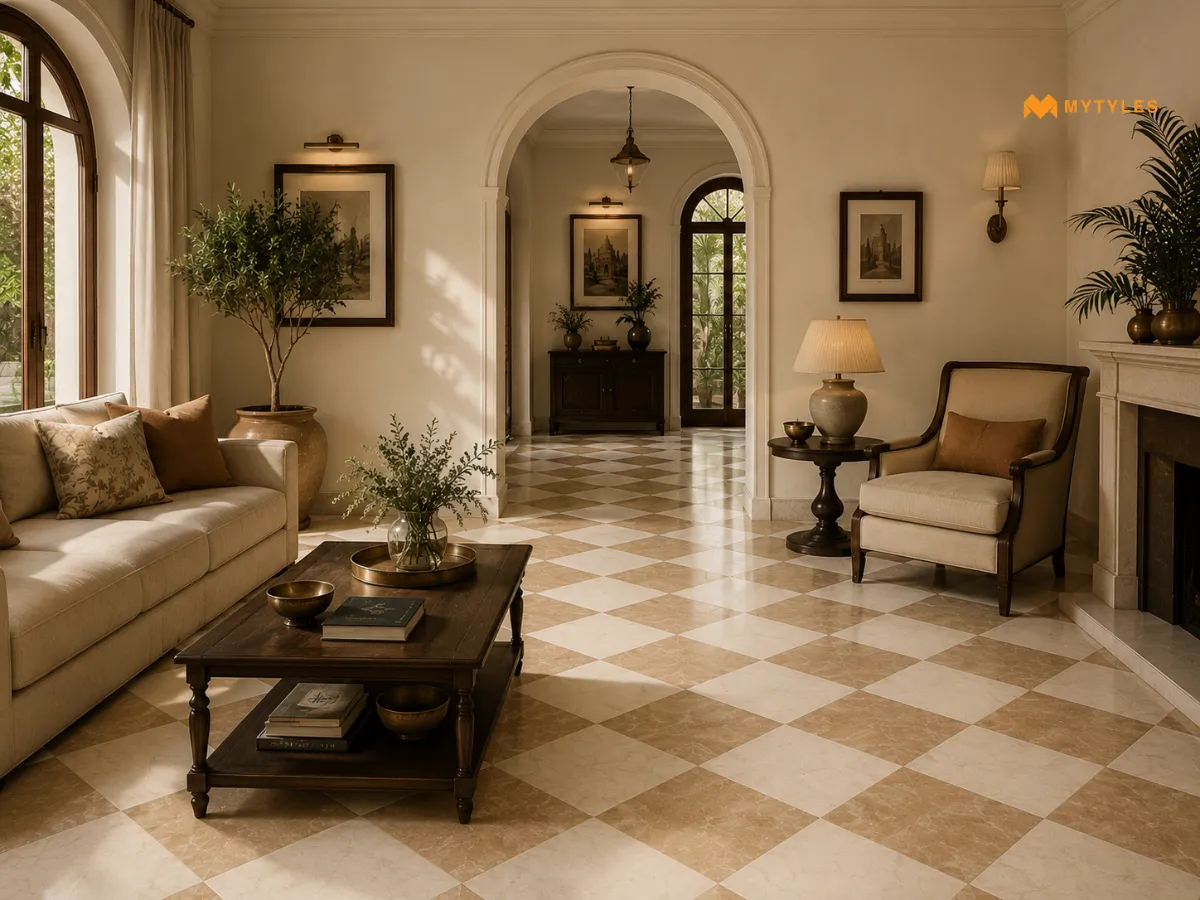
Not every living room suits the boldness of black and white. Beige and white chequered tiles bring the same pattern energy in a quieter, warmer way. This combination sits naturally alongside wooden furniture, cane accents, and earthy wall tones that are common in Indian living rooms.
Chequered tiles for living room applications read differently depending on the tile format chosen. Larger format sizes give the pattern more breathing room across the floor and reduce the number of joints visible across a wide surface. A diagonal chequered tile layout in warm beige and white adds a sense of openness to the layout while keeping the overall mood grounded and relaxed.
Terracotta and Ivory Courtyard Flooring
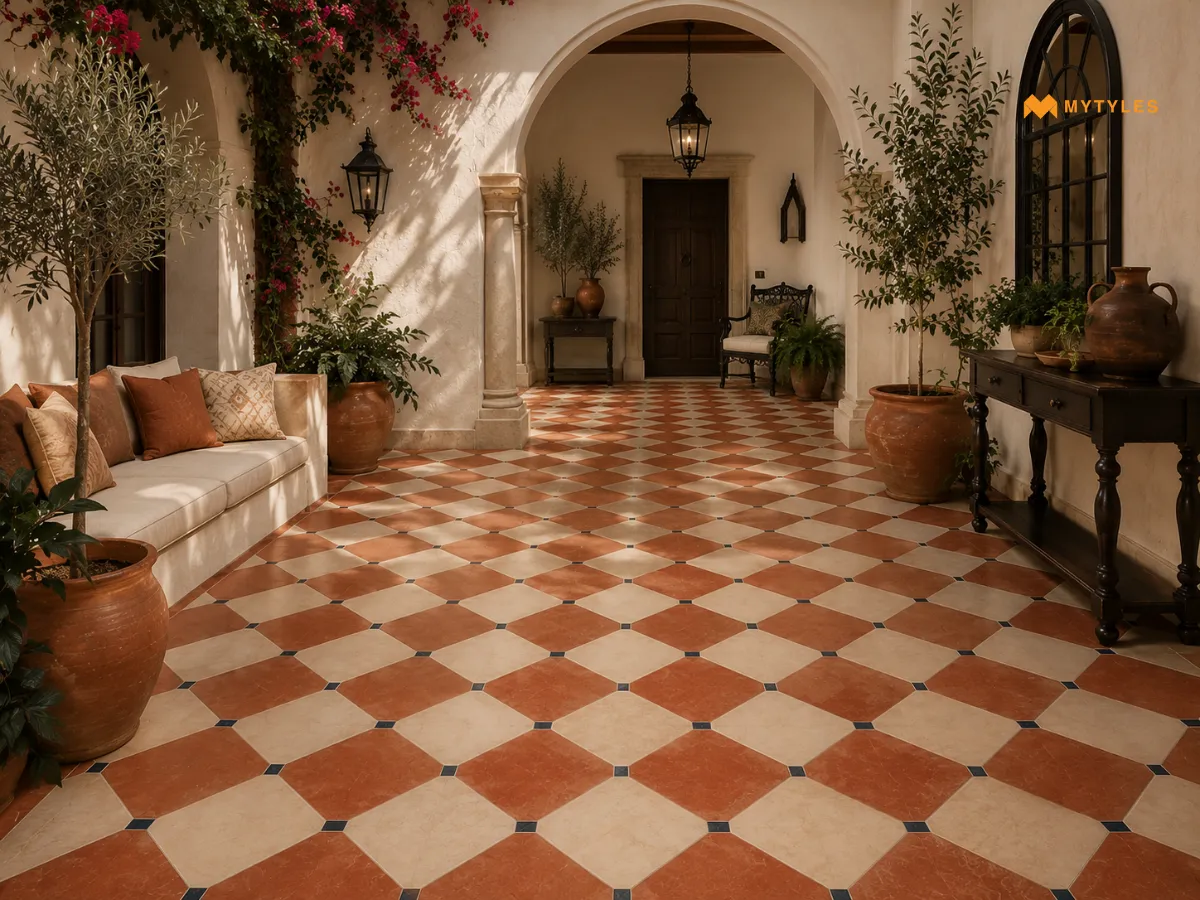
Courtyards and open transition spaces in Indian homes suit heritage-inspired tile designs more naturally than most other areas. Brown and cream chequered flooring or terracotta and ivory combinations connect the built space to the landscape around it without the pattern feeling out of place outdoors.
For open courtyard applications, checking the product page for outdoor suitability and slip resistance before ordering is worth doing since not every chequered floor tile is rated for full weather exposure.
Grey and White Kitchen Floors
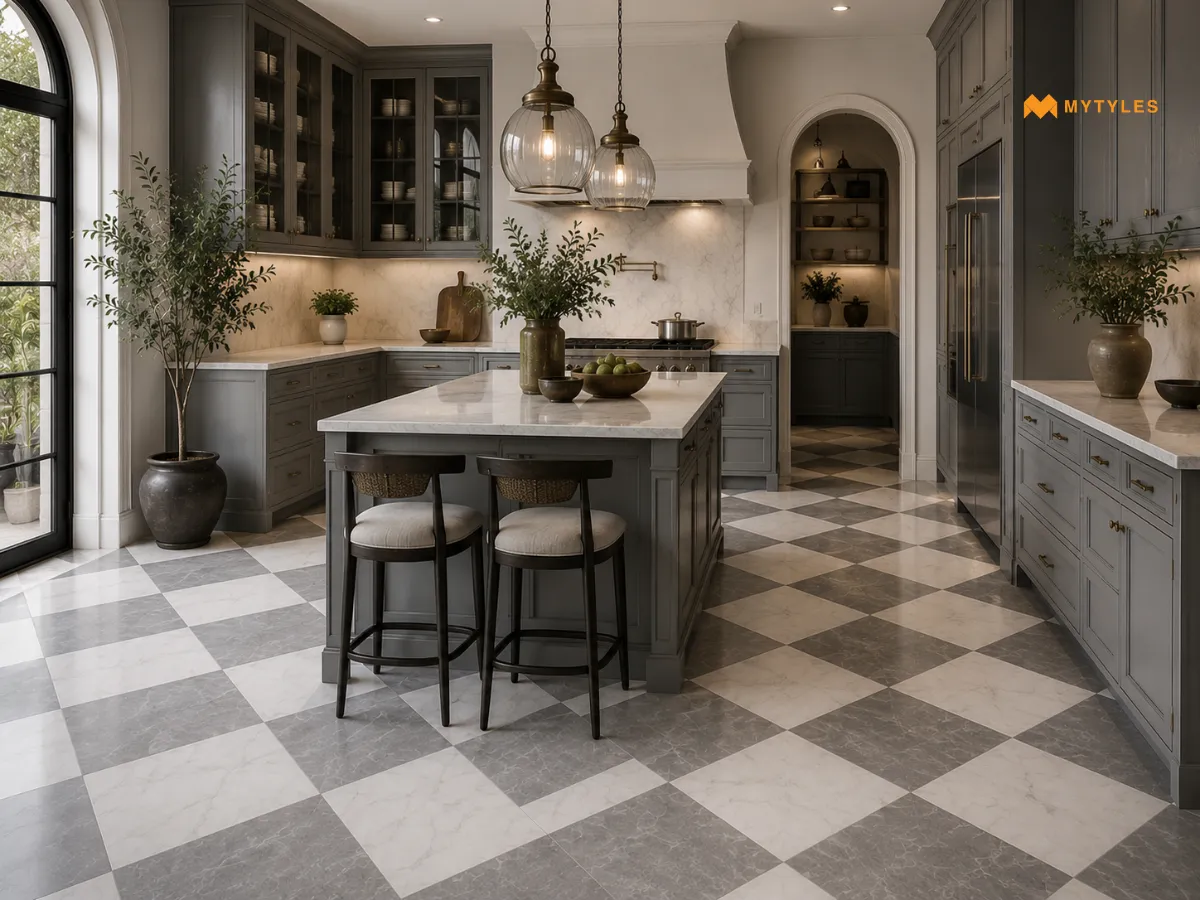
Chequered kitchen floor tiles in grey and white are a quieter alternative to the classic black and white combination in a kitchen that already has strong cabinet colors or a bold countertop. The softer contrast keeps the pattern present without the floor competing with everything else in the kitchen.
Matt-finish chequered tiles suit kitchen floors better than polished options. Always check the slip resistance rating on the product page before specifying any tile for a kitchen floor application.
Marble-Look Dining Room Checkerboard
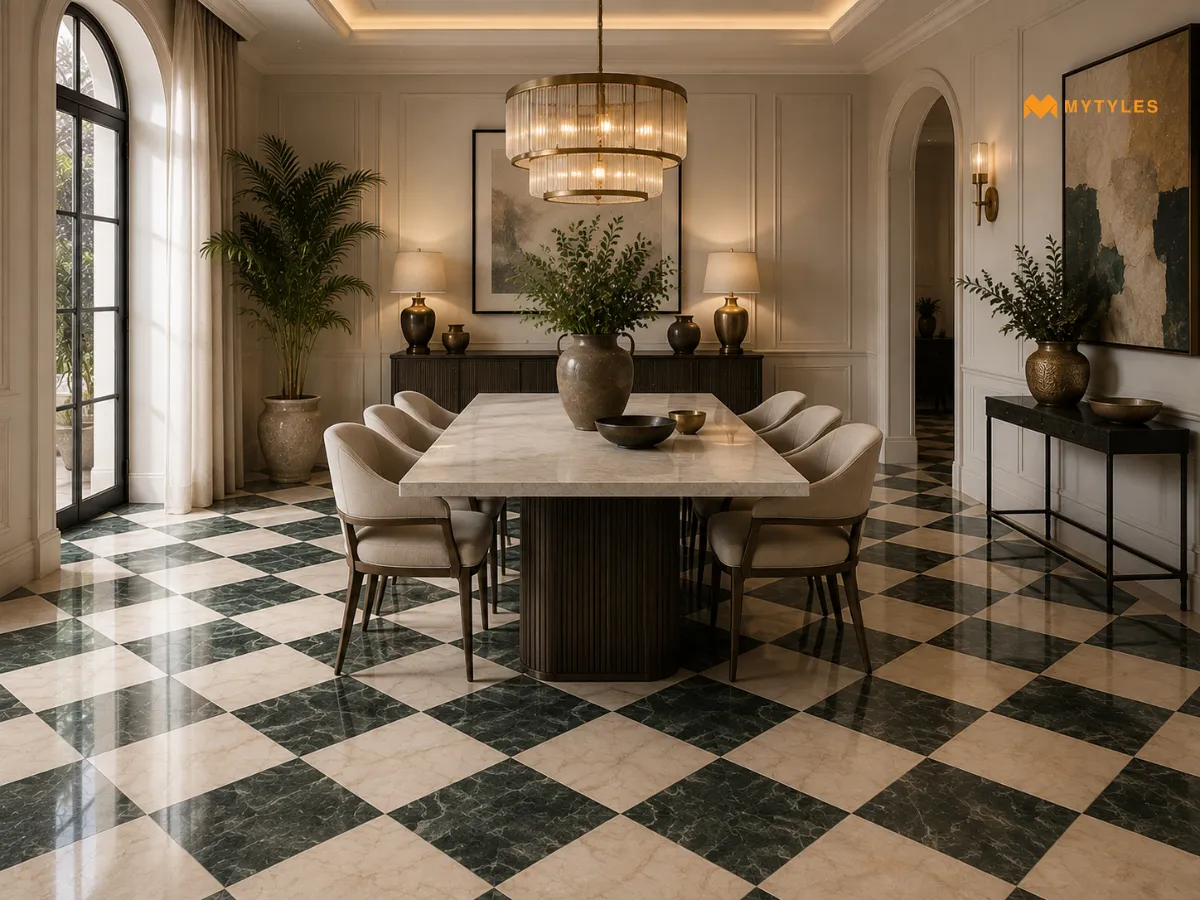
A checkerboard floor tile layout in marble-look tiles brings a formal, considered quality to a dining room floor. The veining across each tile gives the pattern a more layered, detailed appearance than a plain two-tone chequerboard.
Checkerboard tiles in a marble-look finish suit dining rooms where the floor needs to carry some visual weight alongside a statement dining table and chairs. Keep the surrounding walls and furniture neutral so the floor pattern reads clearly without the room feeling busy.
Vintage Bathroom Floors
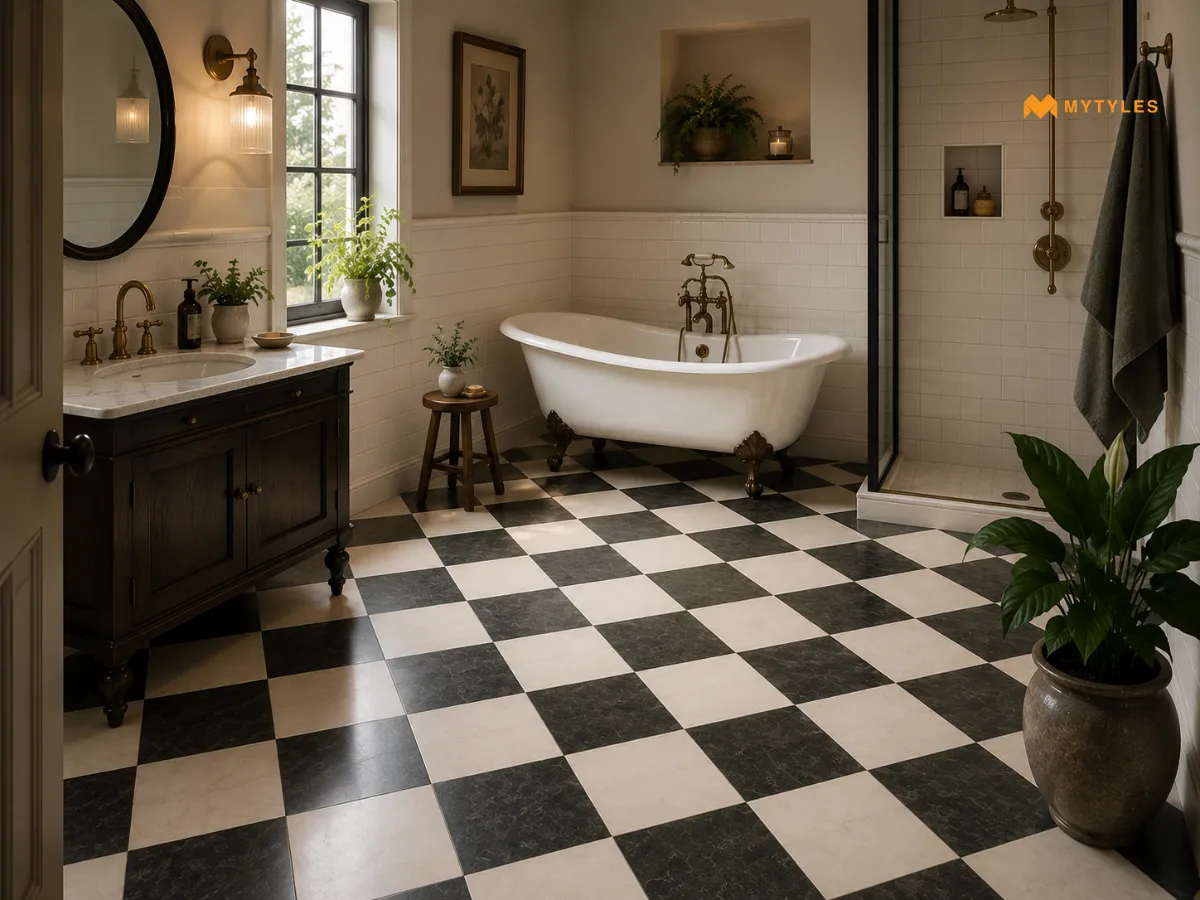
Small-format chequered bathroom floor tiles in black and white or soft two-tone combinations can be used for compact Indian bathrooms. Their pattern adds character to a surface that often gets a plain tile by default. The smaller the tile format, the more intricate the pattern reads across the floor.
Beige and white chequered tiles or soft grey and white combinations suit bathrooms where a bold black and white contrast feels too strong for the space. Check the slip resistance rating on the product page before specifying any chequered floor tile for a wet bathroom floor application.
Large Format Checkerboard Tiles
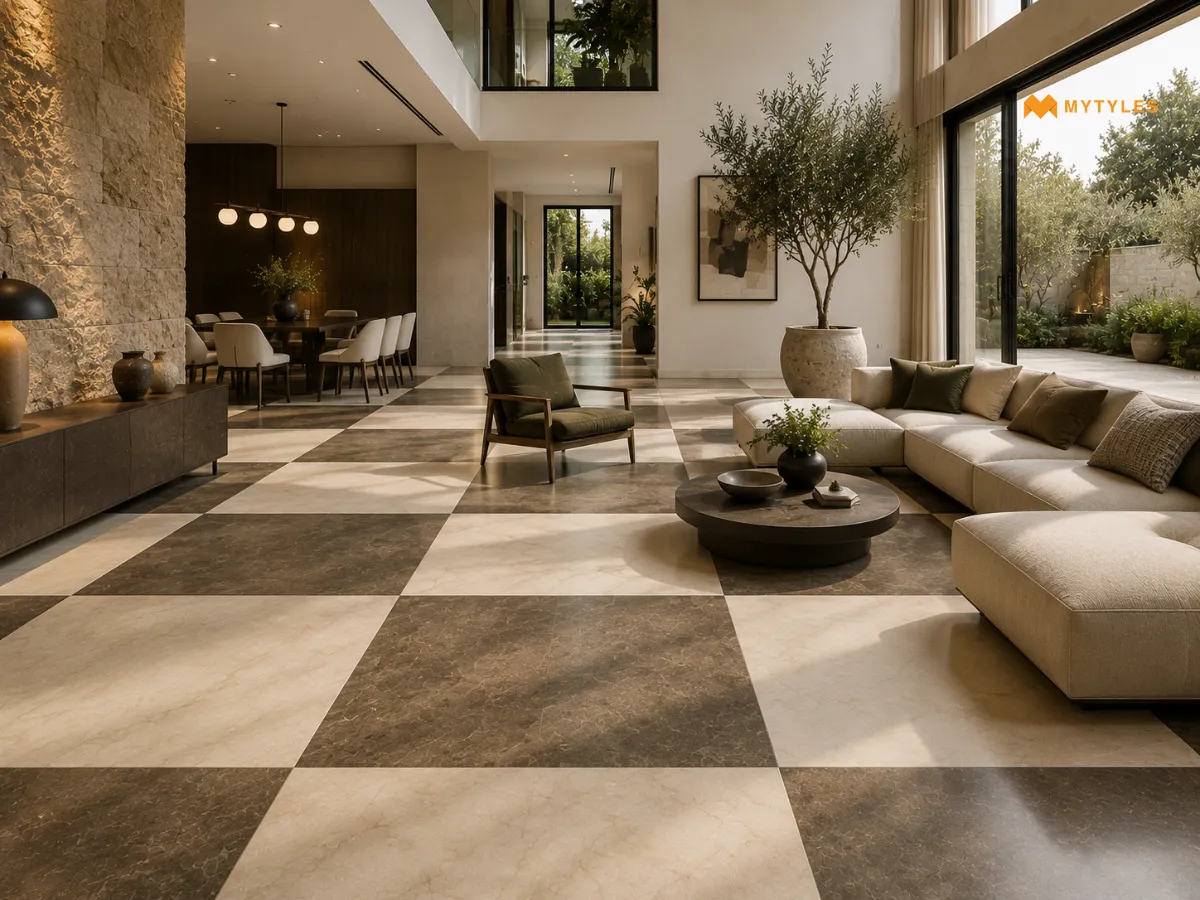
Most people associate chequered tile designs for home with small-format tiles. Large-format two-tone vitrified floor tiles in a chequerboard layout read completely differently. Fewer, bigger squares across a floor give the pattern a bolder, more architectural quality that suits open-plan living areas and large entrance lobbies.
Full-body vitrified checkerboard tiles in large format carry the color through the entire tile thickness rather than just on the surface, which makes chipped tile edges less prominent. Check the product page for size availability and application suitability before ordering.
Outdoor Patio Checkerboard
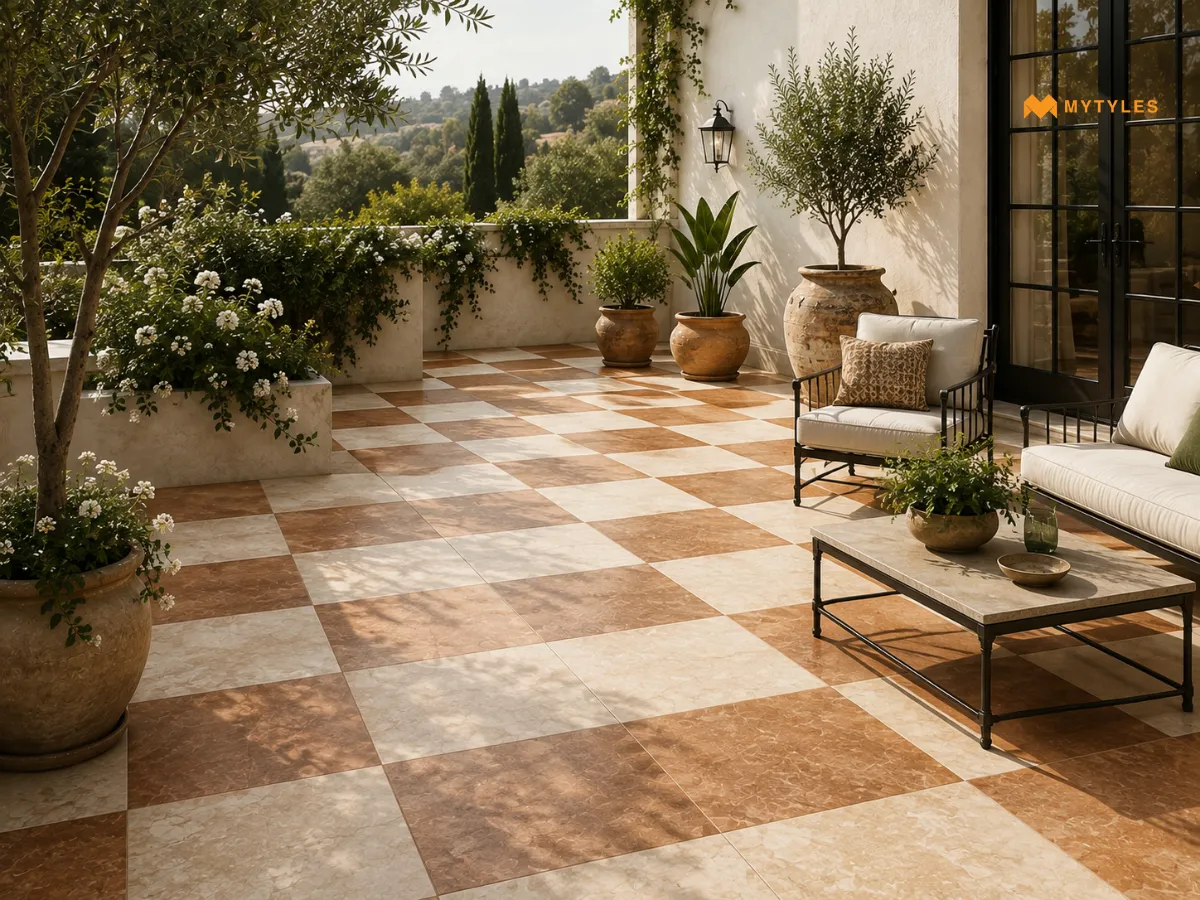
Chequered tiles for balcony floor and patio applications bring the same pattern energy outdoors. Green and white chequered tiles suit patios surrounded by garden planting and greenery where the color connects the built surface to the landscape. Brown and cream chequered flooring suits covered sit-outs and verandas where a warmer tone fits the outdoor setting better.
For open outdoor applications, the product page should be checked for weather resistance and outdoor suitability before ordering. Slip resistance is particularly important for outdoor floor tiles that get wet during rain.
Modern Monochrome Checkerboard
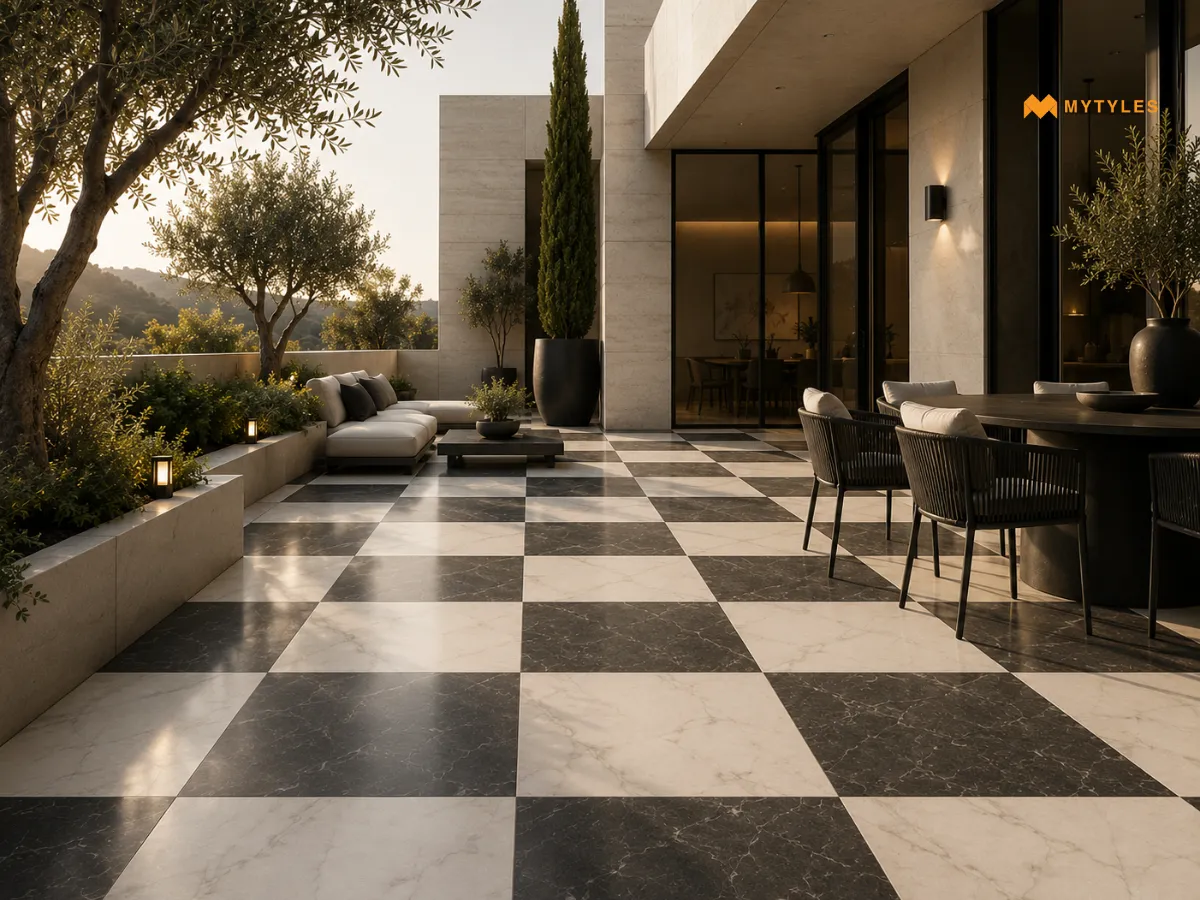
Contemporary Indian interiors are leaning towards modern chequered floor designs. In monochrome combinations beyond the classic black and white, there are options such as deep charcoal and light grey, off-white and warm ivory, dark navy and soft cream. These combinations carry the chequered structure while sitting more quietly within a modern color palette.
Two-color floor tile combinations in tonal rather than high-contrast shades suit apartments and urban homes where the interior direction is contemporary, and the floor needs to complement rather than dominate the overall scheme.
How to Choose the Right Chequered Floor Tiles
The chequered floor tiles' pattern draws attention. What keeps that attention from becoming the wrong kind comes down to five decisions: size against the room, color against the interior, finish against the daily use, material against the application, and grout color. Here is how to get all five right before ordering.
Choose The Right Tile Size
The tile size determines how many squares appear across the floor and how bold the pattern reads. Small-format tiles create a more intricate, detailed pattern. Large-format tiles give the checkerboard a bolder, more graphic quality.
Select Suitable colors
Black and white floor tiles have a striking contrast and suit interiors that are looking for the classic chequered contrast. Two-tone shades in beige and white, grey and white, or green and white are an appropriate choice for areas where a high-contrast pattern is too bold.
Choose Between Matt And Glossy Finishes
Matt-finish chequered tiles can be considered for kitchens, bathrooms, and high-traffic areas depending upon the R-rating. Formal living rooms and entrance lobbies can use polished chequered floor tiles for a premium look.
Pick The Right Material
Ceramic chequered floor tiles can be used for indoor applications with light daily use. Porcelain checkerboard tiles have a dense composition and can bear constant daily footfall in kitchens, passages, and entrance foyers. Vitrified chequered floor tiles have a low-porosity body suited for floor applications across most residential settings.
Match The Grout Color
Grout color ideas in a chequered floor tile layout change how the pattern reads significantly. A grout that matches the lighter tile color keeps the focus on the two-tone contrast. A dark grout across both colors adds a third tone to the pattern and changes the overall visual weight of the floor.
Chequered Floor Tile Ideas For Timeless Indian Homes
Chequered floor tiles are not a trend that needs to be chased. The pattern has been in homes for centuries, and it continues to show up in Indian interiors because contrast is something the eye never gets tired of. The color combination, the layout, the material, and the grout color are what make it feel current or dated, and all of those decisions are in the hands of whoever is choosing the tile.
MyTyles carries chequered tile designs for homes across ceramic, porcelain, and vitrified materials in several color options, including black-and-white chequered tiles, beige-and-white, and more. Browse the full chequered flooring for Indian homes range, compare color combinations and layouts, and find the tile that fits the space. Visit the MyTyles Experience Centre to see how the pattern reads in reality.

Are Chequered Floor Tiles Still In Style?

Yes. Chequered floor tiles continue to suit both traditional and contemporary interiors. The overall look depends on the tile size, color combination, finish, and surrounding materials. Black and white remains classic, while beige, green, and brown combinations create a softer appearance that suits many modern Indian homes.
Which Color Combination Works Best For Chequered Floor Tiles?
The best color combination depends on the room and the atmosphere you want to create. Black and white offer bold contrast, while beige and white, brown and cream, or green and white produce a warmer, more understated look. Consider the room size, lighting, and furniture before making a selection.
Which Rooms Are Best Suited For Chequered Floor Tiles?
Chequered floor tiles work well in entryways, living rooms, kitchens, dining areas, bathrooms, balconies, and verandas. The pattern can become a subtle backdrop or a focal point depending on tile size and color contrast. Choosing proportions that suit the room helps create a balanced overall appearance.
What Tile Finish Is Best For A Chequered Floor?
Matt finishes provide a softer, understated appearance, while polished finishes reflect more light and create a better visual effect. The right finish depends on the room, maintenance preferences, and the overall interior style. Both finishes can create attractive chequered flooring when paired with suitable colors and layouts.
Do Large-Format Tiles Work For A Chequered Floor Pattern?
Yes. Large-format tiles create a bold, architectural interpretation of the traditional chequered pattern. Because there are fewer grout joints, the layout appears cleaner and more continuous. Smaller tiles, meanwhile, create a more classic appearance that suits vintage-inspired interiors and compact spaces.
What Grout Color Should I Choose For Chequered Floor Tiles?
Most homeowners choose a grout color that closely matches one of the tile colors rather than using a contrasting grout. Matching grout keeps the focus on the chequered pattern while reducing the visual emphasis on joints. The choice also depends on the tile finish and overall design style.
How Do I Choose The Right Chequered Floor Tile Design For My Home?
Start by considering the room size, natural light, furniture style, and preferred color palette. Then select a suitable tile material, finish, and format that complements the space. Viewing tile samples together before installation makes it easier to understand how the completed chequered floor will look in the room.

ABOUT THE AUTHOR
Nabiya Naqvi
Nabiya Naqvi is a content writer with a postgraduate background in chemical sciences and a strong passion for creative expression. Her journey into writing began with a love for storytelling and gradually grew into a professional path focused on interiors, home decor, and design-led content. With a keen interest in beautiful living spaces, Nabiya enjoys simplifying design ideas and making them relatable for everyday readers. Through her writing, she blends creativity, research, and an eye for detail to help homeowners understand how tiles, textures, and thoughtful material choices can transform a space.