.svg)


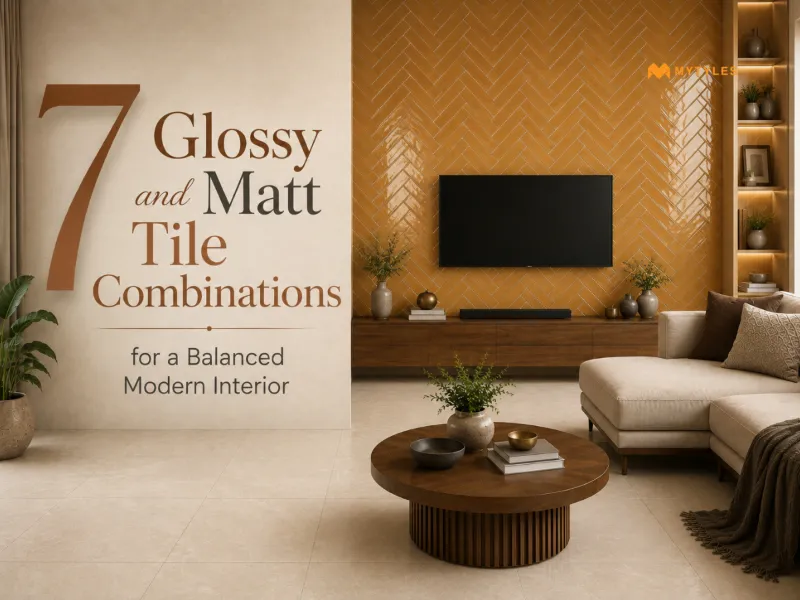
7 Glossy and Matt Tile Combinations for a Balanced Modern Interior
ByNandana Priya

Sun , Aug 16 , 2026

Read Time: 5 Min


 Copied!
Most tile buyers would relate to the scenario where they have to choose between matt and glossy finishes. Each finish carries a different visual character, and picking one over the other can feel like a trade-off. Why not use both and still create a balanced look?
Glossy and matt tiles can share the same wall or the same room in ways that end up feeling more interesting than either one alone. This blog looks at glossy and matt tile combinations that work well together, along with where each finish tends to work the best, so the choice feels less like picking a side and more like a design decision.
Why Glossy and Matt Combinations Work for a Modern Interior
The best part of pairing these two finishes is honestly how little effort it takes to notice the difference. Light behaves differently depending on the finish it lands on. A glossy tile reflects it back, while a matt one makes it look softer. Put both in the same space, and you get a more layered look.
There's a practical side to it too, and it's one most people don't think about. Not every surface wants the same finish. Matt finish tiles tend to show fewer light reflections, which can make everyday marks and smudges less noticeable. Glossy tiles reflect more light and can make a space feel brighter and more open.
Split the finish across surfaces instead of locking the whole room into one, and that's basically the idea behind every modern tile combination coming up next.
Matt Floors Paired with a Glossy Feature Wall
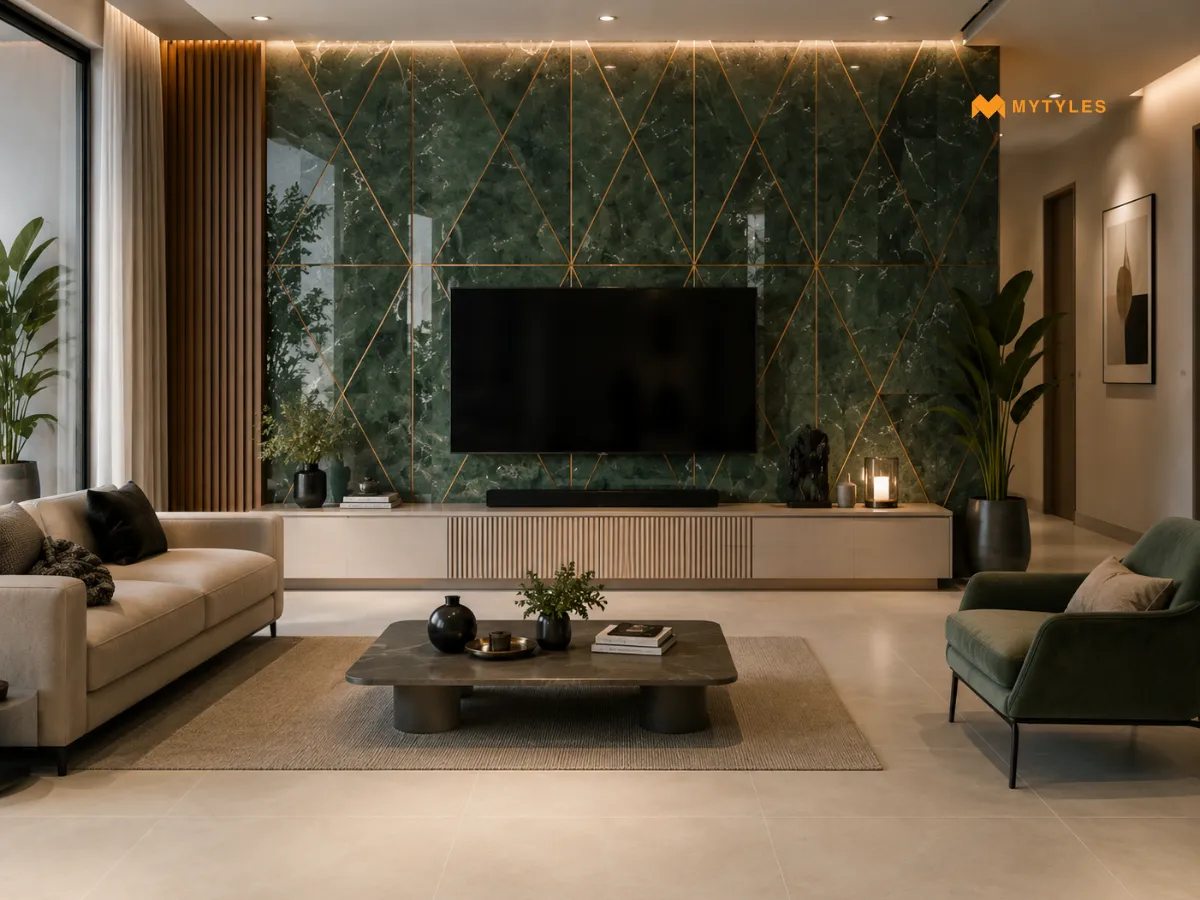
Living rooms usually have that one wall where everyone's eyes go first, behind the TV, behind the sofa, or right as you walk in. That's the wall worth giving a glossy finish to, since it catches the light and does most of the visual work in the room. A two-tone or marble-look glossy tile tends to suit this spot particularly well.
Keep the rest of the living room floor tiles matt, and you get a calmer base underneath. This gives the room a balance, letting the feature wall tile stay noticeable.
Glossy Backsplash with a Matt Kitchen Wall
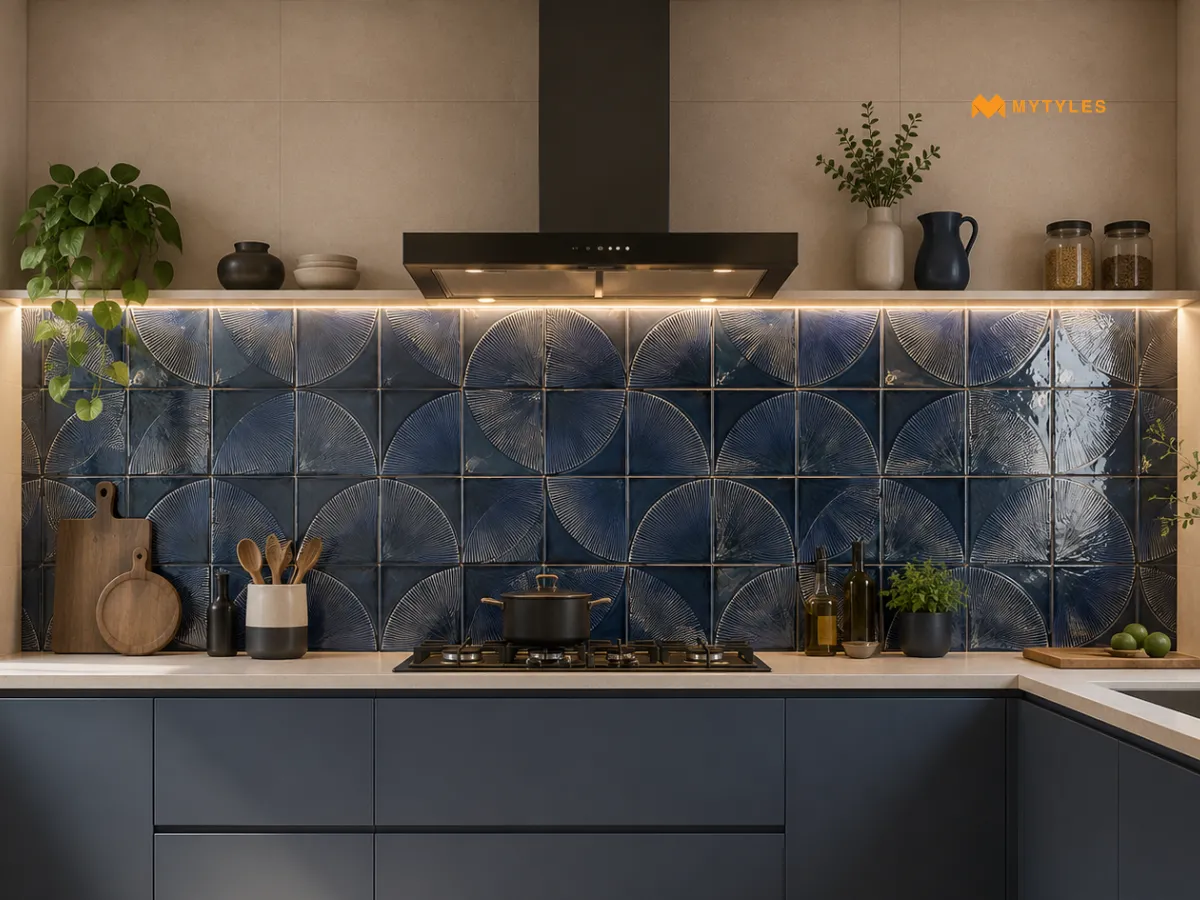
The backsplash is probably the part of a kitchen wall that sees everyday use, daily splashes, and heat from the stove; it's worth checking the tile's cleaning, heat resistance, and installation guidance before settling on one for this spot.
Glossy-finish tiles with product suitability can work here. They reflect a bit of light back near the stove, giving a small lift to the space. Step back from the stove, and the rest of the kitchen wall can carry a matt finish instead. It brings in a different texture and creates a balanced look.
Here you can also try using different color combinations, like a deep blue or forest green glossy backsplash against a lighter matt wall.
Pairing Matt Bathroom Floors with Glossy Wall Tiles
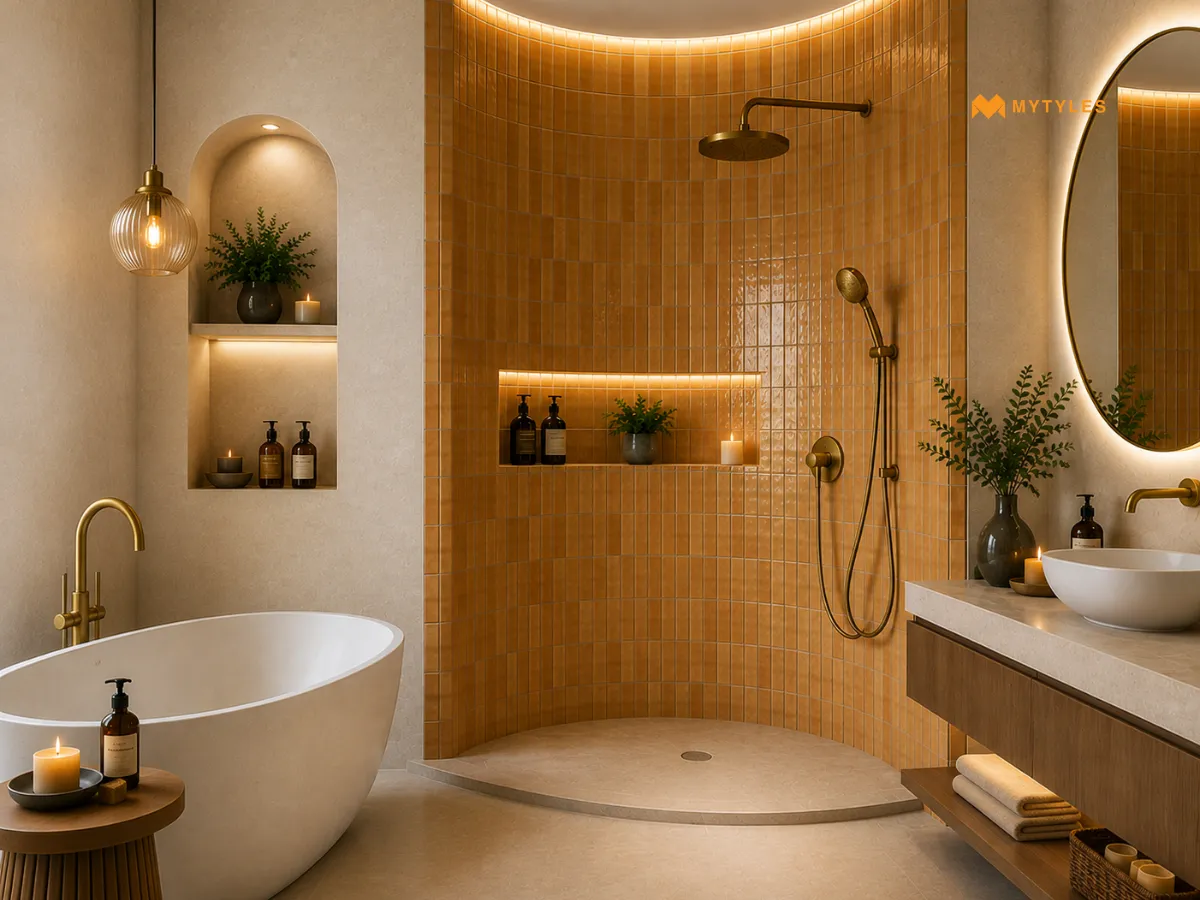
Nobody wants to think too hard about grip when they're stepping out of the shower, but it's genuinely one of the first things worth sorting out in a bathroom.
Matt bathroom floor tiles are commonly selected for their surface finish, but it's always worth confirming that the chosen tile is suitable for the intended application before installation. Bathrooms deal with water on a daily basis, which makes grip and water resistance two of the more important things to check.
A matt finish doesn't automatically mean a tile is anti-skid, so this is worth verifying against the product specification. When it comes to water resistance, tiles and grout are not a substitute for it, so proper waterproofing needs to be handled separately during installation, regardless of which tile finish sits on top.
Once you've settled on the floor, the walls become the space to bring in some brightness. Glossy bathroom wall tiles reflect light nicely and can keep the wall area from feeling too flat. You can also try experimenting with different tile color combinations on the floor and wall to upscale the look of your bathroom.
Matching Plain Matt Floors with Glossy Patterned Wall Tiles
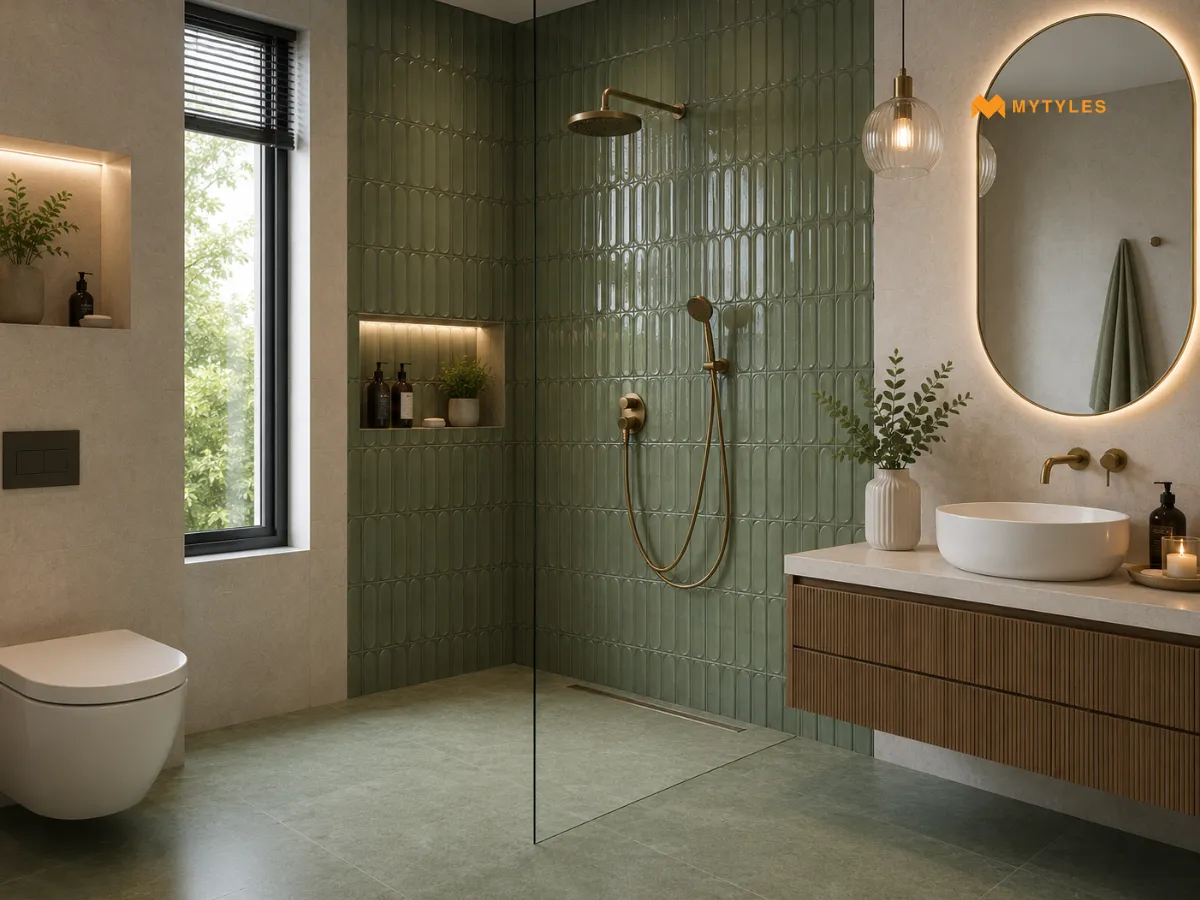
There's a nice little trick in keeping the wall and floor the same color; it takes one decision off the table so the finish and pattern can actually do the talking. For floors, a plain matt tile can be used. Up on the wall, a glossy patterned tile with a similar color base gets to show off a bit, catching light differently, without needing a totally different shade to pull it off.
This wall and floor tile combination works especially well in a shower corner or bathroom nook, though for wet areas it is worth confirming the products' suitability. Using plain tiles for both floor and wall is a nice reminder that you don't always need contrast to make a space feel layered; sometimes matching the tone and switching up the finish is enough.
Matt Vitrified Countertops with a Glossy Tile Backsplash
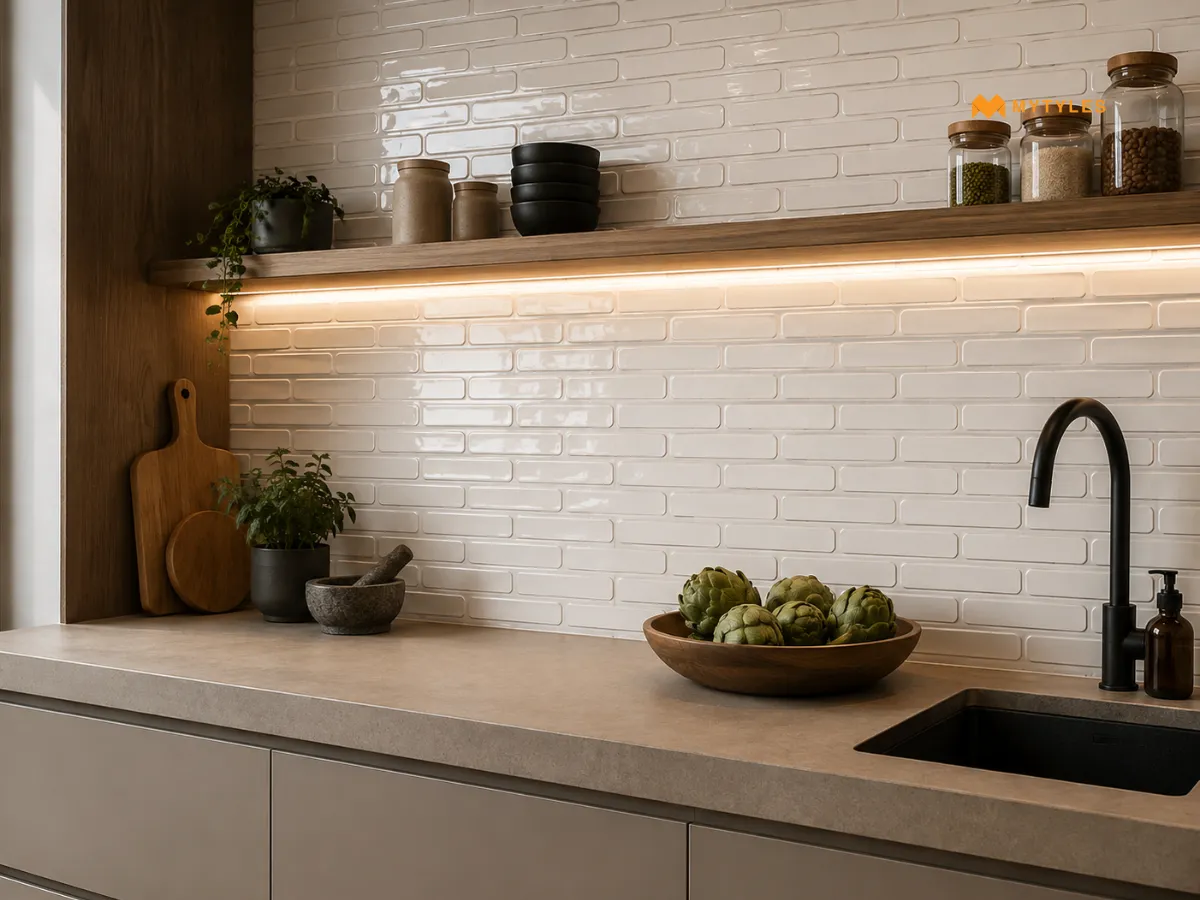
A matt vitrified countertop in the kitchen keeps the look understated, while the backsplash above can bring in glossy tiles for walls without pushing the kitchen into looking too polished. It's more of a gentle shift than a big contrast.
You can keep the colors close within the same family for a quieter look or step into something a shade deeper if you want the backsplash to stand out a little more. Subway tiles, octagon tiles, or geometric wall tiles can be used here.
Large-Format Matt Tiles Finished with a Glossy Border
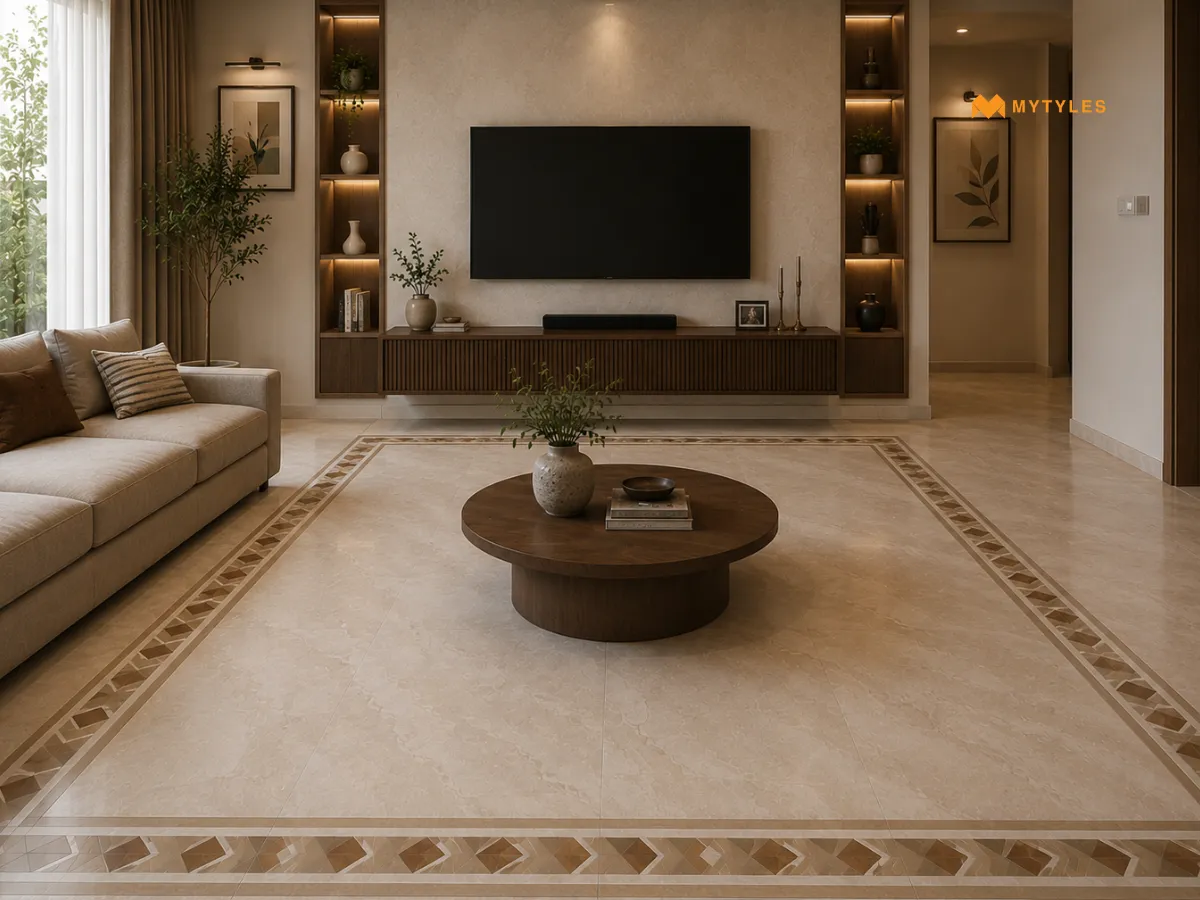
Open-plan spaces often benefit from fewer grout lines, since a continuous surface tends to feel seamless to walk through. Large-format tiles in matt suit that kind of layout, though checking suitability and slip resistance for the specific space is still worth doing before installation. Large-format tiles also call for a flat, well-prepared surface and correct spacing during laying.
A glossy border running along the floor's edge, or framing a rug area, adds a defined boundary and a bit of reflection without needing a second highlighter tile. Since this border sits on the floor, it's worth confirming the glossy tile's floor suitability and its slip performance. A border tile is a subtle detail, but one that changes how the designed room ends up feeling.
Neutral Tile Combination with Matt Grey Floors and Glossy White Walls
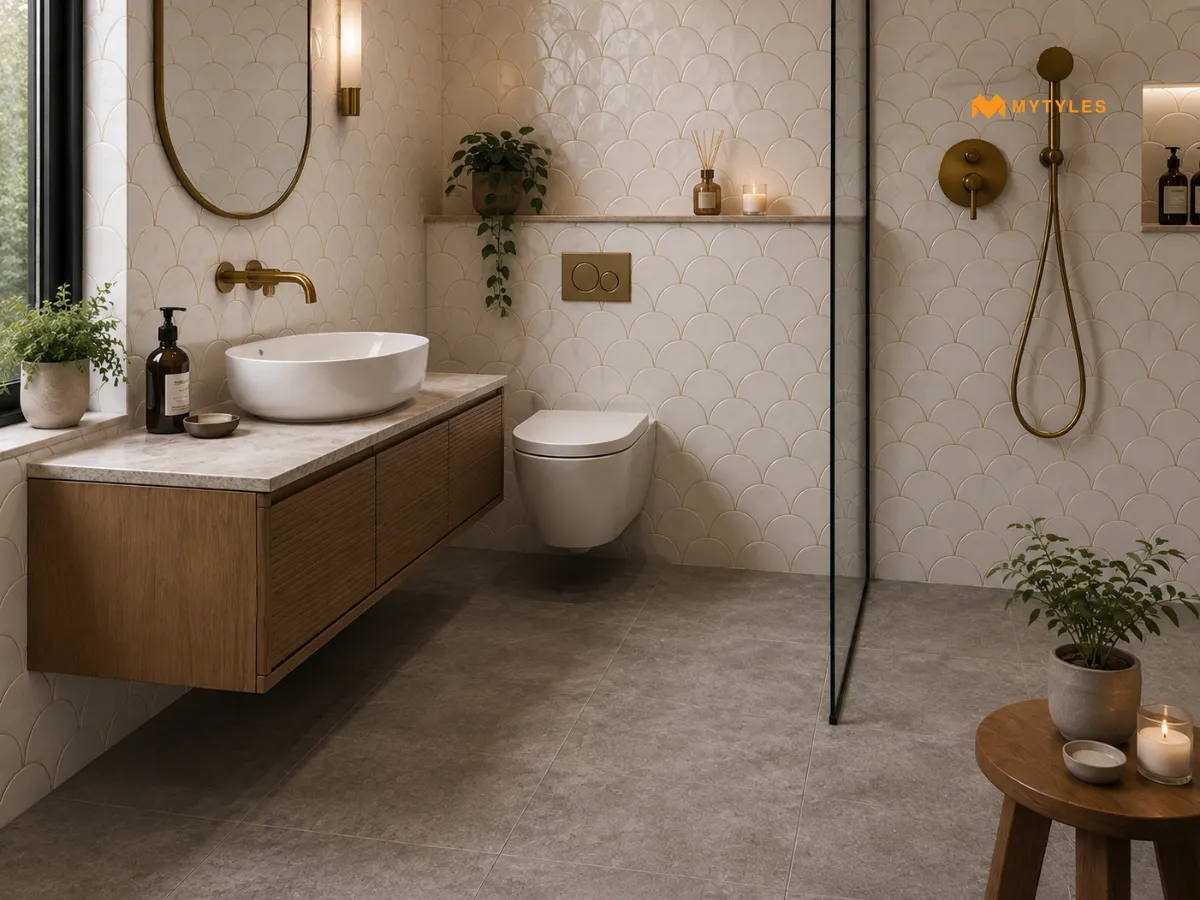
Grey and white is one of those pairings that rarely goes wrong, and splitting the finish between them makes it feel a bit more intentional. Grey matt floor tiles create a quieter base beneath the brighter wall finish.
White walls in glossy-finish tile pick up whatever light is in the room and bounce it back, making the space feel brighter without needing a second color anywhere. This matt floor and glossy wall tile combination keeps the overall look classic.
Ways to Balance Glossy and Matt Tile Finishes
Getting a glossy-matt tile combination to look well-planned comes down to a few decisions made early on. A few things are worth keeping in mind while planning out any of these tile finish combinations:
- Give one finish the lead role: Trying to split a room exactly evenly between glossy and matt tiles tends to make the overall design feel less defined. Let matt tiles take the larger share as the steady base and bring glossy in for a wall, niche, or border where it can stand out on its own. You can also try it vice versa depending on your space layout, lighting and other factors.
- Read the room's light: A dim or compact space generally benefits more from glossy walls, since they bounce available light back into the room, while a nearby matt surface stops that brightness from turning into glare.
- Check suitability of tile: Every space has its own requirements, and choosing the right tile finish becomes important. For floors, especially in bathrooms or high-traffic areas, check the slip-resistant tile ratings and product suitability before finalising your choice.
Bringing Glossy and Matt Together in Your Space
The point of combining glossy and matt tiles isn't to follow a trend. It's to let each surface do what it's actually good at, whether that's a kitchen backsplash, a bathroom floor and wall, or a living room feature wall. Take a look at the glossy and matt tiles on MyTyles online, or visit an experience centre to see the finishes and combinations in person before you decide.

What Are Glossy Tiles?

Glossy tiles have a smooth, reflective surface that catches natural and artificial light. This can make colors, patterns, and veining appear brighter and more noticeable. They are commonly used as glossy tiles for walls, kitchen backsplashes, bathroom walls, feature panels, and selected floors where the product is recommended for that application.
What Are Matt Tiles?
Matt tiles have a low-sheen surface that reflects less light than glossy finishes. Their softer appearance often suits floors, larger wall areas, and interiors where strong reflection is not preferred. Matt tiles for floors may also offer more surface texture, but the slip rating and intended application should still be checked before installation.
What Is The Difference Between Glossy And Matt Tiles?
The main difference lies in how the two tile finish combinations respond to light. Glossy surfaces reflect light and make details appear brighter, while matt finishes absorb more light and create a quieter look. Glossy tiles are often used on walls, whereas matt finishes are commonly considered for floors, although product suitability matters more than finish alone.
Can Glossy And Matt Tiles Be Used On The Same Wall?
Yes, glossy and matt wall tiles can be combined on the same wall through borders, panels, niches, or alternating sections. Keeping the colors within a similar family creates a subtle contrast, while using different shades makes the division more noticeable. The layout should be planned before installation so the combination looks deliberate rather than uneven.
Which Colors Work Well With Glossy And Matt Tile Combinations?
Neutral shades such as white, beige, cream, and grey are easy to combine across both finishes. A tile color combination such as matt grey with glossy white creates a clean contrast, while beige matt tiles with warmer glossy accents feel softer. Blue, green, or black glossy sections can also be paired with lighter matt surfaces for a stronger focal point.
Can Glossy And Matt Tiles Be Combined In A Bathroom?
Yes, glossy and matt bathroom tiles are often divided between surfaces. Matt bathroom floor tiles are commonly considered where a suitable grip rating is required, while glossy bathroom wall tiles can reflect light around vanities and shower areas. Always confirm the floor rating, slip resistance, moisture suitability, and recommended application of each selected product.
How Can Glossy And Matt Tiles Be Used In A Kitchen?
A common approach is to use glossy and matt kitchen tiles across separate surfaces. Glossy tiles can highlight the backsplash or counter wall, while matt tiles can be used on surrounding walls or suitable floor areas. The colors may match for a quieter finish or contrast slightly to define the backsplash without making the kitchen feel overly busy.

ABOUT THE AUTHOR
Nandana Priya
With a strong interest in design, creativity, and emerging tile trends, I enjoy turning ideas from the world of tiles and interiors into engaging, meaningful reads. My writing focuses on creating well-researched content that helps readers understand design choices with more clarity and confidence. I bring together research, design awareness, and digital marketing insights to craft content that is relevant, easy to follow, and thoughtfully written for todays homeowners and design-conscious readers.