.svg)


Heavy-Duty Parking Tiles: What You Need to Know
ByAditi Bardhan

Wed , May 20 , 2026

Read Time: 5 Min


 Copied!
Parking areas require tiles that can withstand the daily movement of vehicles without becoming slippery, stained or worn. Tyres leave pressure, turning marks, dust, rainwater, wash water, oil spots, and mud on the surface. Heavy-duty outdoor parking tiles handle this use better than regular indoor tiles because they give stronger grip, better water resistance, and higher surface durability. A good tile keeps a driveway, garage, apartment parking bay, or outdoor parking area cleaner and stronger for longer. Before purchasing, check the tile material, finish, thickness, anti-skid texture, water absorption and suitability to your parking space.
What Are Heavy-Duty Parking Tiles?
Heavy-duty parking tiles are thicker, denser tiles used in driveways, garages, apartment parking bays, ramps, and outdoor parking areas. Many options come in higher thicknesses, often around 15 mm or above, depending on the tile type and where they will be installed. This added strength aids the floor in supporting the weight of parked cars and dynamic loads of tyre turning, braking, and daily movement. The best parking tile must also have low water absorption, have good edges, have an anti-skid surface that is matt or textured, and be abrasion, mud, stain and oil mark resistant.
Why Regular Floor Tiles May Not Work For Parking Areas
Regular floor tiles are not always engineered for the stress pattern of a parking floor. The issue is not just weight, but how that weight moves across the surface. Parking areas need floor parking tiles that can stay stable under pressure, friction, moisture, and outdoor dirt without becoming unsafe or difficult to maintain.
- Point Load Stress: The vehicle's tyres load small areas. Normal tiles may not have sufficient structural integrity to cope with this point load.
- Turning And Braking Force: Lateral forces are exerted on the tile surface when turning and braking the vehicle. In case of inappropriate tile and base, the load may crack joints and raise tiles.
- Weak Edge Performance: There are additional stresses on joints, corners and ramps in parking floors. The regular tiles may crack faster in these places.
- Surface Safety: Smooth indoor finishes may lose grip when exposed to water, mud, or tyre residue.
Best Materials For Heavy-Duty Parking Tiles
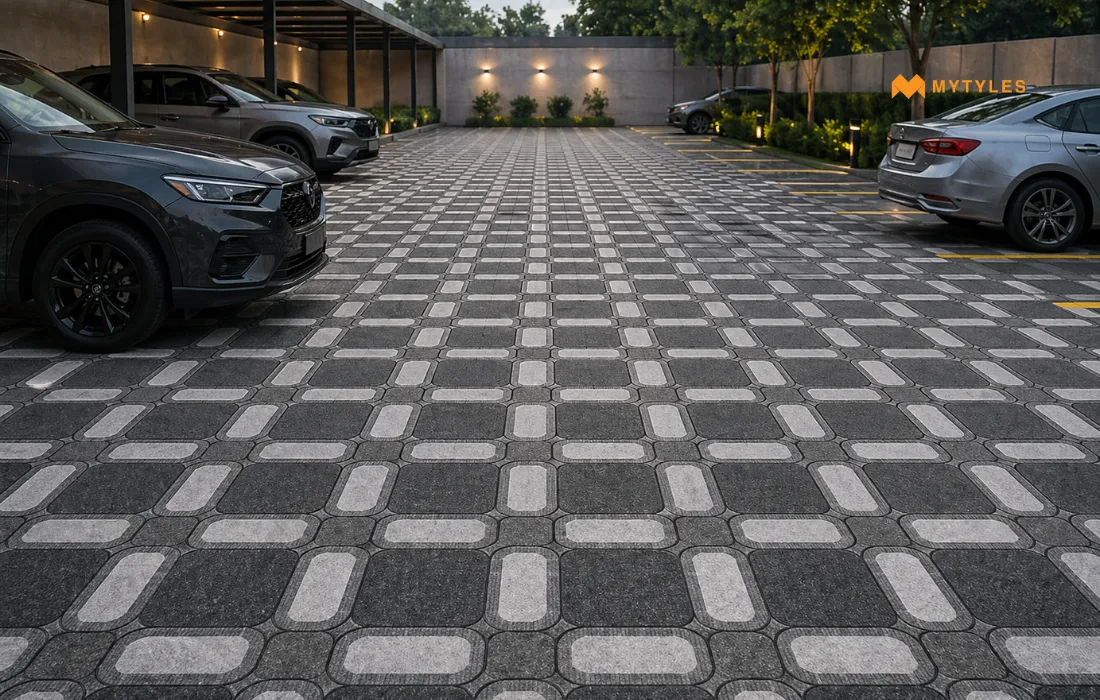
Parking area tiles should be durable, dense, and easy to maintain. It should withstand the weight and friction of vehicles, rain and water, mud, dust and stains without becoming worn. Vitrified, full-body vitrified and porcelain tiles are preferred, as they are stronger and less porous than ceramic tiles.
Vitrified Parking Tiles
Vitrified parking tiles are a safe choice for covered and open parking spaces, garages, and driveways. They are made of a combination of clay, silica and minerals which are fired at high temperatures to create a dense and hard body. They have low moisture absorption, so these tiles are suitable for areas exposed to rain, washing, mud, and dust. These parking tiles also have good cleaning properties when they are stained or have tyre marks. When used as a parking floor, vitrified parking tiles for the home should be matt, rustic, cement-look or textured rather than polished for increased friction.
Full-Body Vitrified Tiles
Full-body vitrified parking tiles are made for tougher use. In these tiles, the color and material run through the full thickness of the tile, not just the surface. So, small chips or wear marks are less noticeable. They are suitable for driveways, ramps, apartment car parks, and corners. They also offer better edge strength and abrasion resistance, which helps the floor stay in good condition for longer.
Best Finishes For Parking Tiles
.webp)
Parking tile finish should be chosen by grip, cleaning effort, and how the floor will age, not just by design. A parking floor sees tyre turns, wet patches, dust, mud, and oil drops, so the surface should not be too smooth or too porous.
Matt Finish Parking Tiles
Matt tiles work well for covered parking, garages, and daily home parking. The surface is flat rather than shiny, so dust, water marks, and tyre stains are less noticeable than on polished tiles. Matt-finish indoor parking tiles also provide more grip under tyres and footwear, particularly after washing. Choose this option if you want a clean, simple parking floor that is easy to maintain.
Rustic Finish Parking Tiles
Rustic tiles are better for open parking areas, ramps, and driveways where grip matters more. These tiles are slightly abrasive, which means that you will not slip if the floor is slippery. They also hide outdoor dirt better because the surface already has a natural, uneven look. Avoid very deep textures, though, as they can trap mud and become harder to clean.
Key Features To Check Before Buying Parking Tiles
Parking tiles should be checked for performance, not just design. Floor parking tiles may look strong, but appearance isn’t enough. For parking areas, key factors include thickness, surface grip, water absorption, breaking strength, abrasion resistance, and edge stability. Always check the product specification before buying, especially for outdoor or high-use parking floors.
Load-Bearing Strength
Car parking tiles need to be able to handle the dynamic load and the static load. Static loads are created by vehicles that remain stationary in one position and dynamic loads are created by turning, reversing and braking. When looking for tiles for parking use, check for the best parking tiles rated for heavy-duty flooring, outdoor flooring or parking.
Anti-Skid Surface
Grip is one of the most important factors. Rough, textured, non-glossy, or non-polished surfaces are better for parking floors. If the product indicates slip rating, then R10 or R11 would be preferred for slip resistance in wet or semi-external conditions. In the case of ramps or sloping parking, a stiffer anti-skid surface would be preferred.
Low Water Absorption
Modern parking tile designs for outdoor areas must be low in water absorption to ensure that they do not easily absorb water. Vitrified and porcelain tiles have a water absorption of less than 0.5% and can be used in rain-exposed or regularly washed areas. The reduced water absorption also contributes to less staining and damage due to moisture.
Stain and Scratch Resistance
Parking floors are concerned with tyre marks, mud, dust, oil drops, grease and cleaning wear. Select the best parking tiles that have good abrasion resistance. PEI 4 or PEI 5 tiles tend to be more appropriate than the light-duty ones in high-use parking floors. Scratch resistance is also a good indicator of a surface hardness of about Mohs 6 or more.
Thickness & Edge Strength
Many heavy-duty parking tiles come in 12 mm, 15 mm, or 20 mm thickness, depending on the product and use case. For home parking, 15 mm or above is commonly preferred where extra strength is needed. Edge strength matters too, because corners can chip near joints, ramps, and turning areas if the tile is weak or the base is uneven.
Easy Cleaning
A parking tile must be sufficiently textured to be gripped but not have deep grooves where mud can collect. Select surfaces that are sweepable, washable and can be cleaned using light cleaners. Stone-look, cement-look, charcoal, grey, brown, and patterned tiles are more beneficial in covering the daily marks than plain light shades because of ease of maintenance.
The Right Parking Tile Makes All the Difference
Choosing parking tiles involves more than just selecting a design that complements the exterior. The floor has to handle daily pressure, tyre movements, water, dust, stains, and cleaning without losing grip or strength. That is why material, finish, thickness, size, brand, outdoor suitability, and installation area all matter. So, before you choose, check grip, edge strength, water absorption, stain resistance, and cleaning effort. A good parking tile should make the space easy to use and maintain. Choose well once, and the space stays safer, stronger, and easier to maintain for years. Build a parking area that looks good and works hard with MyTyles. Find the best heavy-duty parking tiles with strong materials, practical surfaces, and designs that handle everyday parking with ease.
Expert Reviewed by Biren Agrawalla
Biren Agrawalla, the Founder of MyTyles with over 10 years of experience across tile, retail, and home decor. Driven by a passion for tiles and a deep understanding of customer behaviour, he has spent his career transforming how people discover and buy tiles online. Biren combines practical retail insight with modern digital solutions to make tile shopping smarter, more intuitive, and design focused. At MyTyles, he champions a customer first approach, ensuring every experience from browsing to buying is reliable, seamless, and inspiring.

Which Tiles Are Best For A Parking Area?

Vitrified, full-body vitrified, and porcelain tiles are ideal for parking areas due to their high density, strength, and durability. These tiles can handle vehicle load and resist wear over time. For safety, choose matt, textured, rustic, stone-look, or concrete-look finishes. Avoid glossy tiles, as they can become slippery when wet and show tyre marks, dust, and scratches more easily.
What Thickness Is Best For Parking Tiles?
Parking tiles are usually available in 12 mm, 15 mm, and 20 mm thicknesses. For most parking applications, 15 mm or thicker tiles are preferred for better load-bearing capacity. However, thickness alone isn’t enough; also check strength, edge quality, grip, and water absorption. Always ensure the tile is rated for parking or heavy-duty outdoor use.
Are Vitrified Tiles Good For Parking?
Yes, vitrified tiles can work well for parking areas if they are designed for heavy-duty or outdoor use. They have low water absorption, good strength, and resistance to stains and wear. For better safety, choose matt, rustic, or textured finishes instead of polished tiles, which can become slippery and show marks more easily in parking spaces.
Can Normal Floor Tiles Be Used For Parking?
Normal floor tiles are not suitable for parking unless they are specifically made for heavy-duty use. Parking areas require tiles that can handle vehicle weight, turning movement, and exposure to water and dirt. Standard indoor tiles may crack, chip, loosen, or become slippery over time, making them unsuitable for long-term parking applications.
Are Full-Body Vitrified Tiles Good For Parking?
Yes, full-body vitrified tiles are a strong and reliable choice for parking areas. Since the color and material run through the entire tile, chips and wear are less visible. They also offer better abrasion resistance and edge strength, making them suitable for high-traffic areas like driveways, ramps, and apartment parking spaces.
What Color Is Best For Parking Tiles?
Colors like grey, charcoal, brown, beige, and cement or stone-look shades are best for parking tiles. These tones help hide dust, mud, tyre marks, and stains, making maintenance easier. Avoid very light or glossy tiles, as they tend to show dirt and scratches quickly. Neutral, textured finishes also blend well with outdoor surroundings.
What Should I Check Before Buying Parking Tiles?
Before buying parking tiles, check material, thickness, surface grip, water absorption, edge strength, and stain resistance. Also consider where the tiles will be used, such as a driveway, ramp, or open parking area. Choose tiles designed for heavy-duty use that offer durability, safety, and easy maintenance for long-term performance in outdoor conditions.

ABOUT THE AUTHOR
Aditi Bardhan
I'm Aditi Bardhan, a professional content writer with over five years of experience creating SEO-driven, research-backed content across multiple industries. I specialise deeply in the tile and surface materials industry, crafting high-converting content for homeowners, architects, interior designers, and trade professionals. My work is grounded in technical research, design understanding, and consumer behaviour insights, enabling me to simplify complex concepts, highlight material benefits, and help brands build authority in the tile and construction space.