.svg)


Moroccan Tile Color Combinations That Work Well in Indian Homes
ByNandana Priya

Wed , Jul 15 , 2026

Read Time: 5 Min


 Copied!
You walk into a tile store looking for something ordinary, maybe plain white or a simple beige, and then a Moroccan-patterned tile catches your eye from across the display. The patterns look striking, almost too attention-grabbing for a home that already has its colors, its furniture, and its own quiet rhythm. Somewhere between admiring the tile and imagining it on your wall, the question shows up. Will the design suit an Indian home, or will it feel too loud once it is actually installed?
That hesitation makes sense. The truth is Moroccan tiles can work well in Indian homes, provided the color combination, grout shade, and placement are thought through.
This blog walks through tile color combinations that tend to work well in Indian homes. Along the way, you will also find guidance on where each combination fits best, so you can figure out what suits your space before making a decision.
Why Color Combination Matters in Moroccan Tiles
A Moroccan-patterned tile rarely looks the same from one home to another, and color is usually the reason. The same geometric design can feel open and airy in one setting, then feel heavy and overwhelming in another. Let's find the reason behind such differences.
- The color combination changes how a space feels. Some pairings make a room feel more open, while others make the same room feel more defined or enclosed.
- The tile color combination affects how well the tile blends with what is already in the room. Wall paint, furniture, and flooring all respond differently depending on the shades chosen.
- Colors decide how visible the pattern becomes. Some balance the pattern, while bold Moroccan tile combinations may bring deeper contrast to the same pattern.
Popular Moroccan Tile Color Combinations for Indian Homes
You can find Moroccan-patterned tiles in plenty of color options. When chosen right, they give your space the look you wanted to achieve. Here are some of the Moroccan tile design ideas that tend to work well in Indian homes, along with where each one fits best.
Blue and White Moroccan Tiles
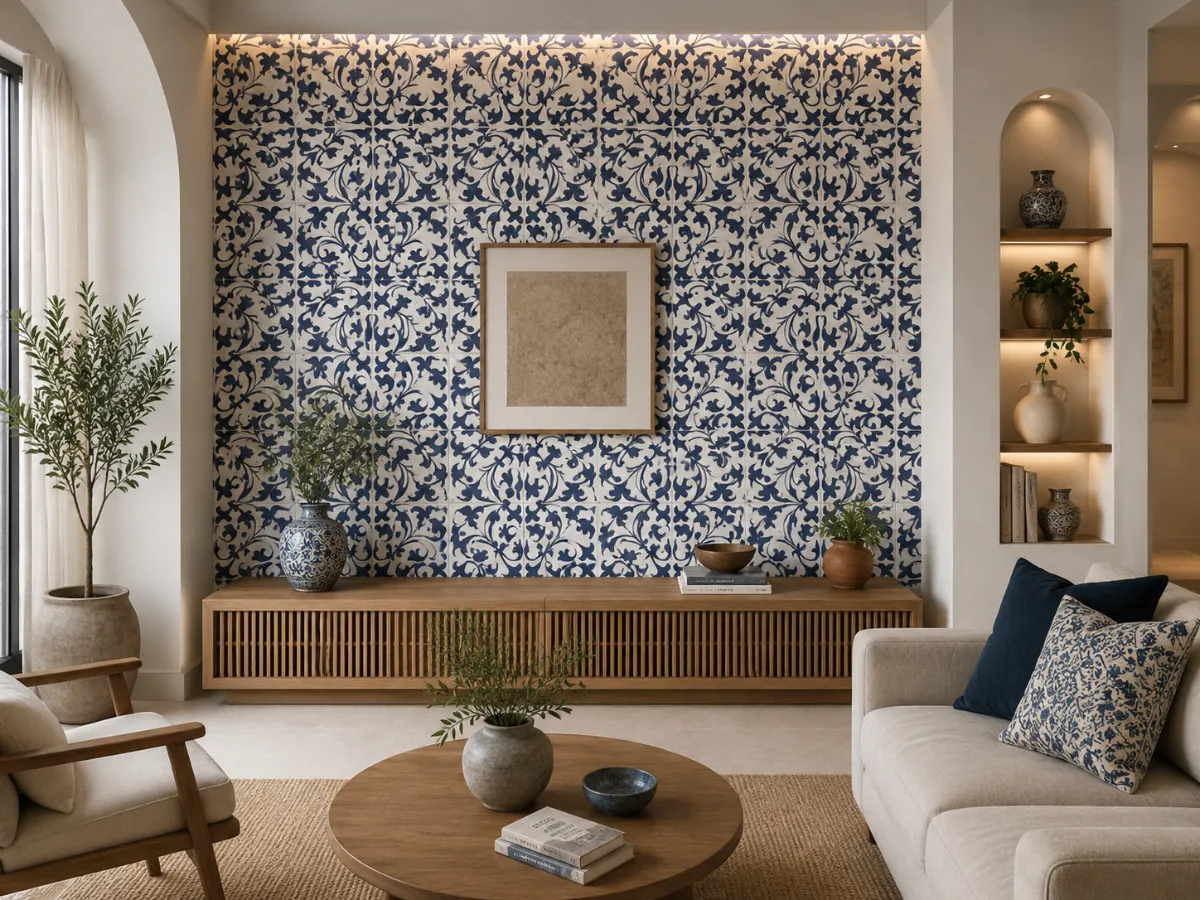
Blue and white Moroccan tiles show up often in kitchen backsplashes, balcony walls, and pooja room backdrops, largely because white tends to soften the pattern. Blue adds color without pulling too much attention.
If you're worried the color might look too bright, go with a muted blue. It tends to suit most room sizes. Want something richer? Use the deeper blue Moroccan wall tiles on one wall instead of the whole room. Pairing it with simple furniture nearby usually helps the tile stand out a bit more clearly.
Black and White Moroccan Tiles
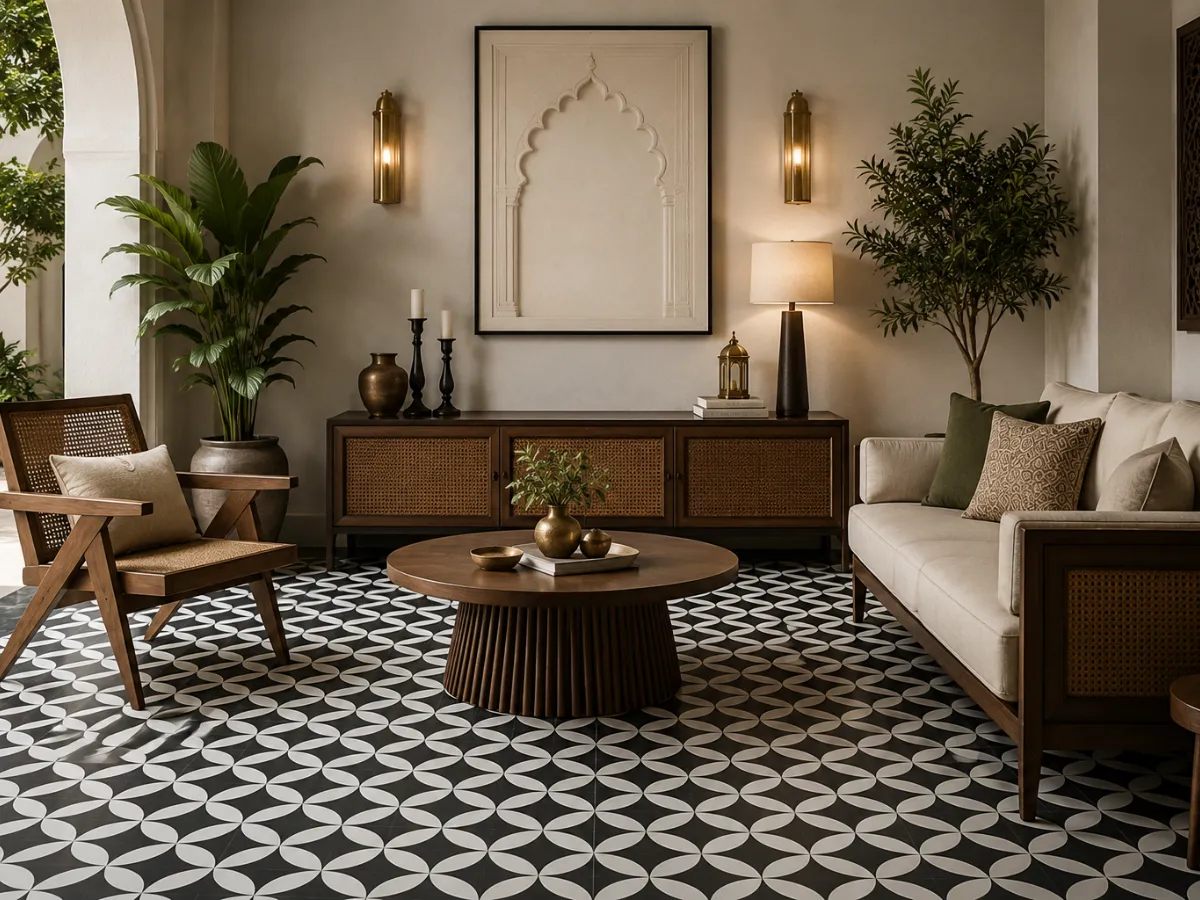
If you want the pattern to be the first thing people notice, black and white Moroccan tiles are worth considering. The contrast is what carries the look: sharp, structured, and hard to miss.
This tile color palette tends to work well for floors, bathrooms, entryways, passage areas, and anywhere a defined look is needed.
It is better to keep one thing in mind; using this pattern across every surface can start to feel busy. A better approach is usually to pick one wall or one floor and let the rest of the room stay fairly neutral.
Grey and White Moroccan Tiles
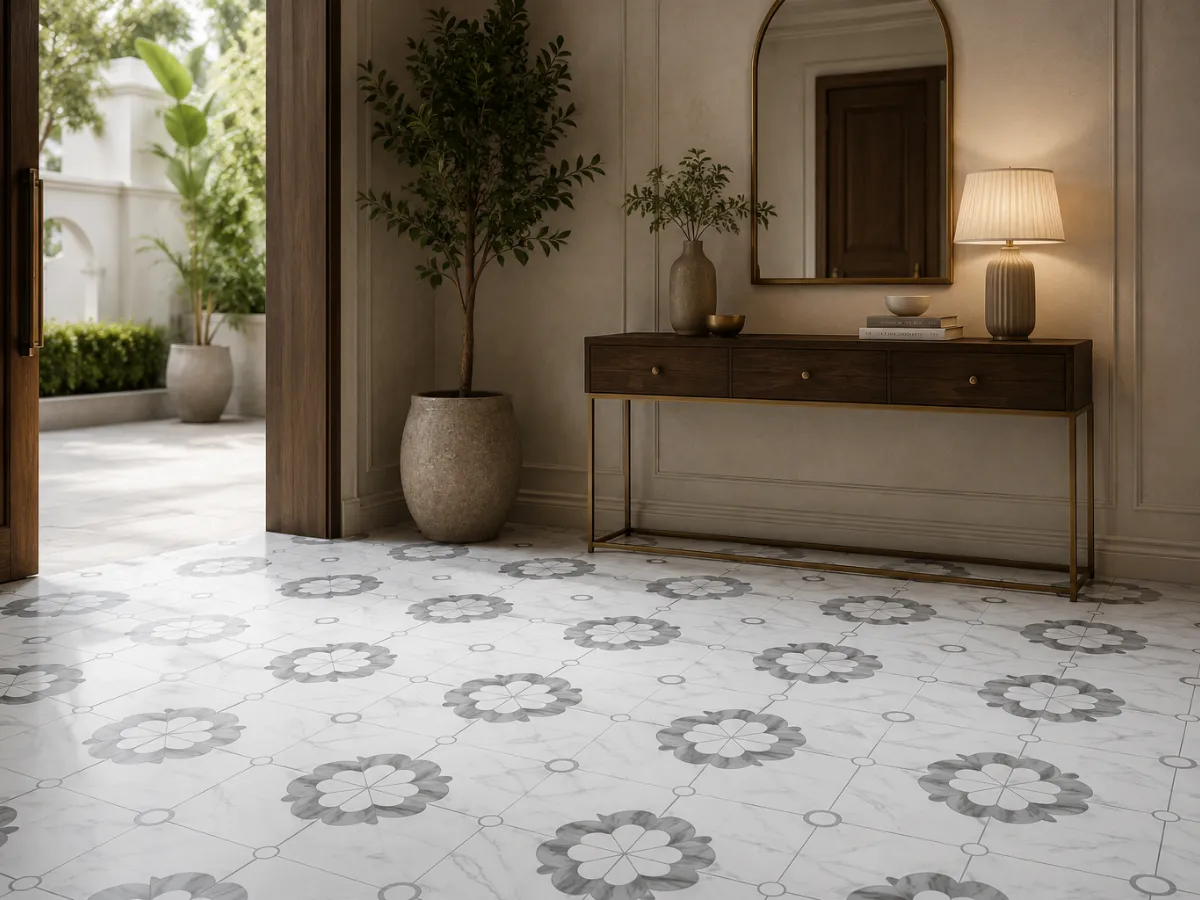
Grey and white colors in Moroccan-patterned tiles offer a quieter middle ground. They keep the pattern visible and generally work well on a daily basis.
It suits kitchens, bathrooms, or any space that already leans neutral, since the color combination tends to blend in. If your home already uses a lot of white or light wood, then grey and white tiles are worth adding to your shortlist.
Terracotta and Cream Moroccan Tiles
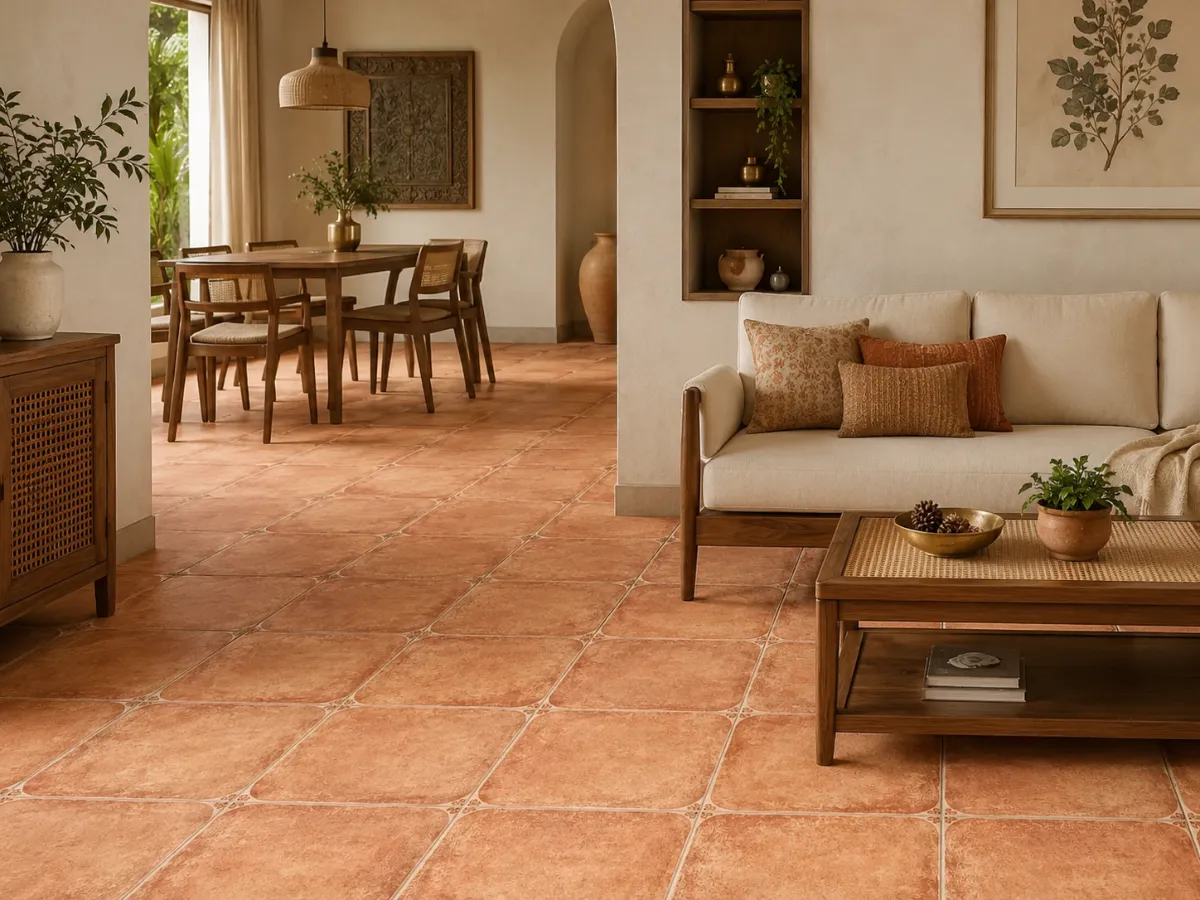
If your home already has traditional details like jute textures, brass accents, and wooden furniture, terracotta and cream Moroccan tiles are worth a closer look. The warmth comes through naturally, while cream helps soften the overall pattern.
This combination tends to suit interiors that already carry some earthy, rustic character, rather than ones that lean more modern or minimal.
Brown, Beige, and Cream Moroccan Tiles
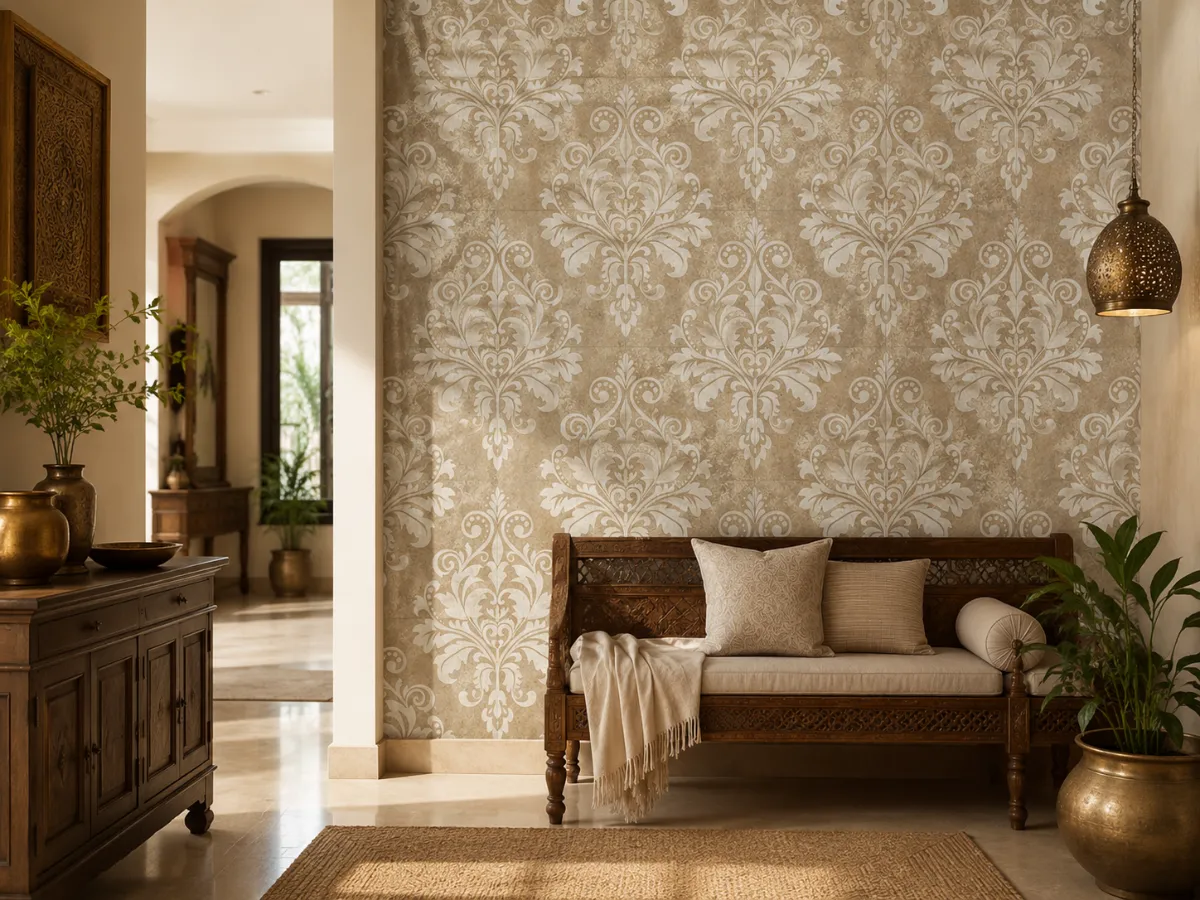
If bold color isn't really your style, don't rule out Moroccan tiles just yet. Brown, beige, and cream tile color combinations keep the same detailed pattern in a much gentler tone.
These earthy shades tend to sit well next to wood, brass, or cream walls, which many Indian living rooms already have. Consider this combination for living rooms, entryways, or bedroom feature walls, especially if you'd like to add patterns without a strong color contrast.
Green and White Moroccan Tiles
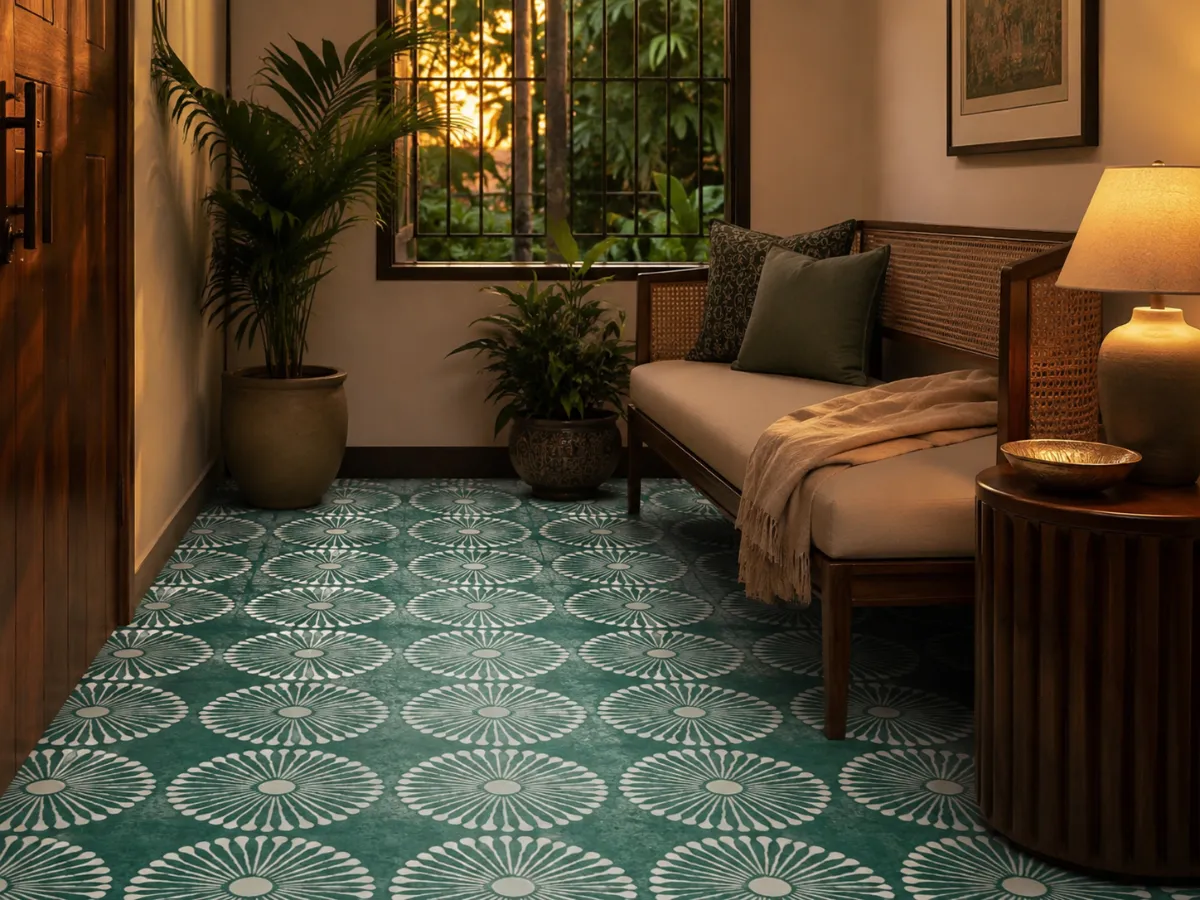
If your space has wooden furniture, a few plants near the window, and warm lighting in the evenings, then green and white Moroccan tiles could fit right in.
Lighter greens tend to open up a space. A deeper green carries more weight, so it's usually a better fit for a smaller, more contained spot rather than something spread across a whole room. Either way, this tile color combination tends to sit comfortably alongside the greenery and warmth that are often seen in most Indian homes.
Where to Use Moroccan Tile Color Combinations in Indian Homes
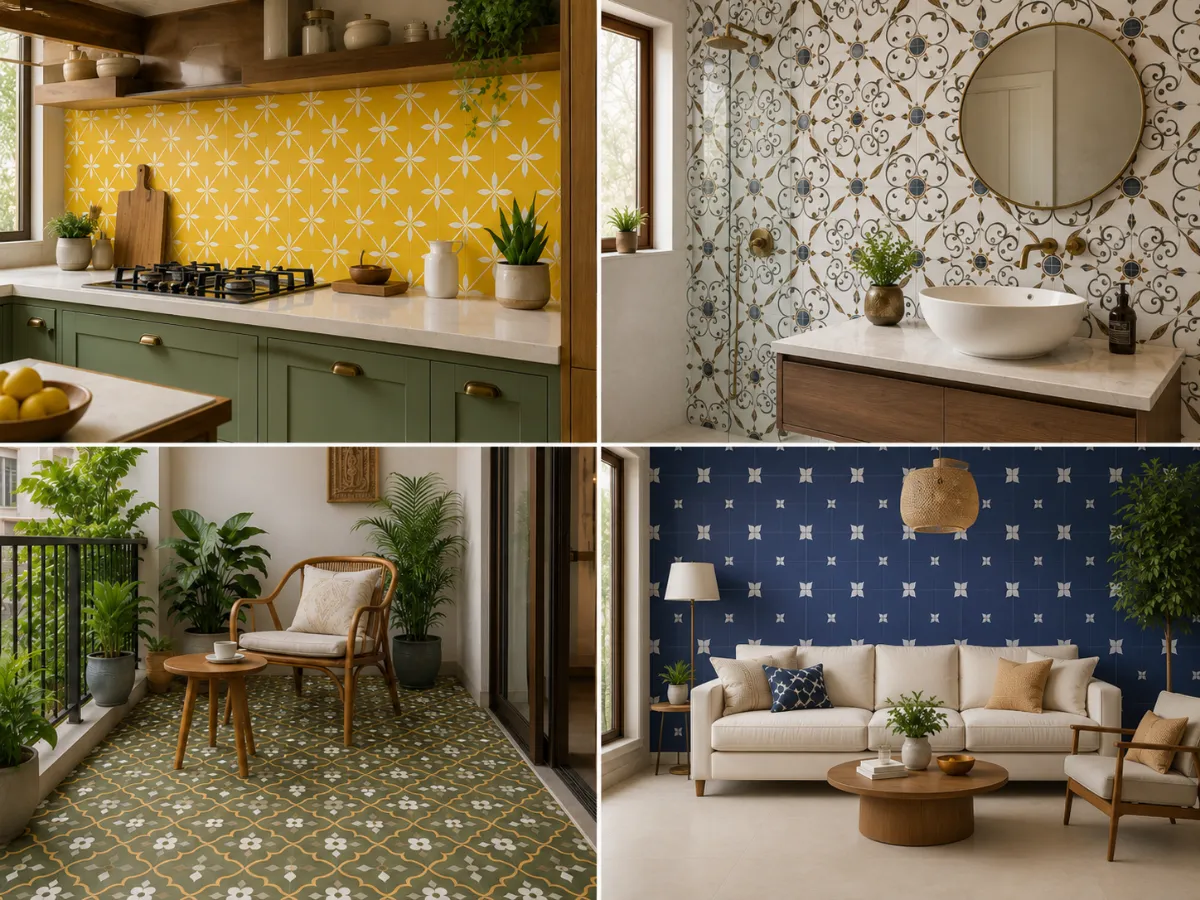
Once you've settled on a color combination, the next question is where it actually belongs in the home. Here's a room-by-room look at how Moroccan tiles tend to fit in.
Kitchen
Moroccan tiles for kitchen spaces usually show up as a backsplash rather than covering the whole wall. Blue and white, grey and white, or a small dose of yellow and blue tend to work well here. As the kitchen backsplash covers a limited area, Moroccan tiles can create a focal point without taking over the entire space.
Bathroom
Moroccan bathroom tiles usually work with either the floor or one wall. Moisture is the main practical concern in this space, so the finish and tile type matter as much as the pattern itself. Keeping the rest of the bathroom fittings and colors fairly simple tends to balance the look of the space.
Balcony
Balconies tend to lean toward the earthier end of the palette. Terracotta and cream, green and white, or a traditional multicolor pattern of Moroccan tiles for a balcony can work here. Since balconies are often semi-open and compact, these tiles can be used on the floor or as an accent wall, depending on the tile finish and product suitability.
Living Room
Moroccan tiles for the living room tend to work best with just one wall carrying the pattern, usually the TV unit backdrop or the wall first visible from the entrance. Everything else, sofas, rugs, and side tables, is generally kept simple, so the tiled wall has room to stand out rather than compete with the rest of the furniture.
Tips to Choose the Right Moroccan Tile Color Combination
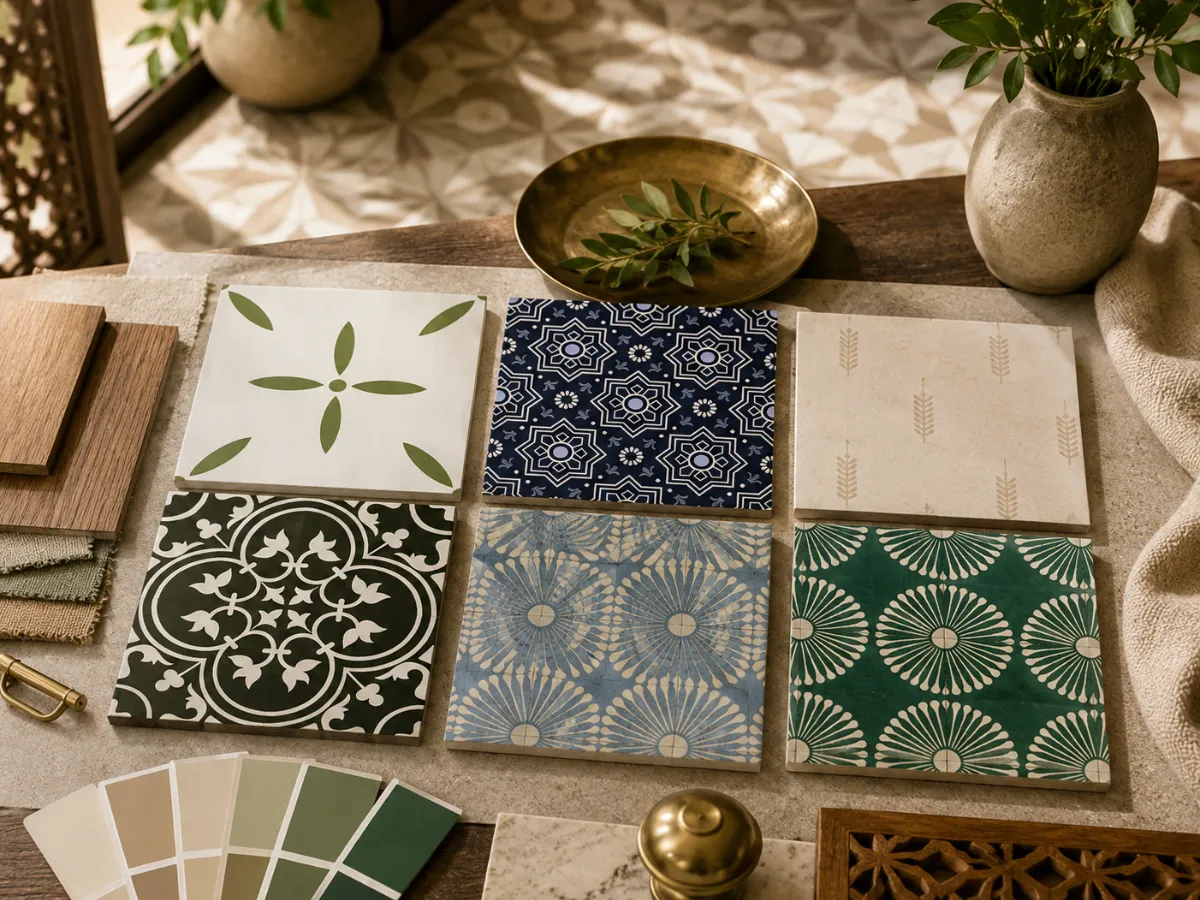
A few things worth considering before deciding on the Moroccan tile color combination for your space are as follows:
- Consider the room size: In smaller rooms, you may want to lean toward lighter combinations like blue and white or grey and white. Larger, well-lit rooms give you more room to consider deeper colors or bolder contrast.
- Think about the natural light: For rooms that don't get much daylight, lighter shades, white, cream, or soft grey could be worth considering. Bold Moroccan tile combinations might suit well-lit spaces or a smaller accent area better.
- Look at your existing furniture: Your existing furniture can guide the decision too. Wooden pieces generally sit well with beige, brown, cream, or terracotta combinations, whereas a more modern setup might lean better toward blue and white, black and white, or grey and white.
- Think about where the tile will go: Floors and walls call for different considerations. On the floor, it's worth checking how visible dust or marks might be, along with the finish, material, and surface grip. Walls carry less daily wear, so there's more room to experiment with a decorative pattern.
- Match the shade to the pattern: With a busier, more detailed pattern, a softer color combination is worth considering. A simpler pattern gives you more flexibility to try a bolder color.
- Don't overlook the grout color: A contrasting grout can make a pattern feel sharper and more defined, while a matching or close-toned grout tends to let the design blend in more softly.
Choosing the Right Moroccan Tile Color Combination
Moroccan tiles bring a lot of character to a home, but the pattern is only half the decision. The color combination also shapes whether the final look feels balanced or overwhelming.
If you're exploring Moroccan tile color combinations for your home, see how they sit on your wall, next to your furniture, under your own lighting. This gives you a better direction in choosing the most suitable Moroccan tiles.
MyTyles has plenty to explore when it comes to Moroccan tile designs, color combinations, finishes, and sizes. Seeing the tiles in person can help you decide better, so if you're still weighing your options, a visit to our experience centre is a good idea. Prefer to browse first? The full collection is also available on our website with Pan-India delivery.
Expert Reviewed by Biren Agrawalla
Biren Agrawalla, the Founder of MyTyles with over 10 years of experience across tile, retail, and home decor. Driven by a passion for tiles and a deep understanding of customer behaviour, he has spent his career transforming how people discover and buy tiles online. Biren combines practical retail insight with modern digital solutions to make tile shopping smarter, more intuitive, and design focused. At MyTyles, he champions a customer first approach, ensuring every experience from browsing to buying is reliable, seamless, and inspiring.

Which Moroccan Tile Color Combination Works Best For Indian Homes?

There is no single tile color combination that suits every Indian home. The right choice depends on the room size, natural light, existing furniture, and the overall interior style. Blue and white, grey and white, terracotta and cream, and brown-based combinations are commonly considered because they suit a wide range of spaces and design preferences.
Are Blue And White Moroccan Tiles Suitable For Kitchens?
Yes, blue and white Moroccan tiles are commonly used for kitchen backsplashes because the lighter shades help soften the detailed pattern. They are often selected for compact as well as larger kitchens, depending on the overall design. Before installation, it is useful to consider the tile material, finish, and product suitability for the intended wall area.
Can Moroccan Patterned Tiles Be Used In Small Rooms?
Yes, Moroccan patterned tiles can be used in small rooms when the pattern scale and color combination are selected carefully. Softer shades and lighter backgrounds generally create a less dominant appearance than darker combinations. Using the pattern on one wall or a limited floor area can also help maintain visual balance within the space.
Which Moroccan Tile Colors Work Well With Wooden Furniture?
Terracotta and cream Moroccan tiles are commonly considered for spaces that already include wooden furniture, brass accents, or other natural materials. Brown, beige, and cream combinations are also suitable when a softer color palette is preferred. The overall result depends on how the tile colors work with the walls, flooring, and surrounding décor.
Where Can Moroccan Tiles Be Used In A Home?
Moroccan wall tiles can be used in kitchens, bathrooms, balconies, living rooms, and other feature areas, depending on the selected material and product suitability. Some installations focus on a backsplash or accent wall, while others use patterned tiles on the floor. The final placement usually depends on the room layout and the amount of pattern you want to introduce.
Should You Use Bold Moroccan Tile Combinations Throughout A Room?
Not always. Bold Moroccan tile combinations are often more suitable when used on a single wall, a backsplash, or a defined floor section rather than across every surface. Combining patterned tiles with plain walls, simple furniture, and neutral finishes can help create a balanced overall appearance without reducing the visual impact of the design.
How Do You Choose The Right Moroccan Tile Color Combination?
Choosing the right Indian home tile color combinations involves looking at the room size, natural light, furniture, and the location where the tiles will be installed. It is also worth considering the grout color, tile finish, and pattern scale before making a decision. Comparing a few samples in the actual space can make the selection process easier.

ABOUT THE AUTHOR
Nandana Priya
With a strong interest in design, creativity, and emerging tile trends, I enjoy turning ideas from the world of tiles and interiors into engaging, meaningful reads. My writing focuses on creating well-researched content that helps readers understand design choices with more clarity and confidence. I bring together research, design awareness, and digital marketing insights to craft content that is relevant, easy to follow, and thoughtfully written for todays homeowners and design-conscious readers.