.svg)


Small Bathroom Tile Designs That Make Your Bathroom Look Expensive
ByAditi Bardhan

Mon , Jul 13 , 2026

Read Time: 5 Min


 Copied!
A small bathroom can still look premium if the tiles are chosen well. In Indian homes, bathrooms are often compact, shared, and used many times a day. The right small bathroom tile designs can make the space feel brighter, cleaner, and more open. The incorrect tiles can make the same bathroom feel smaller, darker, or too busy. Even a simple bathroom can look more expensive when the wall tiles, floor tiles, grout color, and layout work together.
You do not always need very bold tiles or costly materials. A soft marble look, light color, fewer grout lines, or one neat feature wall can change the full look. This guide covers practical small bathroom tile ideas that suit Indian homes and still give a premium finish.
Why Tile Choice Matters More In A Small Bathroom
In a small bathroom, tiles cover most of what you see. So the color, finish, grout, size and layout show more clearly than they would in a larger room.
- Light or glossy wall tiles can make the bathroom feel brighter.
- Too many grout lines can make the wall look busy.
- Similar wall and floor tones make the space feel less divided.
- Bathroom floors stay wet often, so the wrong tile can become slippery in daily use. This is why grip ratings like R10 or DCOF 0.42+ matter more in small bathrooms.
- Small bathroom tile designs in India should work with the slope, drain, door and shower area.
Best Small Bathroom Tile Designs For A Premium Look
A small bathroom looks expensive when the tiles feel clean, balanced and easy to maintain. You do not need too many patterns or dark shades. The right tile finish, layout and color can make the same bathroom feel brighter, taller and more planned.
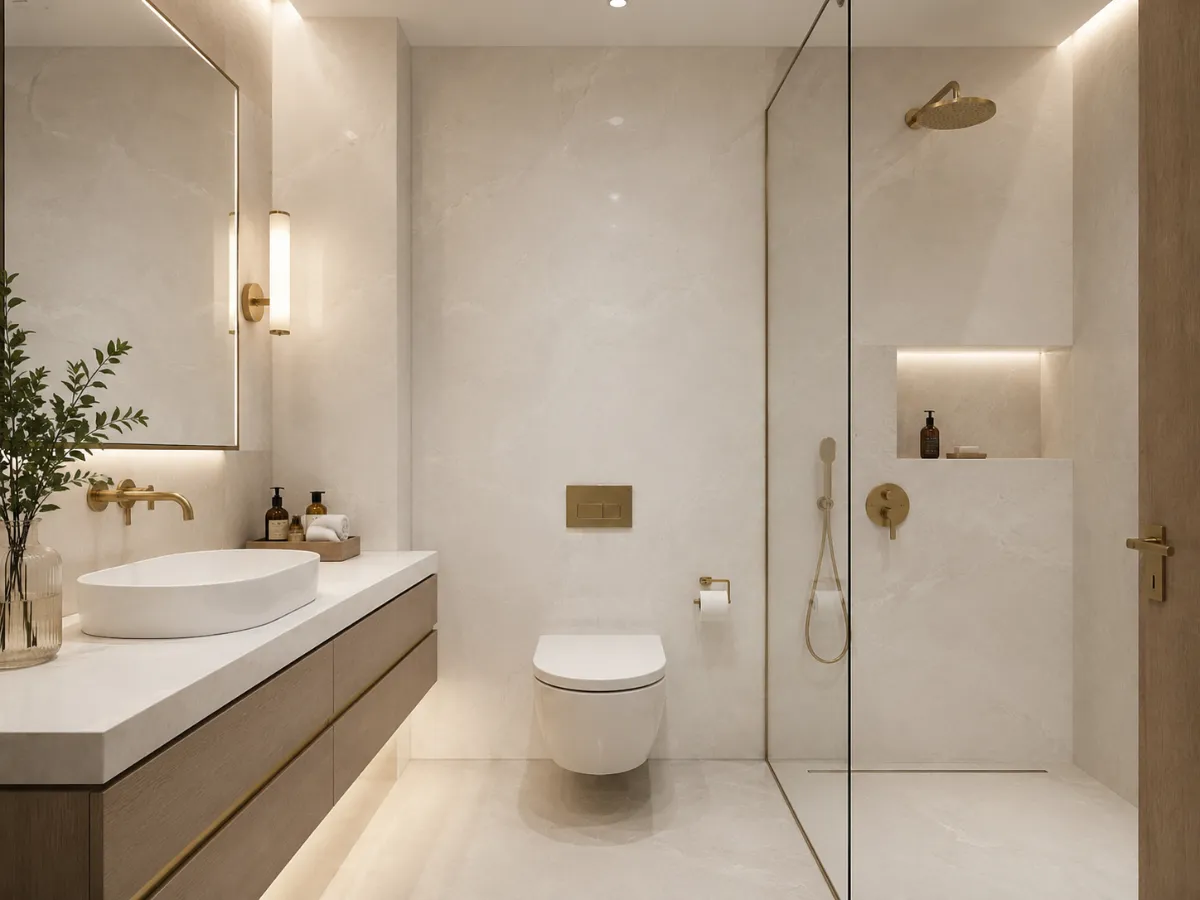
Marble-look bathroom tiles are one of the easiest ways to make a small bathroom look expensive. They give a hotel-style finish without using real marble. White, beige, grey, and soft gold-vein designs work well in compact bathrooms. Use marble-look tiles on the main wall, shower wall, or full wall area for a cleaner look. Avoid too many strong veins in a very small bathroom because the space may feel crowded. A soft marble pattern usually looks more premium and easier to maintain.
Light Color Tiles To Make The Bathroom Feel Bigger
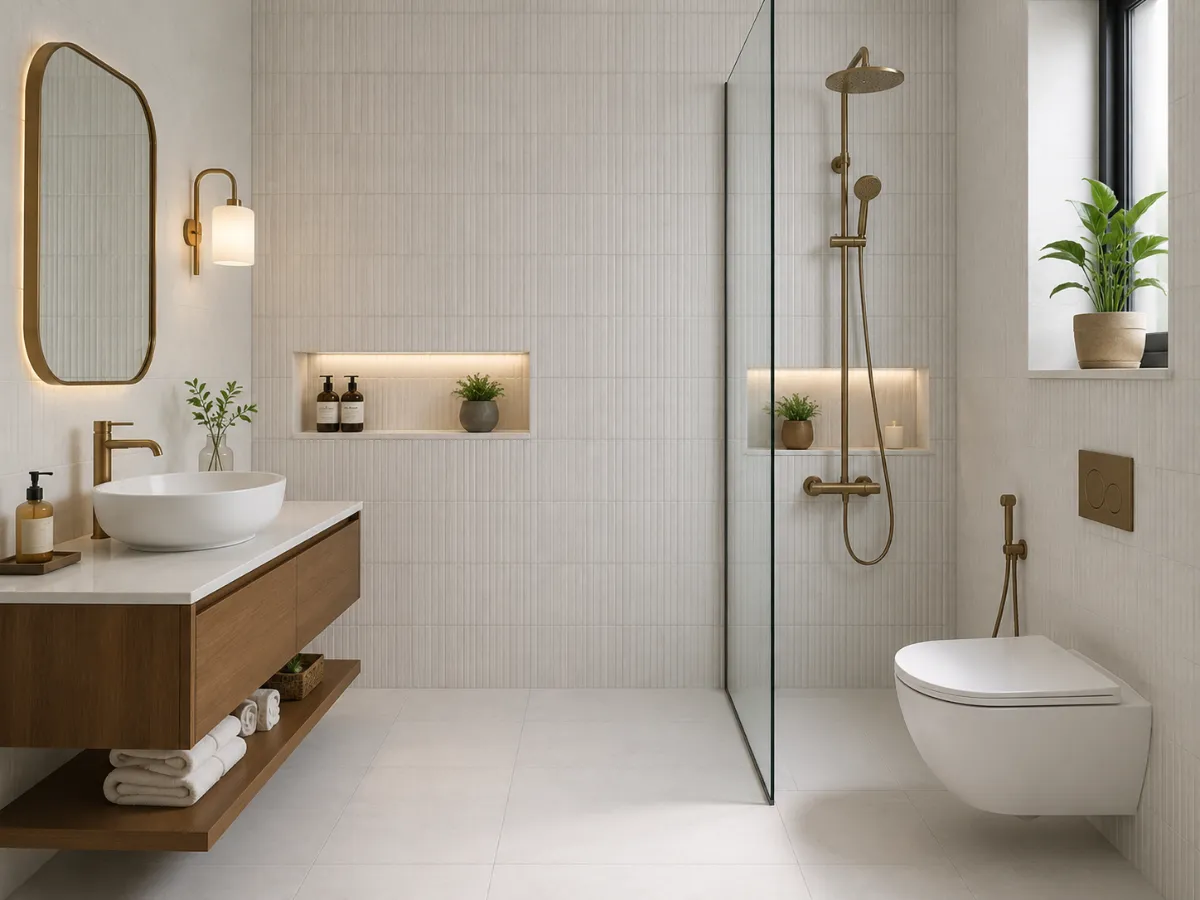
Light color bathroom tiles can make a small bathroom feel more open. White, ivory, beige, cream, light grey and soft greige are easy choices for compact spaces. They reflect light better and stop the walls from feeling too closed in. This works well for Indian bathrooms, where windows are often small or missing. Light tiles also make mirrors, shelves and fittings look neater. If the bathroom feels too plain, add warmth with a wooden cabinet, brass fittings or soft lighting.
Glossy Wall Tiles For Better Light Reflection
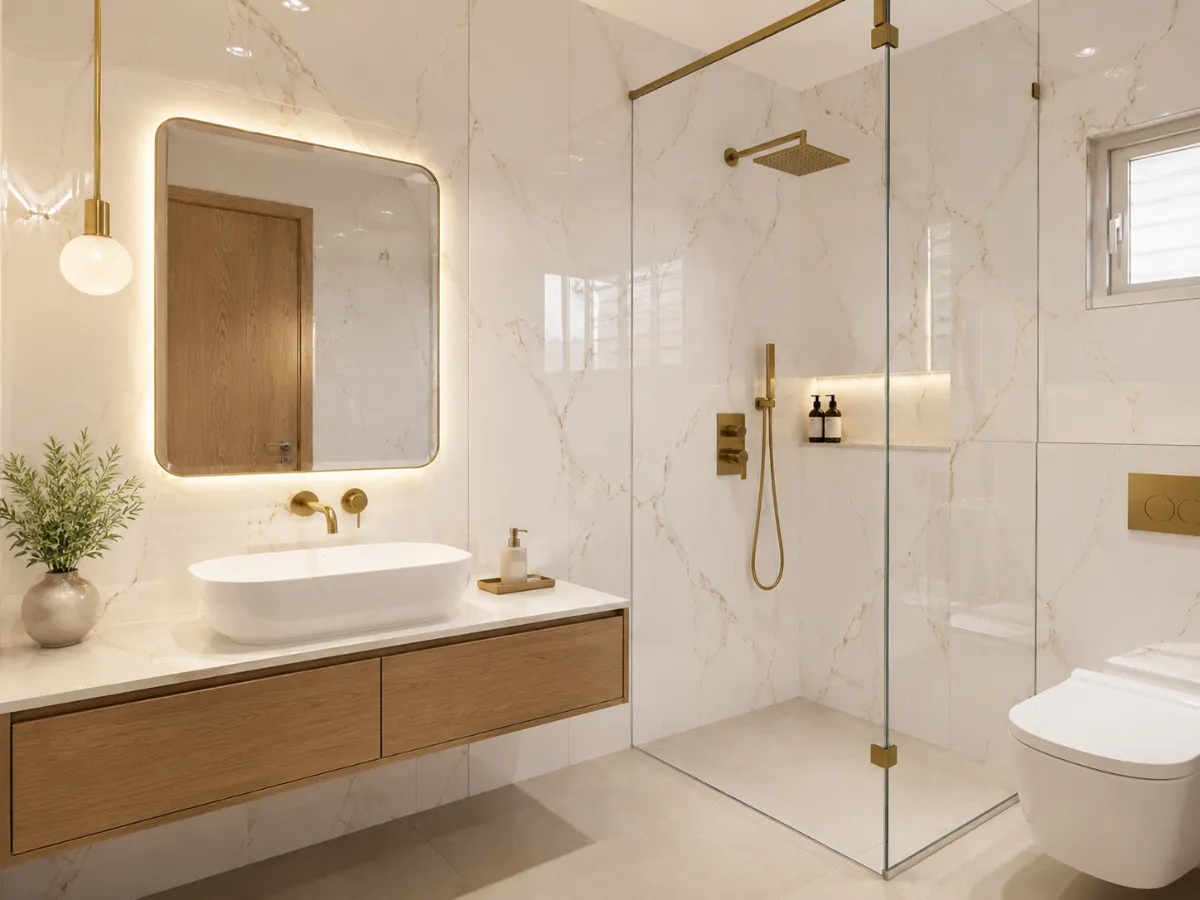
Glossy wall tiles work well when a bathroom feels dull or narrow. They catch light from bulbs, mirrors and windows, so the space looks brighter. Use glossy bathroom wall tiles on the upper wall, vanity wall, or shower wall. They are also easier to wipe when water or soap splashes on the surface. Just avoid glossy tiles on the floor because wet bathroom floors need grip.
Matt Floor Tiles For A Steadier Surface
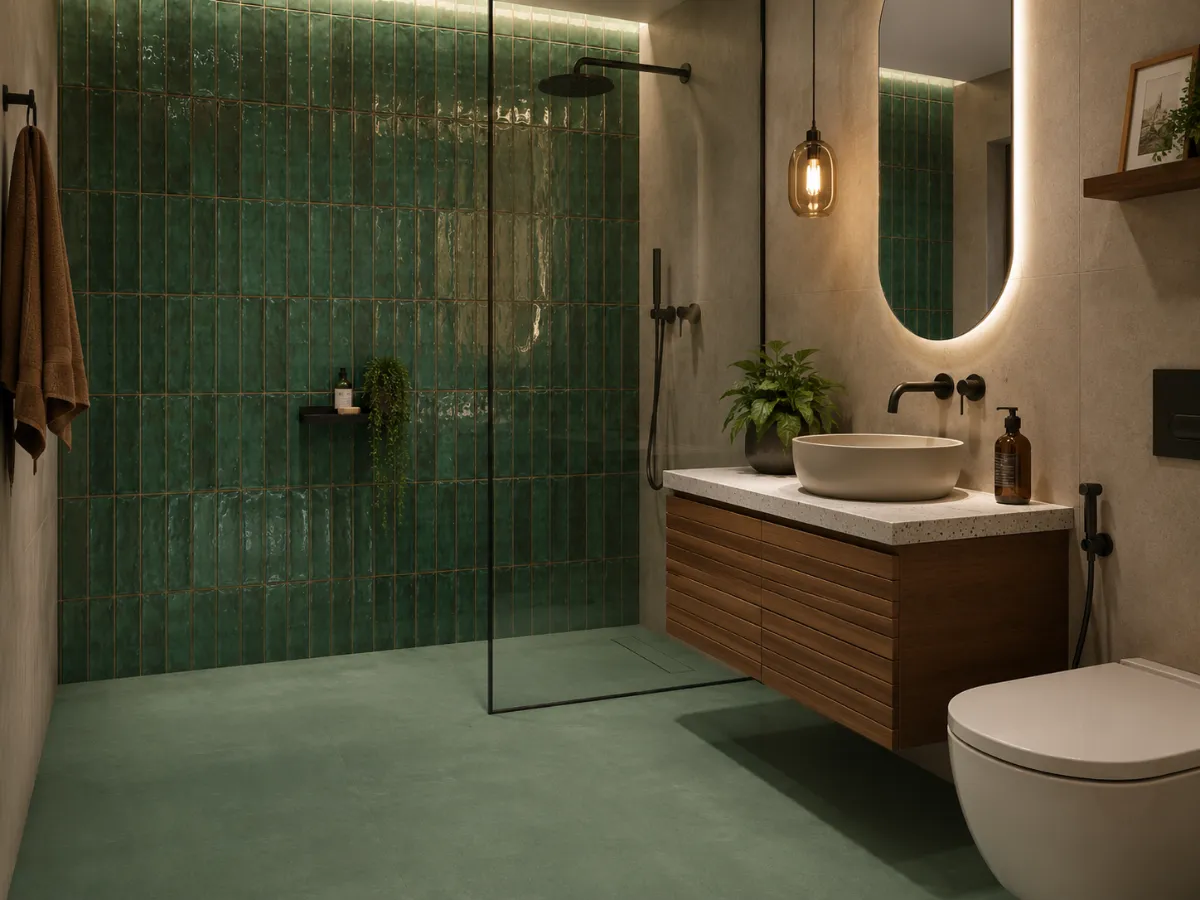
Bathroom floors should never be chosen only by design. They get wet often, so the surface should feel steady underfoot. DCOF 0.42+ or minimum R10-rated matt bathroom floor tiles are a better choice because they reduce the slippery feel compared to other tiles. For small bathrooms, choose matt floor tiles in light grey, beige, stone, or neutral tones. These colors hide dust and watermarks better than very dark or very light floors. If the bathroom is used by children or older people, check for anti-skid bathroom floor tiles before finalising.
One Feature Wall Behind The Mirror Or Shower
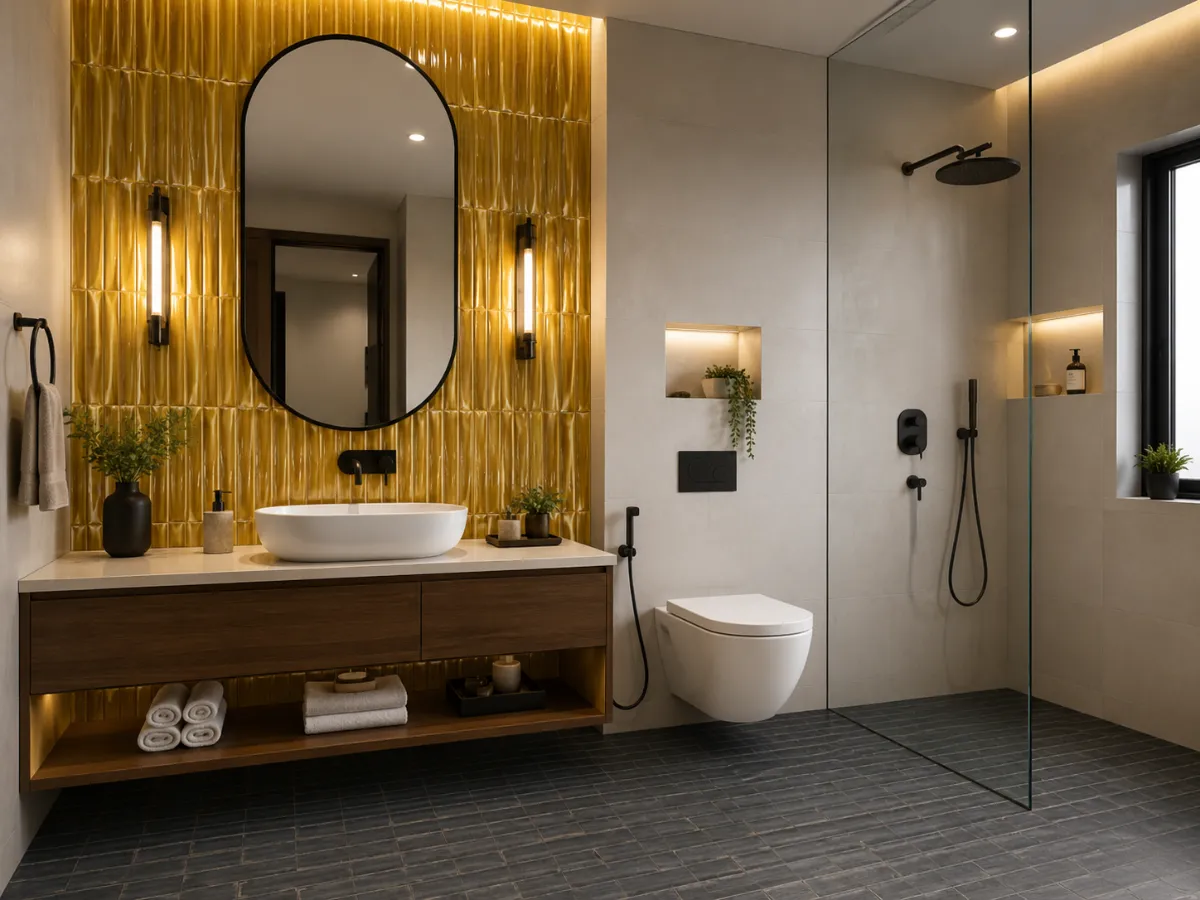
A small bathroom does not need all walls to look bold. One feature wall is enough. Use bathroom feature wall tiles behind the mirror, basin, or shower area to create focus without making the space heavy. Marble-look, soft pattern, 3D, stone-look, or mosaic tiles can work here. Keep the remaining walls plain or light. This makes the feature wall stand out properly. It also keeps the small bathroom tile designs easy on the eye.
Wall-To-Floor Tile Design
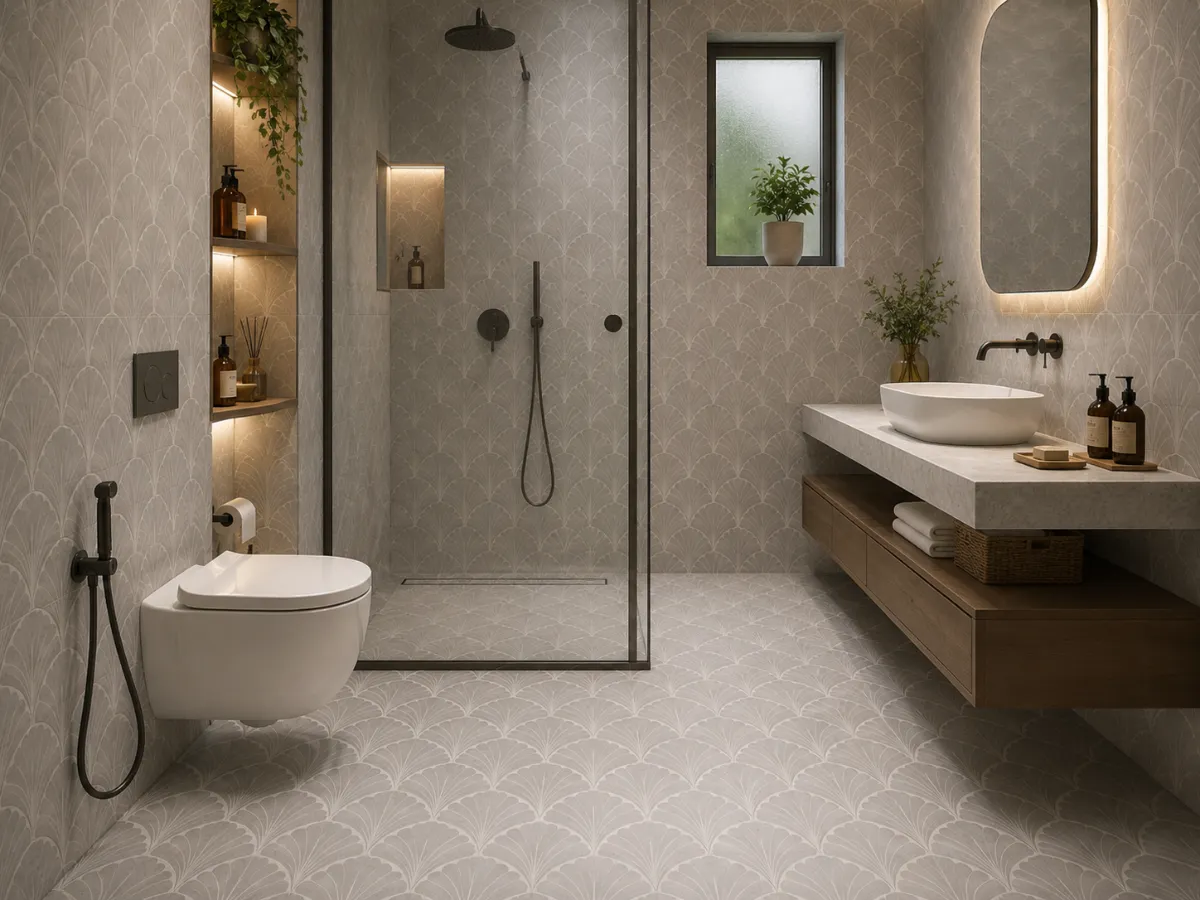
A wall-to-floor tile design can make a compact bathroom look more planned. This means using the same tile, or a similar tone, on both walls and floors. The surface feels more connected, so the bathroom does not look broken into too many parts. This trick works well with neutral bathroom tiles, marble-look tiles, and soft stone-look designs. Make sure the floor tile has enough grip. The wall can be glossy or satin, but the floor should feel safe when wet.
Vertical Tile Layout For More Height
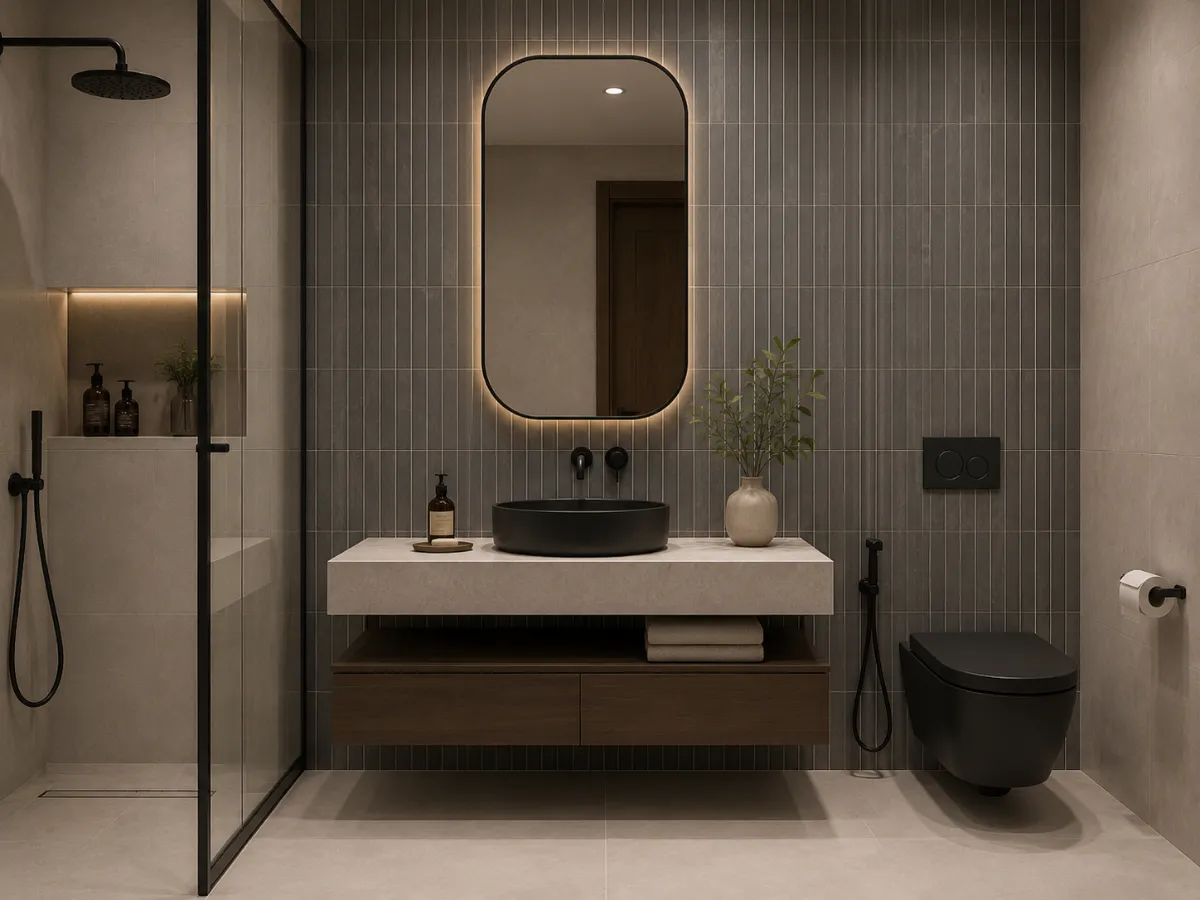
A vertical tile layout can make bathroom walls look taller. This is useful in small bathrooms where the ceiling feels low or the wall space looks tight. Rectangular tiles placed vertically create an upward line. You can use this layout behind the basin, in the shower area, or on one full wall. It works well with plain tiles, subway tiles, and soft textured tiles. Keep the grout colour for bathroom tiles close to the tile shade for a cleaner finish.
Large Or Medium Tiles With Fewer Grout Lines
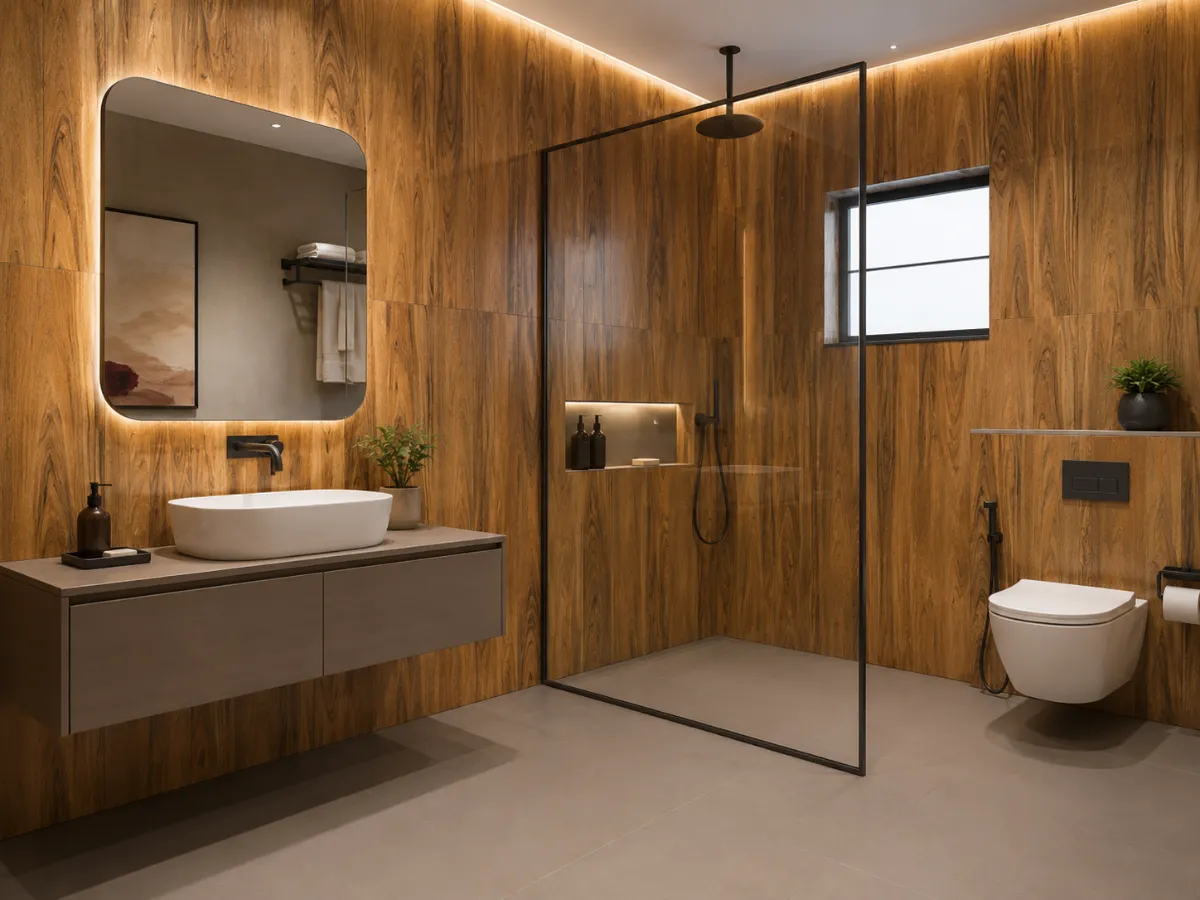
Large or medium tiles can make a small bathroom look cleaner because they reduce grout lines. Fewer cuts and fewer lines make the wall feel less busy. This does not mean every small bathroom needs very large tiles. The tile size should suit the wall width, floor slope, drain position, and cutting area. Medium sizes are often easier to use in compact Indian bathrooms. Choose the largest practical size that fits the layout without too many awkward cuts.
Soft Pattern Tiles Instead Of Loud Designs
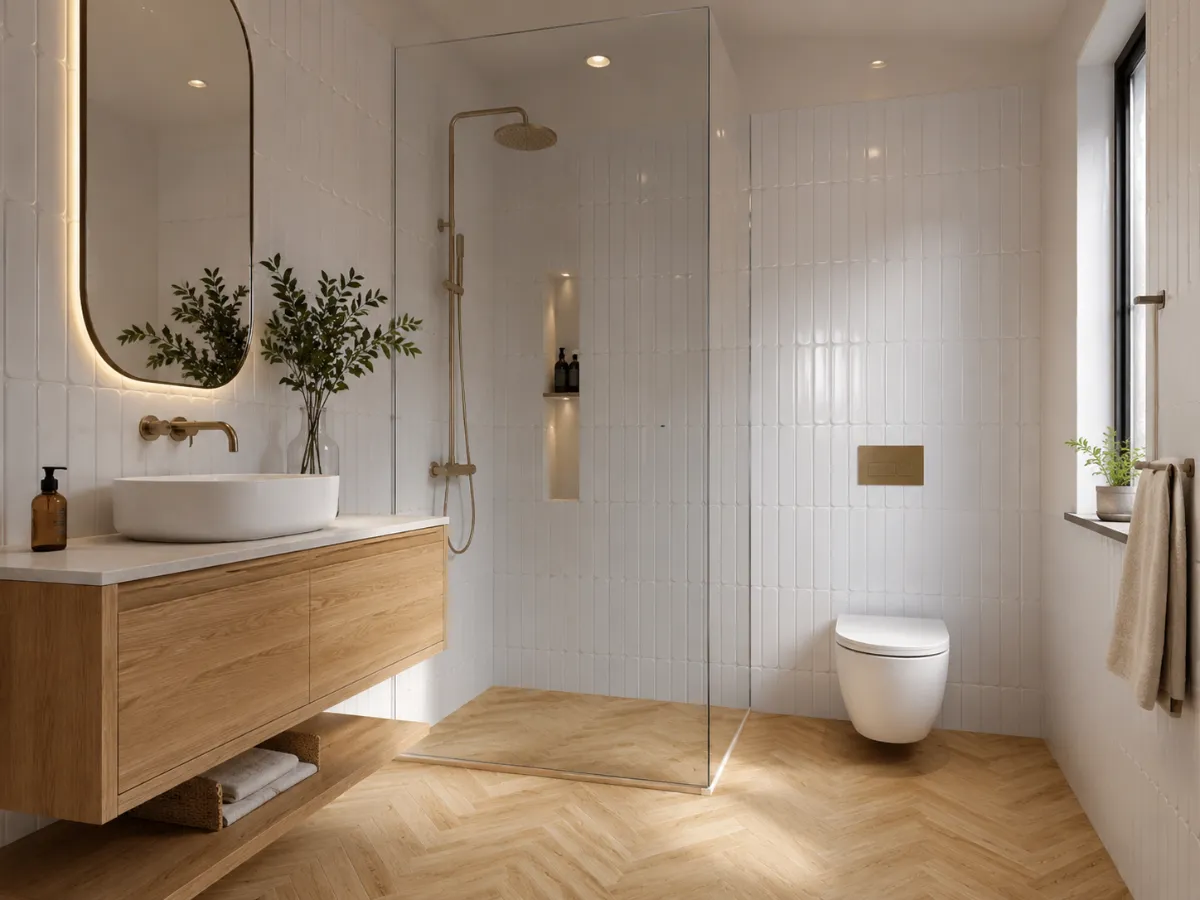
Soft patterns look better than loud prints in most small bathrooms. Heavy designs can make the space feel packed, especially when there are mirrors, taps, shelves, buckets, and bath products already inside the room. For modern small bathroom tile design, consider soft marble veins, light geometric lines, plain textures or muted floral prints. These give detail without taking over the room. If you want a strong pattern, use it only on one feature wall.
Tile Layout Tricks To Make A Small Bathroom Look Bigger
Tile layout can change how small or open a bathroom feels. Even simple choices like grout color, tile direction and wall-to-floor continuity can make a big difference. These layout tricks help reduce visual breaks and make compact bathrooms look cleaner.
- Keep wall and floor tiles in similar tones so the bathroom feels less divided.
- Match grout with the tile color to reduce visible lines.
- Place rectangular tiles upright if you want the wall to look taller.
- Use medium or larger tiles where the floor slope allows.
- Keep dark tiles only behind the mirror or shower.
Make A Small Bathroom Look Premium With The Right Tiles
A small bathroom can look expensive when the tiles are planned properly. You do not need loud patterns or very dark colors to make it look premium. Light shades, marble-look finishes, fewer grout lines, safe matt flooring, and one neat feature wall can do the job well. Choose tiles that suit the bathroom size, lighting, slope, and daily cleaning needs. At MyTyles, you'll find small bathroom tiles designs available in ceramic, porcelain and vitrified materials. You can also compare the glossy, matt, anti-skid and marble-look finishes before you make your decision. In order to choose bathroom tiles for an Indian home that suit your space, budget and everyday use, visit the MyTyles Experience Centre or browse online.
Expert Reviewed by Biren Agrawalla
Biren Agrawalla, the Founder of MyTyles with over 10 years of experience across tile, retail, and home decor. Driven by a passion for tiles and a deep understanding of customer behaviour, he has spent his career transforming how people discover and buy tiles online. Biren combines practical retail insight with modern digital solutions to make tile shopping smarter, more intuitive, and design focused. At MyTyles, he champions a customer first approach, ensuring every experience from browsing to buying is reliable, seamless, and inspiring.

Which Tiles Are Best For Small Bathrooms?

The best tiles for small bathrooms are light, easy to clean, and not too busy in design. Marble-look tiles, neutral bathroom tiles, glossy wall tiles, and matt floor tiles work well. For the floor, choose tiles with a steady grip. For walls, glossy or satin finishes can help the bathroom look brighter and cleaner.
What Color Tiles Make A Small Bathroom Look Bigger?
White, ivory, beige, cream, soft grey, and light greige tiles can make a small bathroom look bigger. These shades reflect more light and make the walls feel more open. Avoid using dark tiles on all walls. If you like dark shades, use them only behind the mirror, shower, or one feature area.
Are Large Tiles Good For Small Bathrooms?
Yes, large tiles can work well in small bathrooms because they create fewer grout lines and make the wall look cleaner. On floors, the size should be chosen carefully because the slope towards the drain matters. If very large tiles do not suit the floor, use medium tiles and keep the grout color close.
Which Bathroom Tiles Look Expensive?
Marble-look bathroom tiles, large-format tiles, soft neutral tiles, designer bathroom tiles, and wall-to-floor tile designs can make a bathroom look expensive. The finish also matters. Glossy walls, matt floors, clean grout, and simple lighting can make even a compact bathroom look more premium without using too many patterns.
Should Small Bathroom Floor Tiles Be Glossy Or Matt?
Small bathroom floor tiles should usually be matt, not glossy. Glossy floor tiles can become slippery when wet, especially in daily-use Indian bathrooms. Matt or anti-skid bathroom floor tiles give a steadier surface underfoot. You can still use glossy tiles on the walls for better light reflection and easier wiping.
What Grout Color Is Best For Small Bathroom Tiles?
The best grout color for small bathroom tiles is usually close to the tile color. Matching grout makes the wall or floor look cleaner because the lines do not stand out too much. White tiles can use white or off-white grout. Beige, grey, and marble-look tiles should use similar soft grout shades.
Where Can I Buy Small Bathroom Tiles Online?
You can buy small bathroom tile designs for Indian homes online at MyTyles. You can explore marble-look bathroom tiles, light color bathroom tiles, glossy wall tiles, matt bathroom floor tiles, anti-skid options, and designer bathroom tiles. Before ordering, check the size, finish, surface, wall or floor suitability, price, and cleaning needs.

ABOUT THE AUTHOR
Aditi Bardhan
Aditi Bardhan is a professional content writer with over five years of experience creating SEO-focused, research-backed content across diverse industries. She specialises in the tile and surface materials space, writing for homeowners, architects, interior designers, and trade professionals. Her work combines technical research, design awareness, and a strong understanding of customer needs, helping readers make clearer and more confident choices. Through her content, Aditi simplifies complex material concepts, highlights practical design benefits, and helps brands build trust and authority in the tile and construction industry.