.svg)


Stunning Tile Feature Wall Ideas for a Premium Indian Home Look
ByAditi Bardhan

Tue , Jul 07 , 2026

Read Time: 5 Min


 Copied!
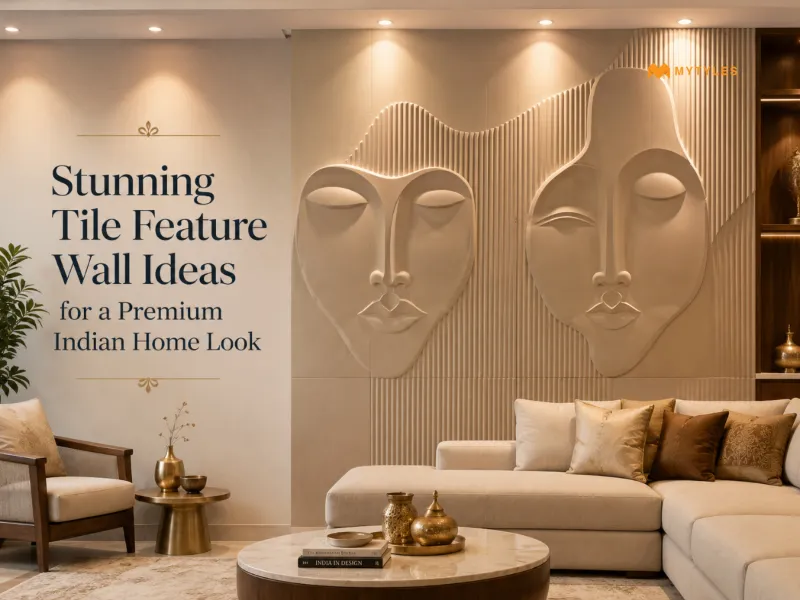
One good wall can change the way a room feels. It can make a living room look planned, make a TV unit look cleaner, or give a plain corner some detail without filling the space with extra furniture. This is why tile feature wall ideas are becoming popular in Indian homes.
A tile feature wall works well because it is not only about looks. Tiles can handle dust, wiping, light moisture, daily use, and long-term cleaning better than many painted or pasted wall finishes. The right design can also match sofas, lights, curtains, flooring, and TV units without making the room feel too heavy.
For Indian homes, the best feature wall is usually the one that fits the room size, lighting, and daily use. Some rooms need marble-look polish. Some need earthy stones. Some need color, texture, or a warm wood effect. This guide covers practical and stylish wall tile design ideas that can help you create a premium-looking wall without making the space feel overdone.
What Is a Tile Feature Wall?
A tile feature wall is one selected wall that is made more noticeable than the other walls in the room. Instead of keeping all walls plain, one wall gets a stronger finish through feature wall tiles. This wall may be behind a sofa, TV unit, bed, dining table, pooja unit, or entry console. The idea is simple. Keep most of the room calm and let one wall become the main focus. Some people prefer soft designs, while others want bolder patterns. Both can work if the wall matches the rest of the room. A tile feature wall is useful because it gives the room a more finished look. It can also protect the wall better than paint in areas that face touch, dust, or regular cleaning.
10 Best Feature Wall Tile Ideas for Indian Homes
Feature walls work best when the tile is chosen for the room, not just for the design. A large living room can handle a bold slab look. A small room may need one soft highlight wall. A TV unit wall may need a clean surface with fewer visual breaks. Here are the best tile accent wall ideas for Indian homes.
Marble Look Wall Tiles for a Luxury Living Room
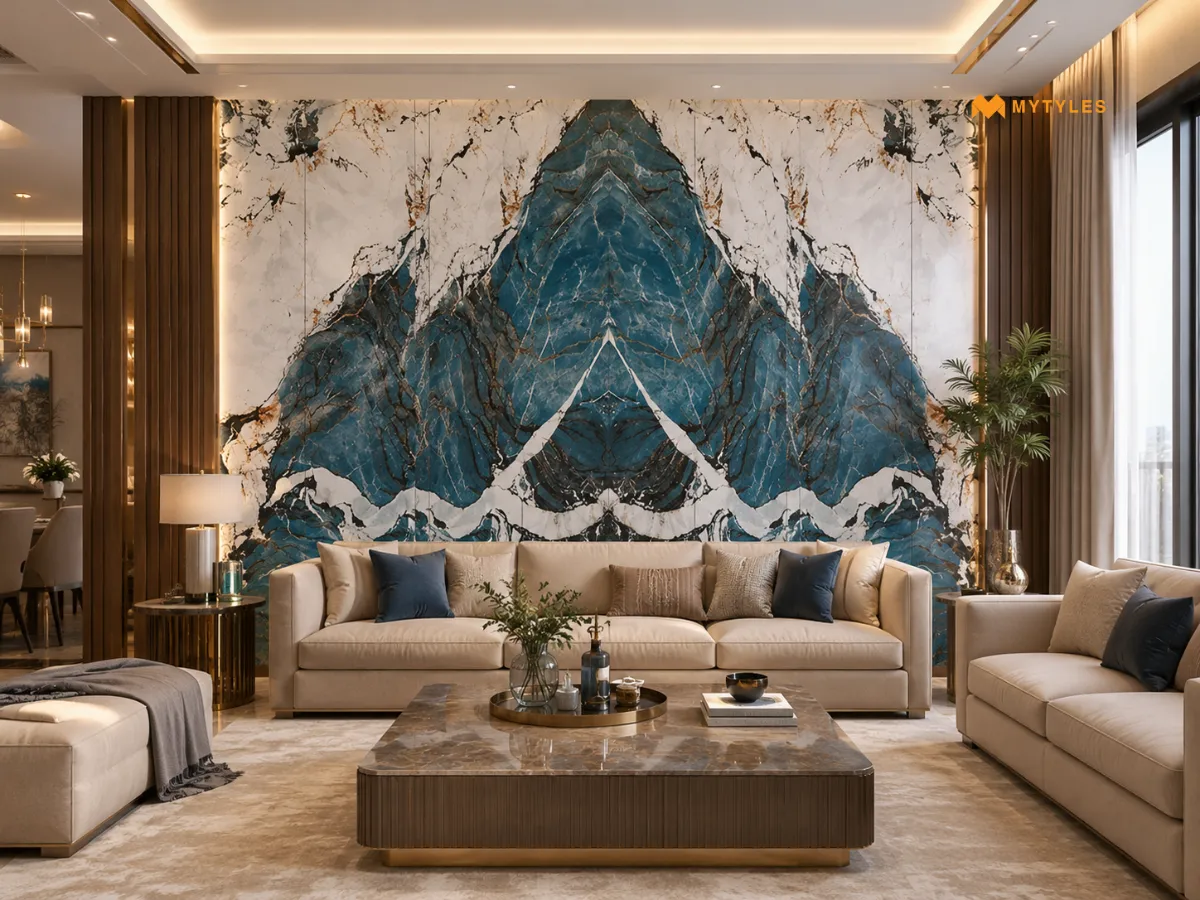
Marble look wall tiles are a strong choice when you want the living room to look polished and rich. They work well behind sofas, TV units, dining walls, and double-height spaces. White, grey, beige, black, and green marble looks are commonly used in premium homes. Large tiles are better for this style because fewer joints make the wall look cleaner. These tiles are also useful as feature wall tiles for living room spaces where the furniture is simple and the wall needs to carry the look.
Stone Cladding for a Natural Accent Wall
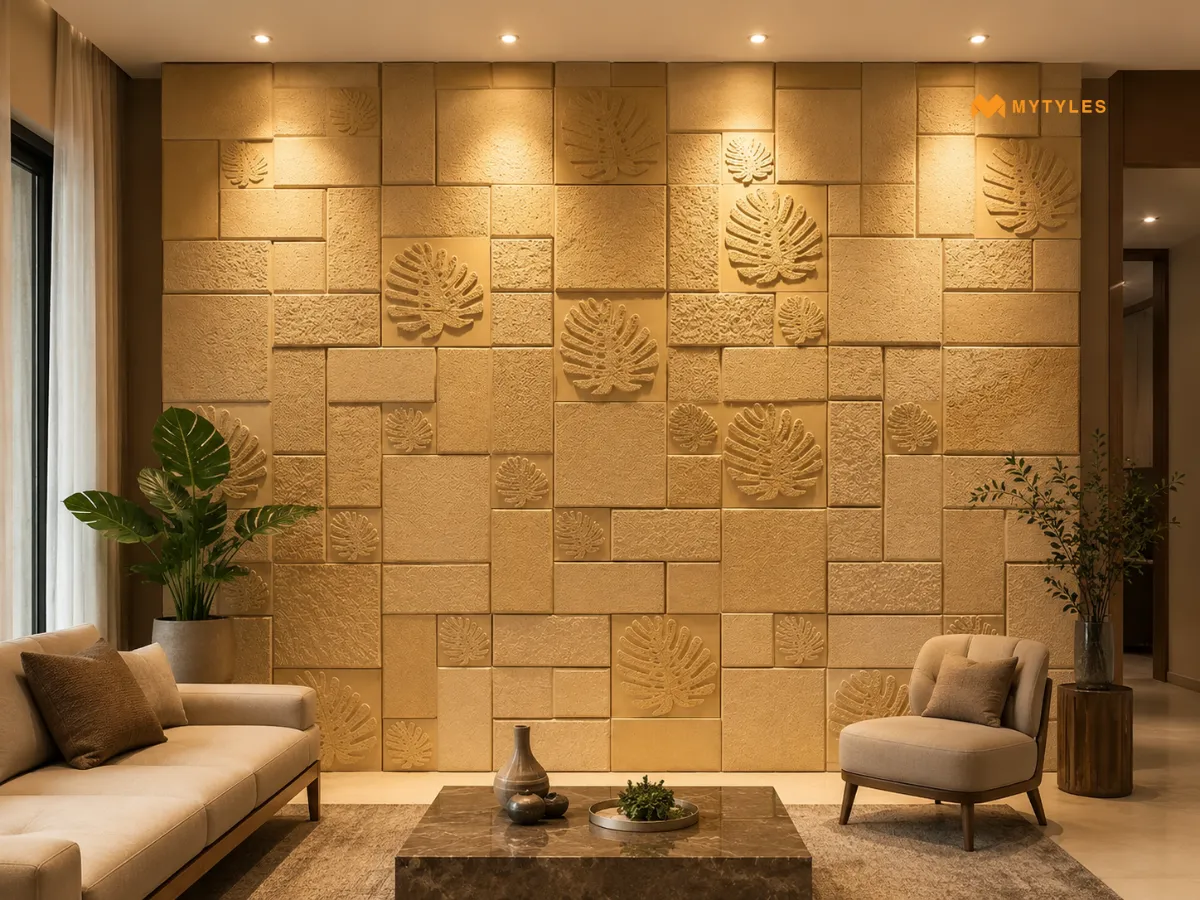
Stone cladding gives the wall a natural and textured feel. They suit foyers, balconies, TV walls, outdoor sit-outs, and garden-facing corners. Stone-look walls work best when the room has warm lights and simple furniture. Too many patterns around a stone-look wall can make the space look busy. Use stone cladding when you want a wall that feels earthy, strong, and not too glossy.
Wooden Look Wall Tiles for Warm Home Interiors
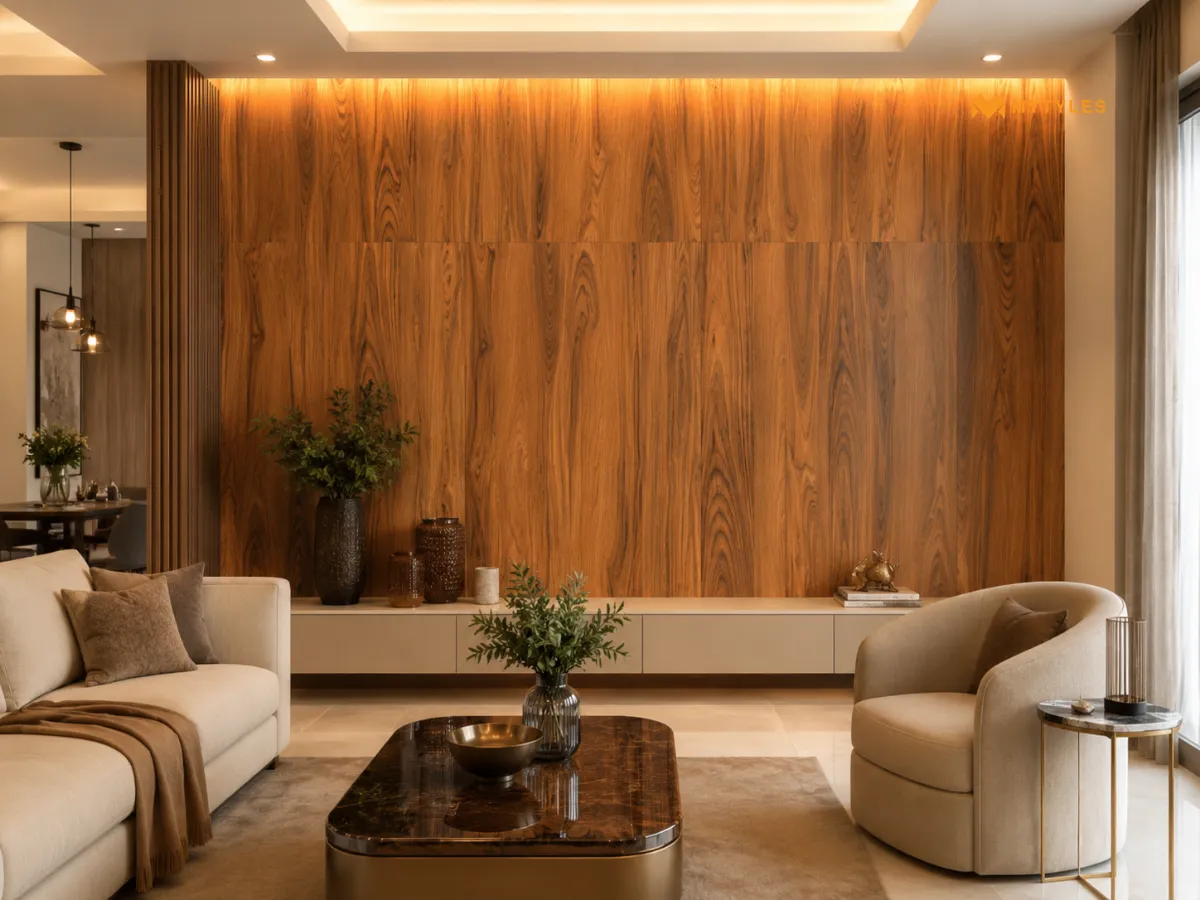
Wooden wall tiles are useful when the room feels too cold or plain. They bring warmth without the care needed for real wood. Use them behind a bed, near a dining area, or around a TV unit. They look great with beige flooring, white walls, cream sofas and warm lighting. These tiles are also a good option for homes where real wood may not be practical due to dust, moisture, or regular cleaning.
Natural Stone Mural for Artistic Walls
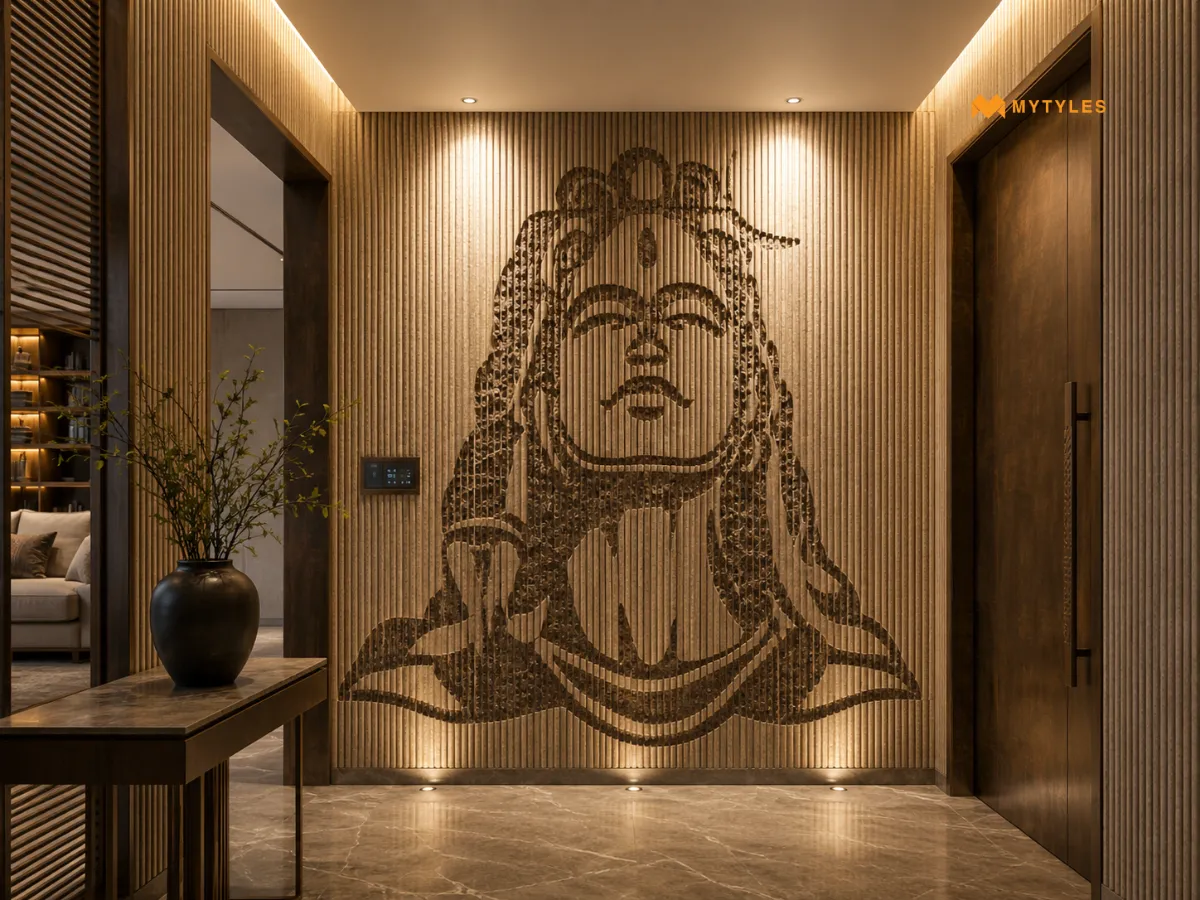
Natural stone murals give the wall a richer and more crafted look. They suit premium living rooms, foyers, dining walls and large feature walls where the design has enough space to stand out. These tiles look best with warm lighting, simple furniture and a clean surrounding wall. Avoid placing too many patterns around them, or the mural may start looking crowded instead of special
Moroccan Wall Tiles for a Colorful Statement Wall
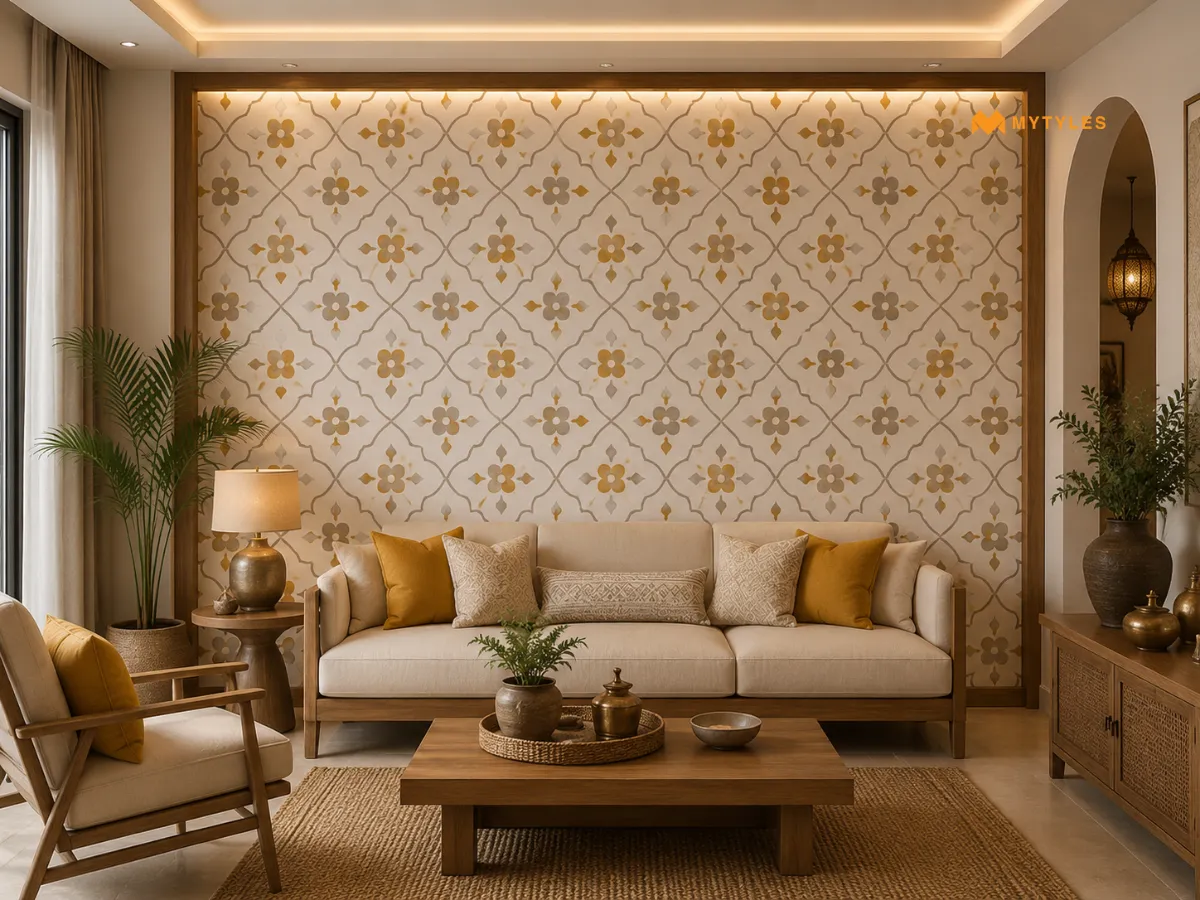
Moroccan wall tiles are a good fit when the room needs color and pattern. They work well in balconies, dining corners, pooja backdrops, and selected living room walls. Use them on one wall only. If the pattern is strong, keep furniture, flooring, and curtains simple. Moroccan tiles are also useful when you want a wall that feels lively without adding artwork or heavy decor.
Mosaic Wall Tiles for Small Highlight Areas
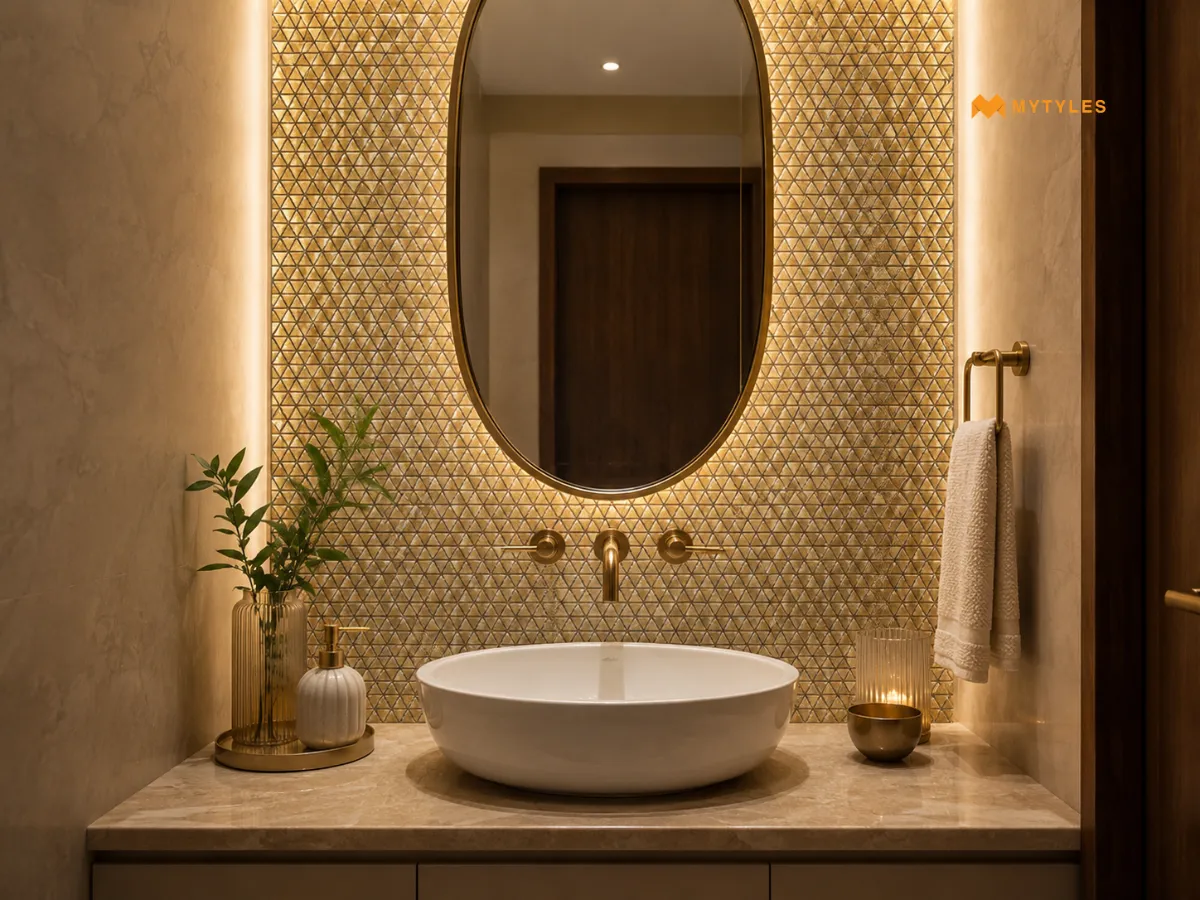
Mosaic wall tiles are best for smaller feature areas. They work well around mirrors, wash basins, pooja niches, bar counters, and narrow wall panels. Since mosaic designs have more joints, they should be used where cleaning is manageable. Avoid placing them in areas where heavy dust or oil will settle often. Glass, stone, and ceramic wall tiles can all create a neat highlight when used in the right size.
3D Wall Tiles for Texture and Depth
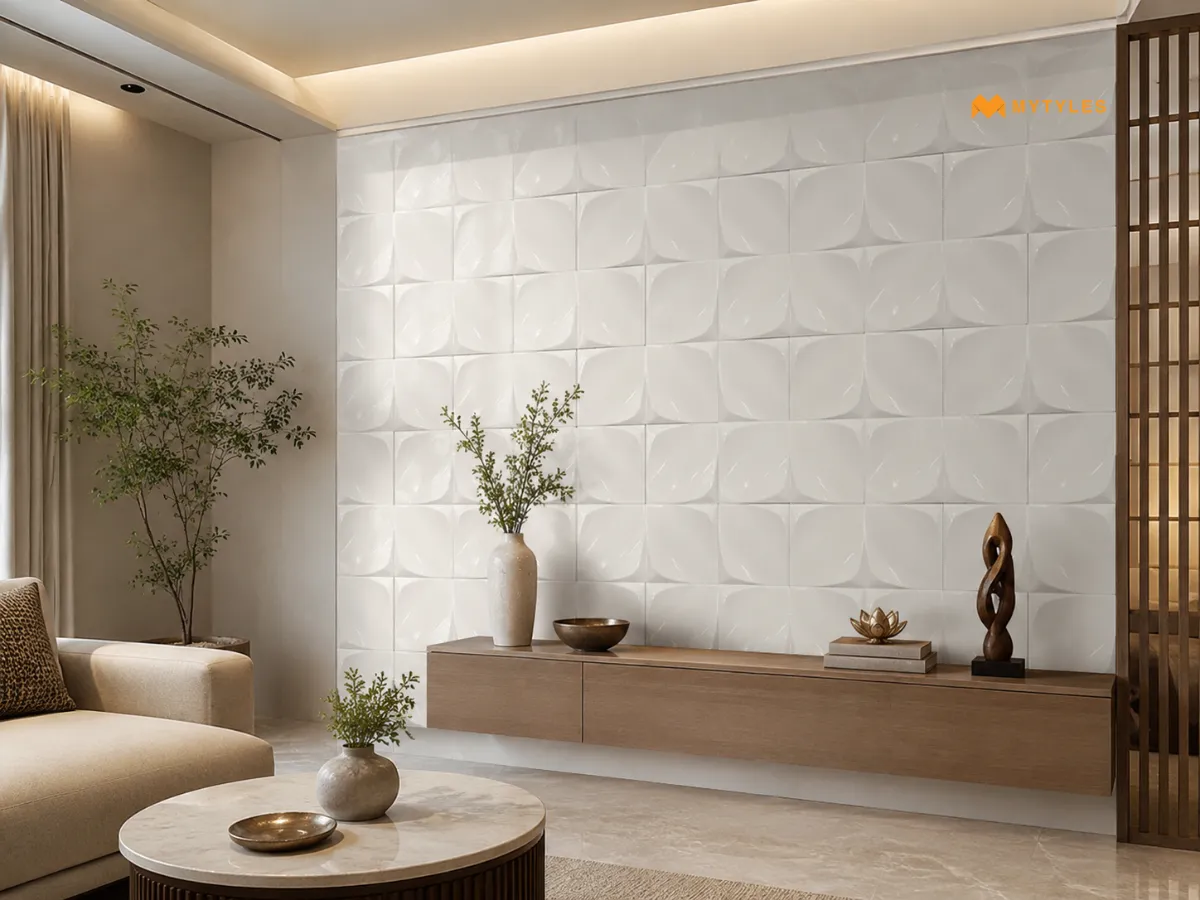
3D wall tiles add shadow and movement to a plain wall. They are useful when you want texture but do not want strong color. Use them in foyers, bedrooms, living rooms, and TV unit side walls. White, grey, beige, and charcoal shades work well for this style. Avoid using deep 3D textures in very dusty areas. The grooves may need more cleaning.
For a softer vertical texture, you can also explore Fluted Tiles: The Latest Trend in Wall Design. Fluted tiles work well when you want a modern wall with clean lines instead of a heavy pattern.
Brick Cladding Tiles for Rustic and Cafe-Style Walls
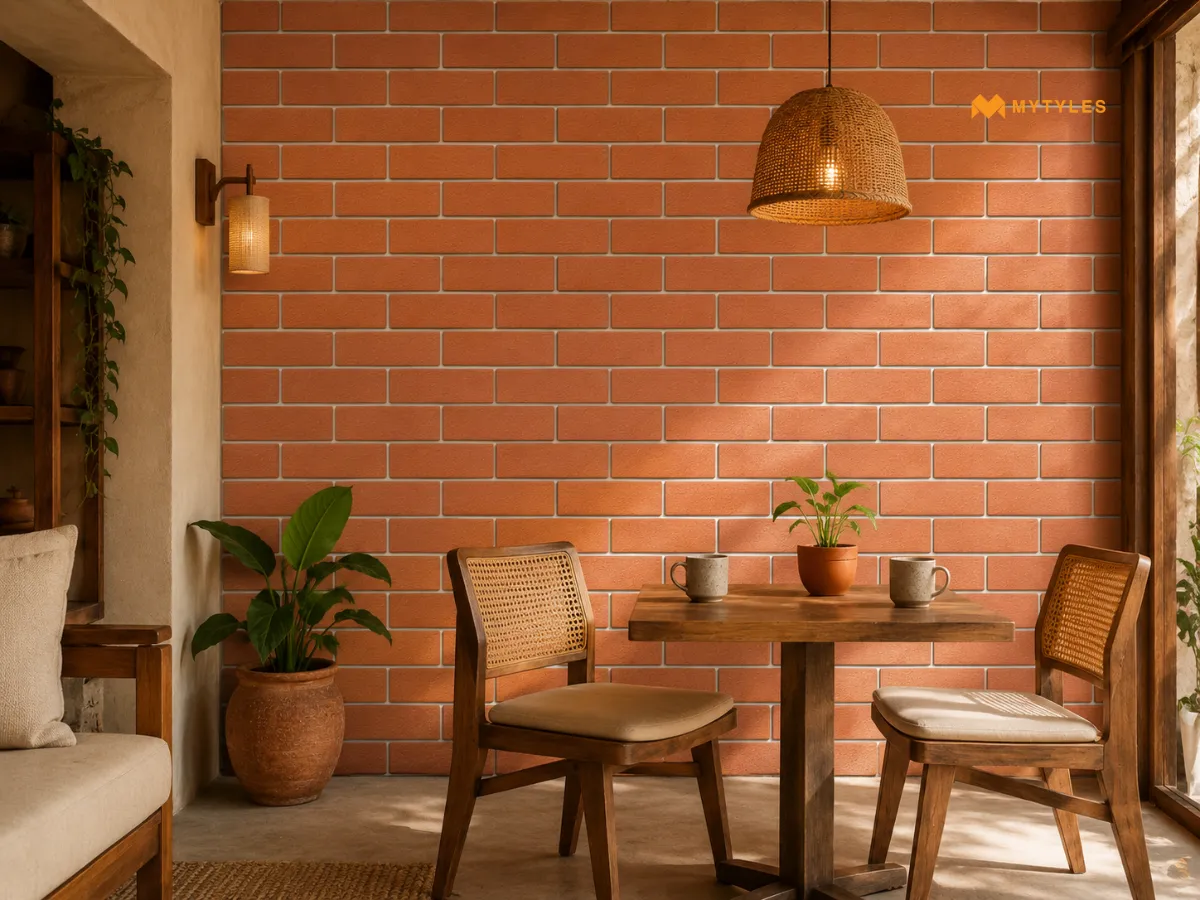
Brick cladding tiles bring a relaxed, rustic look to the room. They are ideal for a balcony wall, reading corner, dining space, cafe or living room. The red brick provides an old-school ambiance. White brick looks lighter and works better in smaller rooms. Grey brick gives a more urban look. Use brick cladding on one wall so the room does not feel heavy.
Terracotta Wall Tiles for an Indian Earthy Look
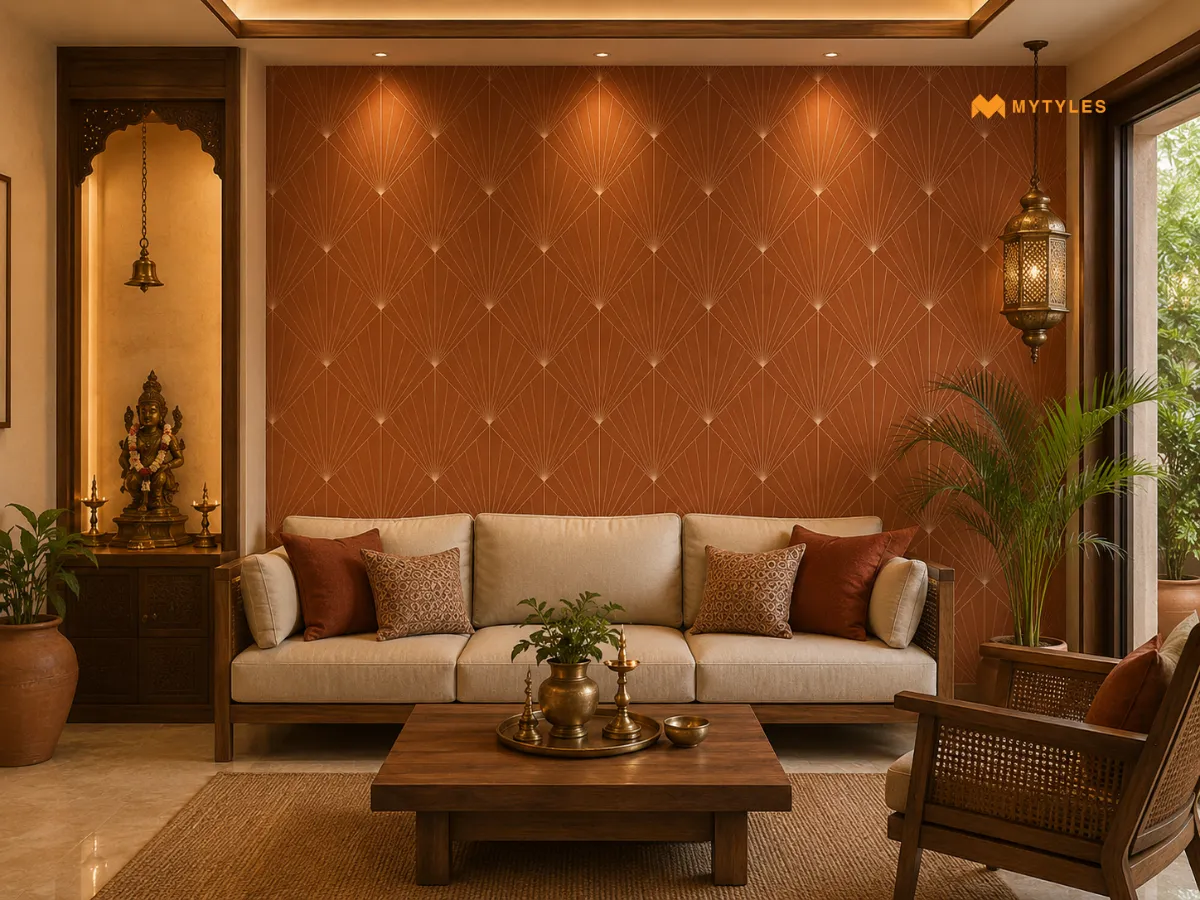
Terracotta wall tiles suit Indian homes beautifully because they feel warm and grounded. They work well in pooja rooms, balconies, courtyards, foyers, and traditional-style living rooms. These tiles look good with plants, brass lights, wooden furniture, and cream walls. They can also soften a modern room that feels too plain. Terracotta is best used with warm lighting and simple surrounding finishes.
Poster Tiles for Statement Walls
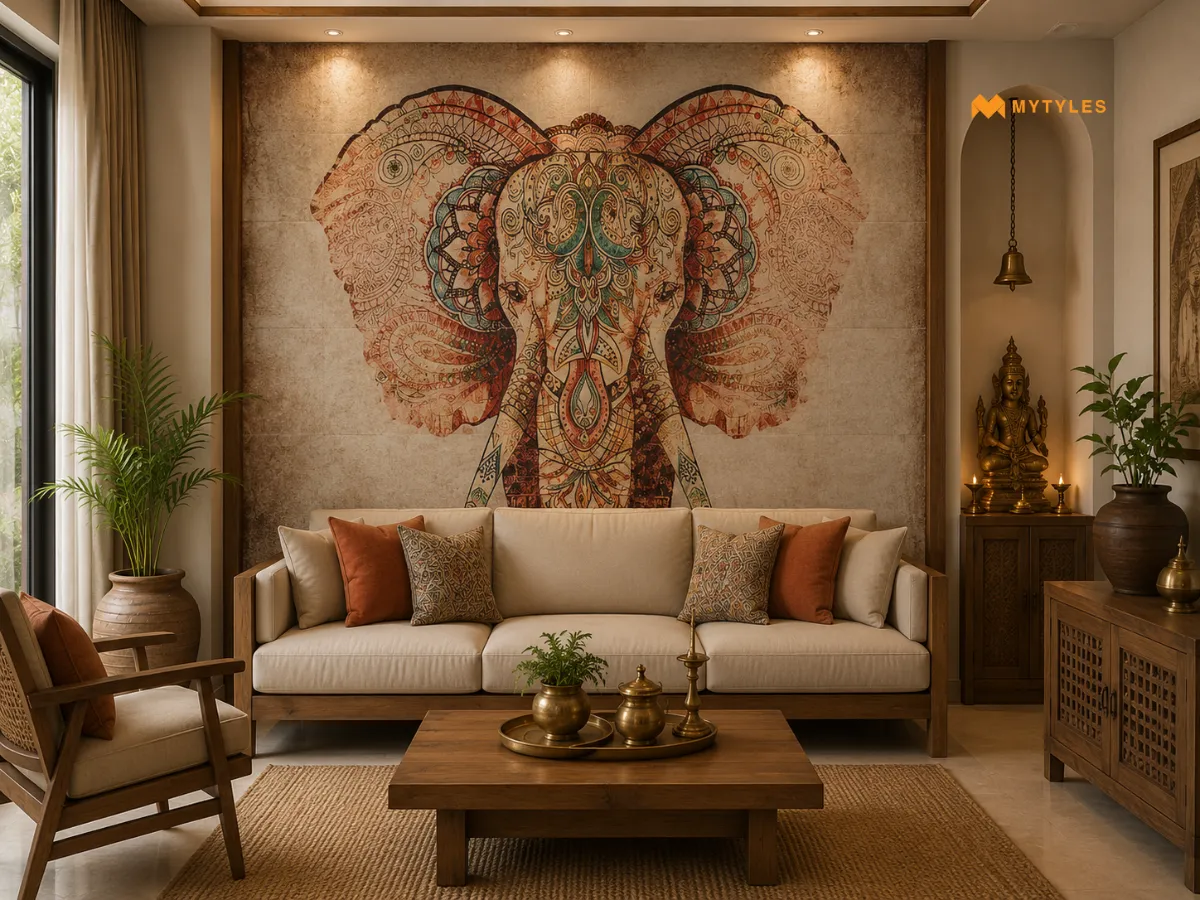
Poster tiles work well when you want one wall to feel like artwork without adding extra frames or wall pieces. They are useful for pooja rooms, living rooms, bedrooms, stairway walls and hotel-style corners. Pick a design for wall tiles for Indian homes that suits the room theme, not just the wall size. If the poster tile has a lot of detail, keep the furniture, lights and nearby walls simple so the design gets enough attention.
How to Choose the Right Feature Wall Tile
Choosing the right decorative wall tiles is not only about the design. The wall should also suit the room size, light, furniture, and cleaning needs.
Use this simple check before finalising:
- Pick light tiles for small rooms.
- Use darker tiles only when the room has enough light.
- Check the finish and surface before ordering.
- Confirm the tile size and wall suitability.
- Match the wall tile with flooring and furniture.
- Use bold patterns on one wall only.
- Choose easy-clean surfaces for busy areas.
- Read the cleaning instructions on the product page.
- Avoid rough textures where dust collects often.
- Keep lighting ready before finalising textured tiles.
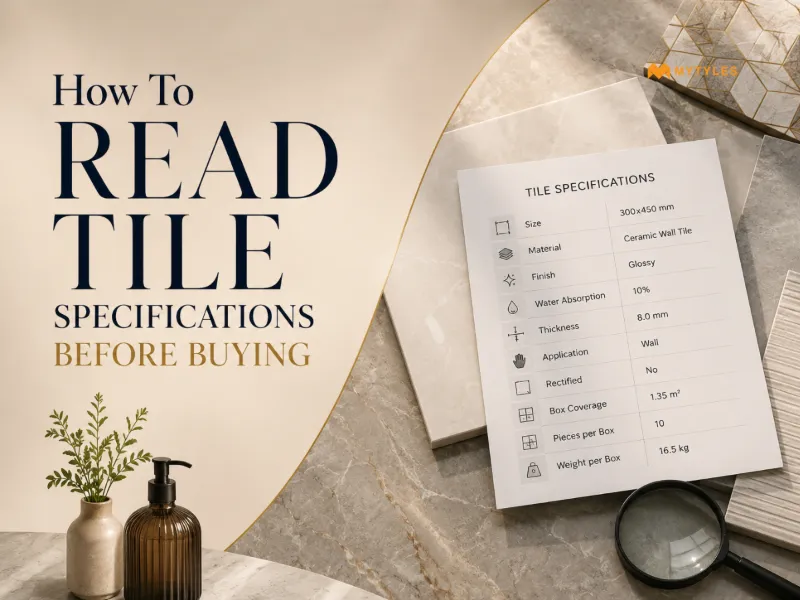
Do not finalise a feature wall tile only by design. Check the specifications first, especially finish, size, surface and application. Our guide, How to Read Tile Specifications Before Buying, can help.
Choose A Feature Wall That Looks Premium And Still Feels Practical
The best tile feature wall idea is not always the boldest one. A feature wall should match the room, the light, the furniture and how the space is used every day. In some homes, a soft marble-look wall works better than a bold pattern. In others, a textured stone wall feels more natural than a glossy finish. MyTyles offers premium wall tiles in marble, stone, wood, Moroccan, mosaic, 3D, ceramic, porcelain, and vitrified options for Indian homes. Browse designs online, compare finishes, and choose a feature wall tile that feels good on day one and still works well years later.
Expert Reviewed by Biren Agrawalla
Biren Agrawalla, the Founder of MyTyles with over 10 years of experience across tile, retail, and home decor. Driven by a passion for tiles and a deep understanding of customer behaviour, he has spent his career transforming how people discover and buy tiles online. Biren combines practical retail insight with modern digital solutions to make tile shopping smarter, more intuitive, and design focused. At MyTyles, he champions a customer first approach, ensuring every experience from browsing to buying is reliable, seamless, and inspiring.

Which Tiles Are Best For A Feature Wall?

The best tiles for a feature wall depend on the room and the look you want. Marble look wall tiles work well for premium living rooms, while stone cladding tiles suit natural accent walls. Wooden look wall tiles add warmth, and Moroccan wall tiles bring color. For easy maintenance, choose smooth ceramic, porcelain or vitrified wall tiles.
Are Tile Feature Walls Good For Indian Homes?
Yes, tile feature walls are good for Indian homes because they handle dust, touch marks and regular cleaning better than many painted or pasted wall finishes. They also work well in living rooms, foyers, bedrooms, balconies and pooja spaces. Choose the tile based on room size, lighting, furniture and how often the wall needs cleaning.
Which Tiles Are Best For A Living Room Feature Wall?
For a living room feature wall, marble look wall tiles, stone cladding tiles, wooden look wall tiles, 3D wall tiles and large vitrified wall tiles are good choices. If the room is small, pick lighter shades and simple patterns. Larger living rooms can handle darker tones, textured tiles or a stronger TV unit wall design.
Are Marble Look Wall Tiles Good For Feature Walls?
Yes, marble look wall tiles are a good choice for feature walls because they give the room a rich and polished look without using natural marble. They work well behind sofas, TV units, dining walls and foyer areas. Large sizes usually look better because they reduce joints and make the wall feel cleaner.
Can I Use 3D Wall Tiles In A Small Room?
Yes, 3D wall tiles can be used in a small room, but keep the design soft. Choose light colors, shallow textures and use them only on one wall. Deep patterns or dark shades can make a compact room feel heavy. Good lighting also matters because it helps the texture show without making the wall look crowded.
Which Feature Wall Tiles Are Easy To Maintain?
Smooth ceramic, porcelain and vitrified wall tiles are usually easier to maintain. Glossy, satin or lightly textured finishes can be wiped faster than deep carved or rough surfaces. For busy homes, avoid heavy grooves in areas that collect dust or get touched often. Always check the finish before ordering.
Where Can I Buy Feature Wall Tiles Online?
You can buy feature wall tiles online at MyTyles. The website has options in marble look, stone look, wooden look, Moroccan, mosaic, 3D, ceramic, porcelain and vitrified tiles. Before ordering, check the product size, finish, surface, price and suitable application. If unsure, contact the support team for help.

ABOUT THE AUTHOR
Aditi Bardhan
Aditi Bardhan is a professional content writer with over five years of experience creating SEO-focused, research-backed content across diverse industries. She specialises in the tile and surface materials space, writing for homeowners, architects, interior designers, and trade professionals. Her work combines technical research, design awareness, and a strong understanding of customer needs, helping readers make clearer and more confident choices. Through her content, Aditi simplifies complex material concepts, highlights practical design benefits, and helps brands build trust and authority in the tile and construction industry.