.svg)


Stone Cladding Designs for a Small House: 6 Modern Front Wall Ideas
ByHeena Dhiman

Thu , Jun 18 , 2026

Read Time: 5 Min


 Copied!
There is something about a well-finished front elevation that makes a house look complete. Not big, not expensive, just complete! And for many small homes across India, that finishing touch is missing. The walls look plain, and the entrance feels flat. Every other house on the street blends seamlessly with each other, making it hard to distinguish houses. Yet, the fix, more often than not, is simpler than people think.
Stone cladding designs for small house fronts have quietly become one of the most impactful choices in modern home design. A strip of natural stone wall cladding along the entrance. A textured stone cladding panel behind the nameplate. A stacked stone wall cladding column on either side of the gate. Incorporating these small interventions can make a big difference, making your home look distinctive.
This blog walks you through six modern stone cladding designs that work particularly well for small house front elevation design.
Why Stone Cladding Works for Small House Elevations
A small house front has less to work with. Less wall, less height, less room for the kind of design moves that make a large home look grand. Putting too much detailing can make a small home start to feel cluttered. If the detail is too little, the facade just sits there, completely flat and forgettable. Stone cladding for a small house exterior handles these problems really well. It gives the wall depth and a sense of substance without piling on layers of ornament.
Every Indian homeowner knows from experience the facts that paint fades and plaster textures start to crack over time. Exterior stone cladding design holds its form across seasons. Whether monsoons, summer heat, or humidity, none of it leaves the same mark on stone that it does on painted surfaces. That is what makes it genuinely weather-resistant wall cladding in the truest sense. You do not need to have repainting cycles. No touch-up costs every summer, and no peeling edges after the first monsoon. All these things bring us to low-maintenance exterior wall tiles.
6 Modern Stone Cladding Designs for Small House Front Elevations
Not all stone cladding is built the same. The texture, the cut, the finish: each one changes how a facade feels entirely. Here are six styles that do it well on a small house front.
1. Stacked Stone Cladding
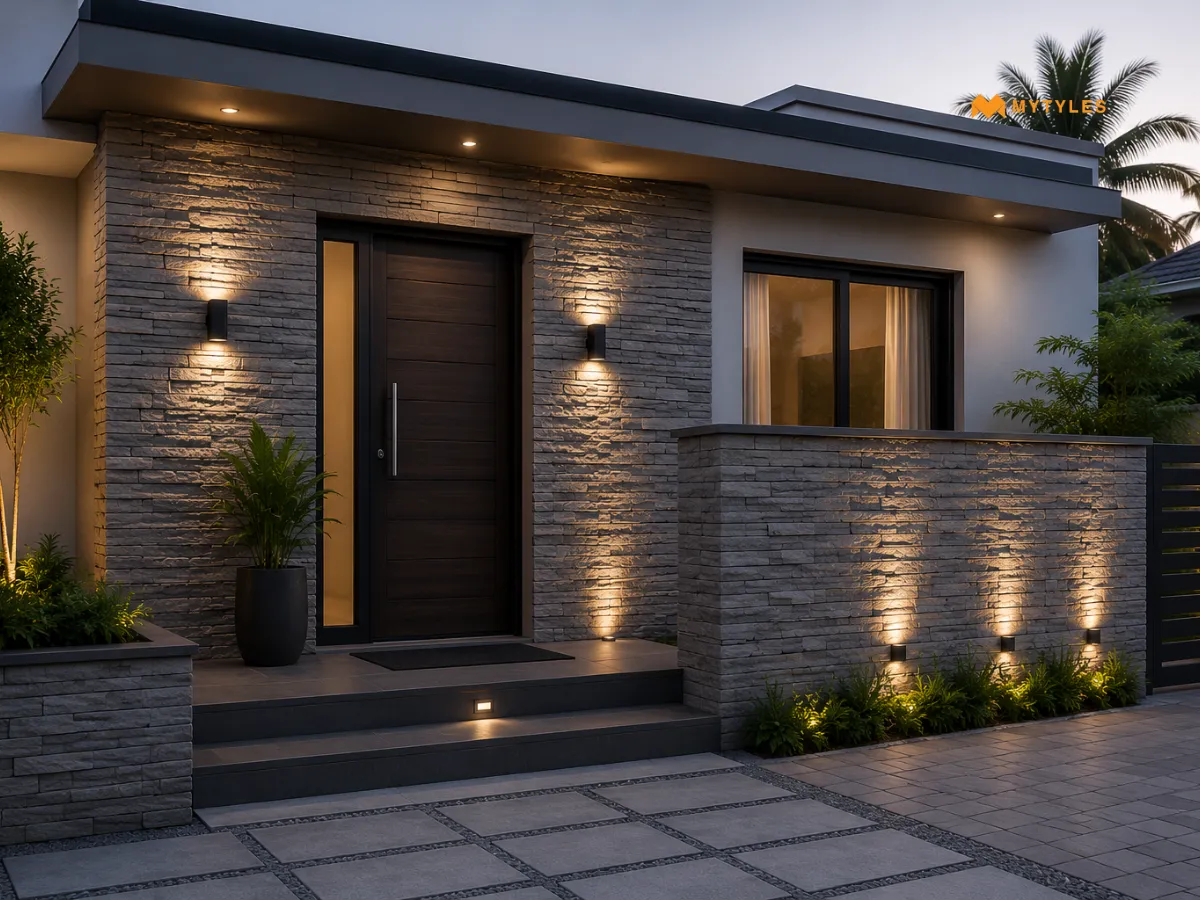
Stacked stone cladding is the most orderly of the lot. Long strips of stone cut to uniform widths and stacked in clean horizontal rows: no gaps, no exposed mortar, just a tight, composed surface that reads as deliberately modern.
For a small house front elevation design, this works beautifully on one featured wall, the area around the main door, a side pillar, or the front boundary wall. Stacked stone cladding for elevation in grey or beige tones gives a very contemporary, composed look. If you pair it with a dark front door and simple lighting, the elevation feels designed rather than decorated. For usage, it will look ideal at the entrance, boundary wall, or around the main door frame.
2. Split Face Stone Cladding
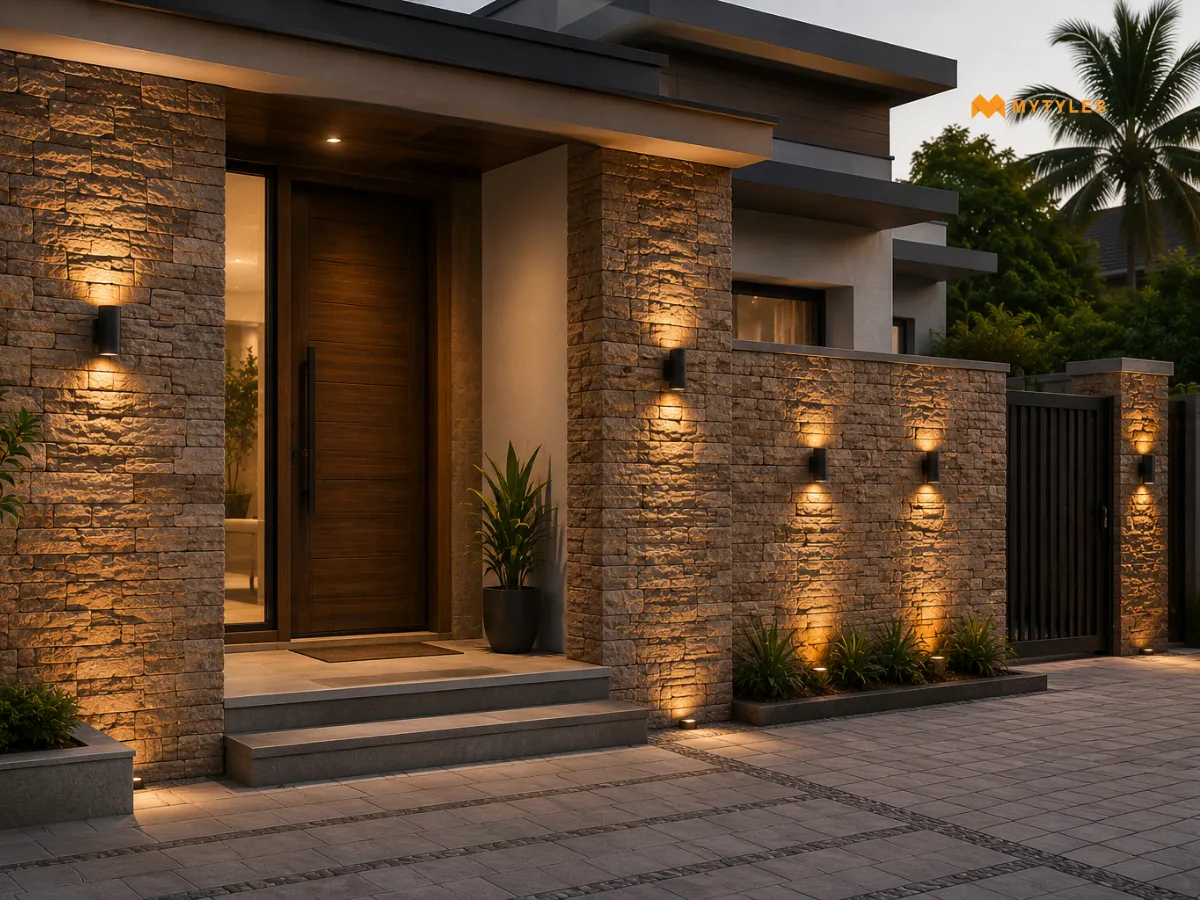
If stacked stone is about precision, split face stone cladding is about raw energy. Each tile has a rough, fractured surface, as though the stone was just broken from a rock face and mounted directly onto the wall.
The result you got is a deeply textured stone cladding surface that catches light dramatically. In the morning sun, it glows warm. In the evening, it looks almost sculptural. For Indian house front elevation design, this style works particularly well in warmer tones like brown or earthy stone cladding shades. This design works ideally when installed around pillar cladding, low compound walls, or as an accent panel beside the gate.
3. Slate Stone Cladding
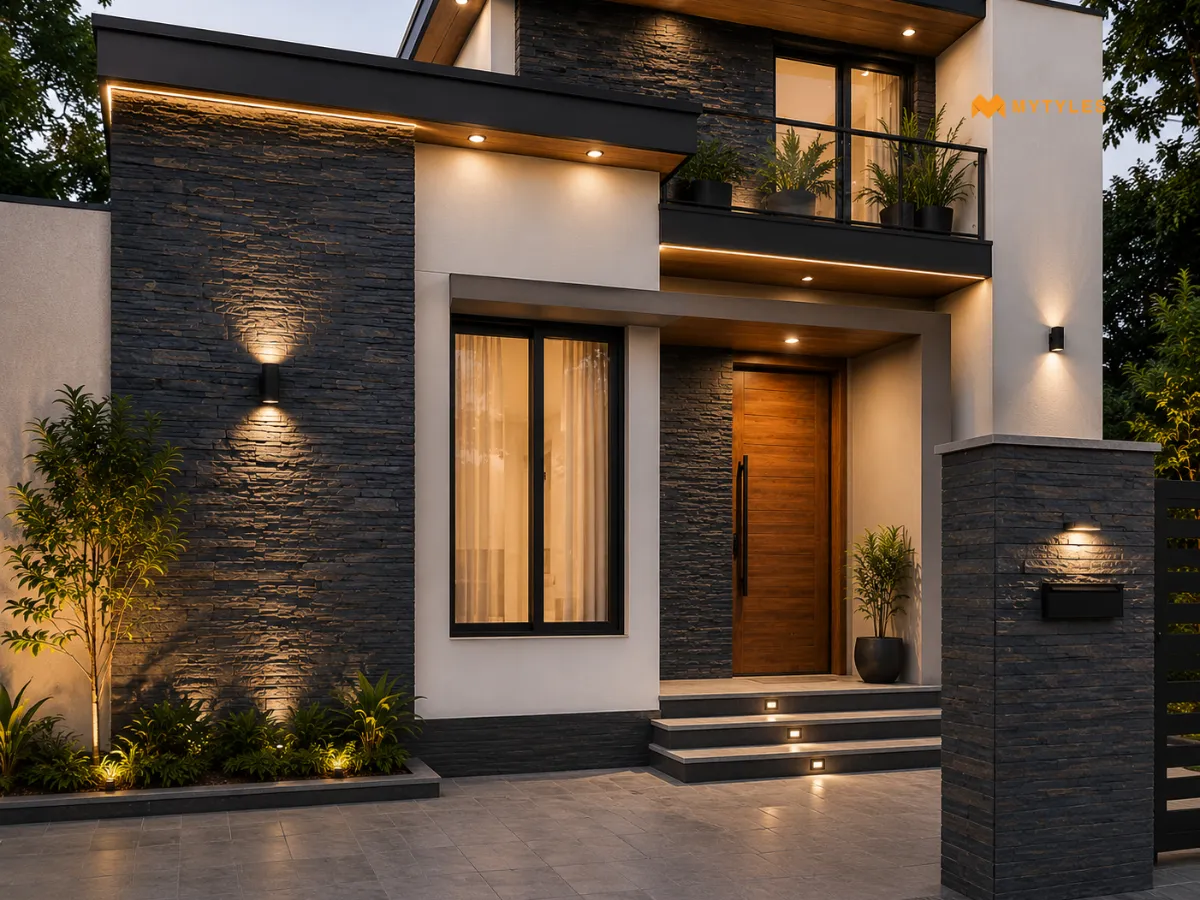
Slate stone cladding adds a layered, almost geological quality to a wall. The stone splits naturally into thin sheets, which gives it a distinctive striated surface. Each tile is slightly different from the next.
For a modern front elevation design, slate reads as refined and deliberate. It does not try too hard. This feature makes this one of the best stone cladding tiles for elevation when wanting a premium look without the luxury price tag.
Slate stone cladding for elevation in dark charcoal or deep blue-grey tones pairs well with white or cream wall paint, creating a two-tone contrast that makes even a small facade look striking. You can use this style on a full feature wall, nameplate area, or alongside windows.
4. Sandstone Wall Cladding
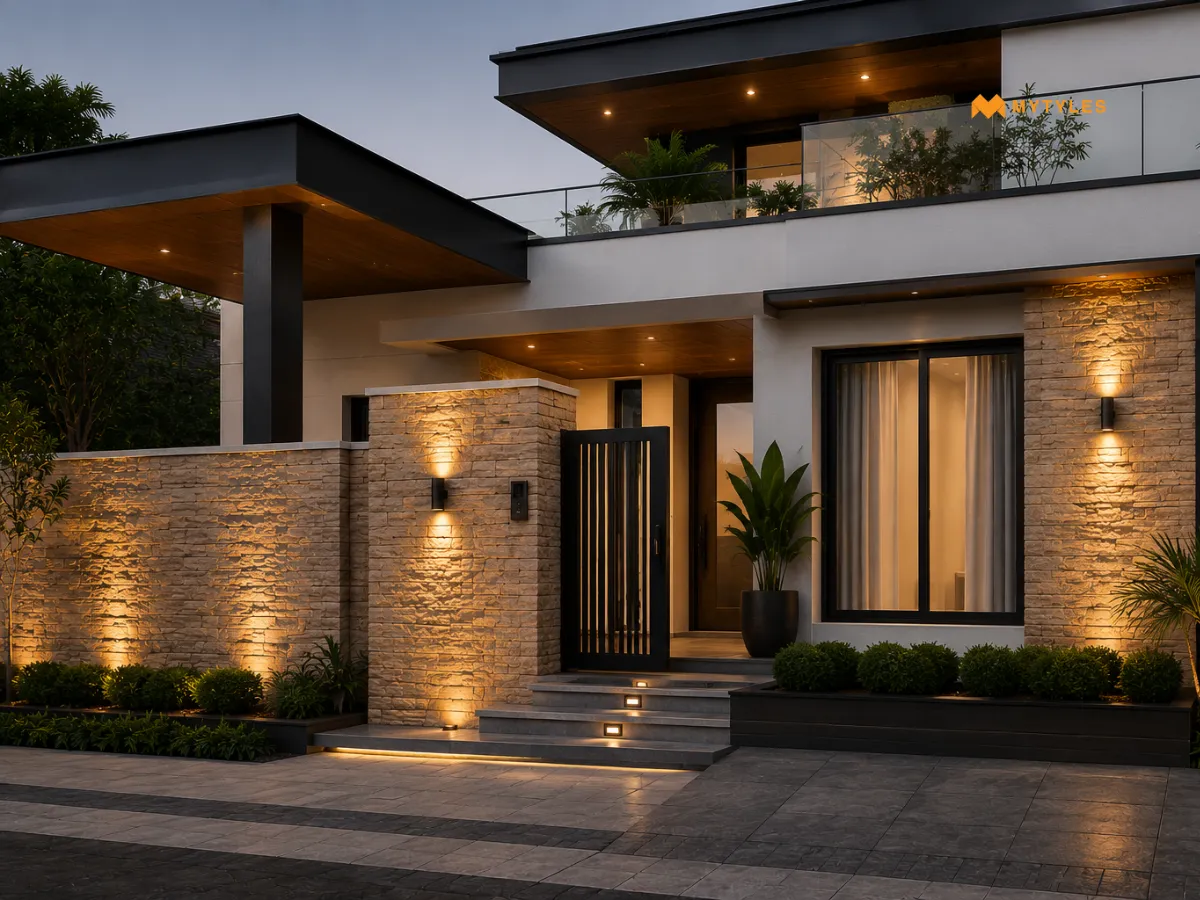
Sandstone wall cladding is arguably the most popular choice for house front stone cladding in India. And for good reason. Sandstone is warm, familiar, and incredibly versatile. It comes in honey, cream, rust, and ochre tones that feel rooted in the Indian landscape.
For a small house elevation design, sandstone adds warmth without heaviness. It is a natural stone wall cladding option that looks appropriate on traditional homes, contemporary houses, and everything in between.
The surface can be finished smooth for a modern look or left with a natural finish stone cladding feel for something more organic. It will be best used on full front elevation, boundary wall, or around the sit-out area.
5. 3D Stone Wall Cladding
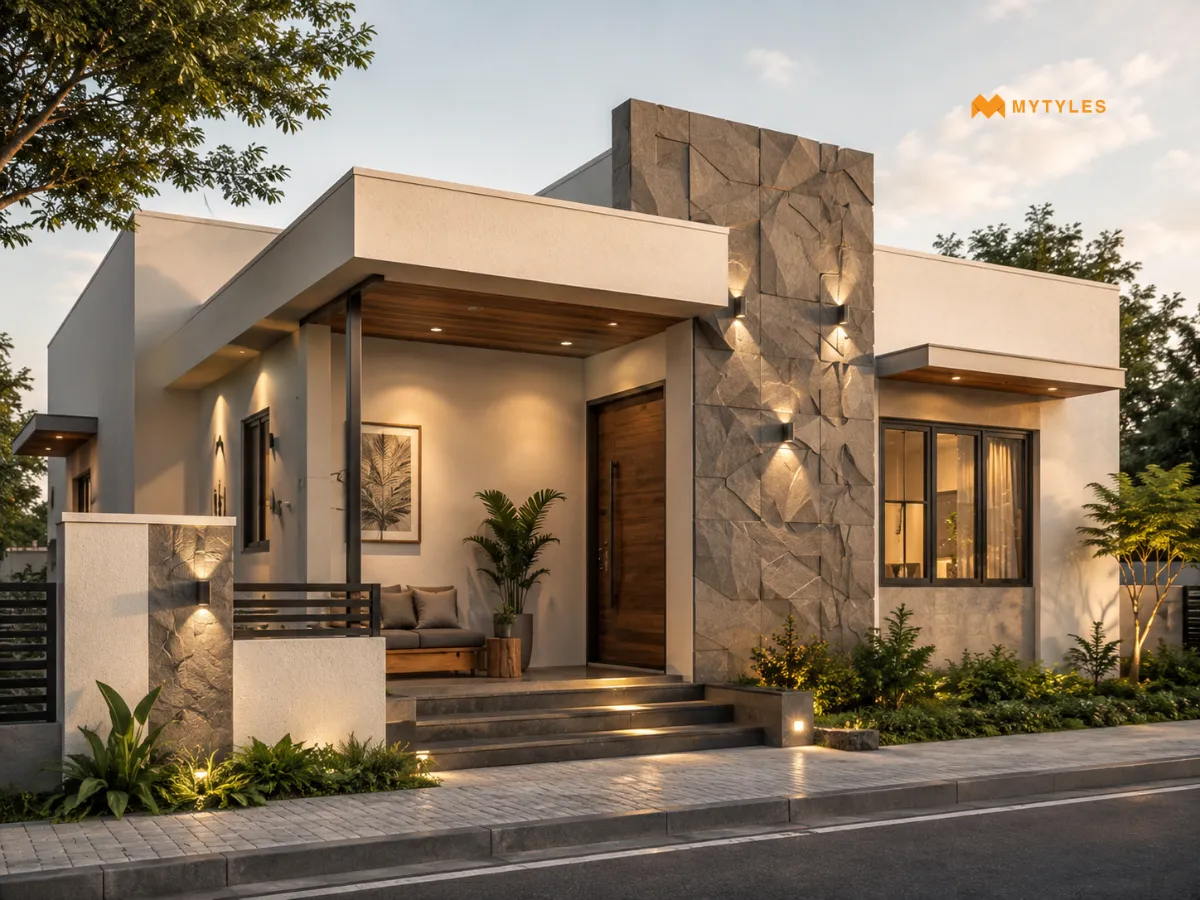
3D stone wall cladding takes the idea of texture further. These tiles have a pronounced three-dimensional relief, with geometric shapes, wave patterns, or angular cuts that project outward from the wall surface.
For compact house elevation ideas, this is one of the boldest design moves you can make. A single panel of 3D stone cladding design beside the entrance can make the whole front look intentional and modern. It works best when used sparingly. One strong panel rather than an entire wall covered in it.
In terms of front elevation tiles design, 3D stone wall cladding tiles are available as ceramic or engineered stone. Also, these tiles weigh less than natural stone and are relatively straightforward to install. This makes them a practical choice for modern house front elevation projects with budget constraints.
6. Rustic Stone Cladding with Mixed Textures
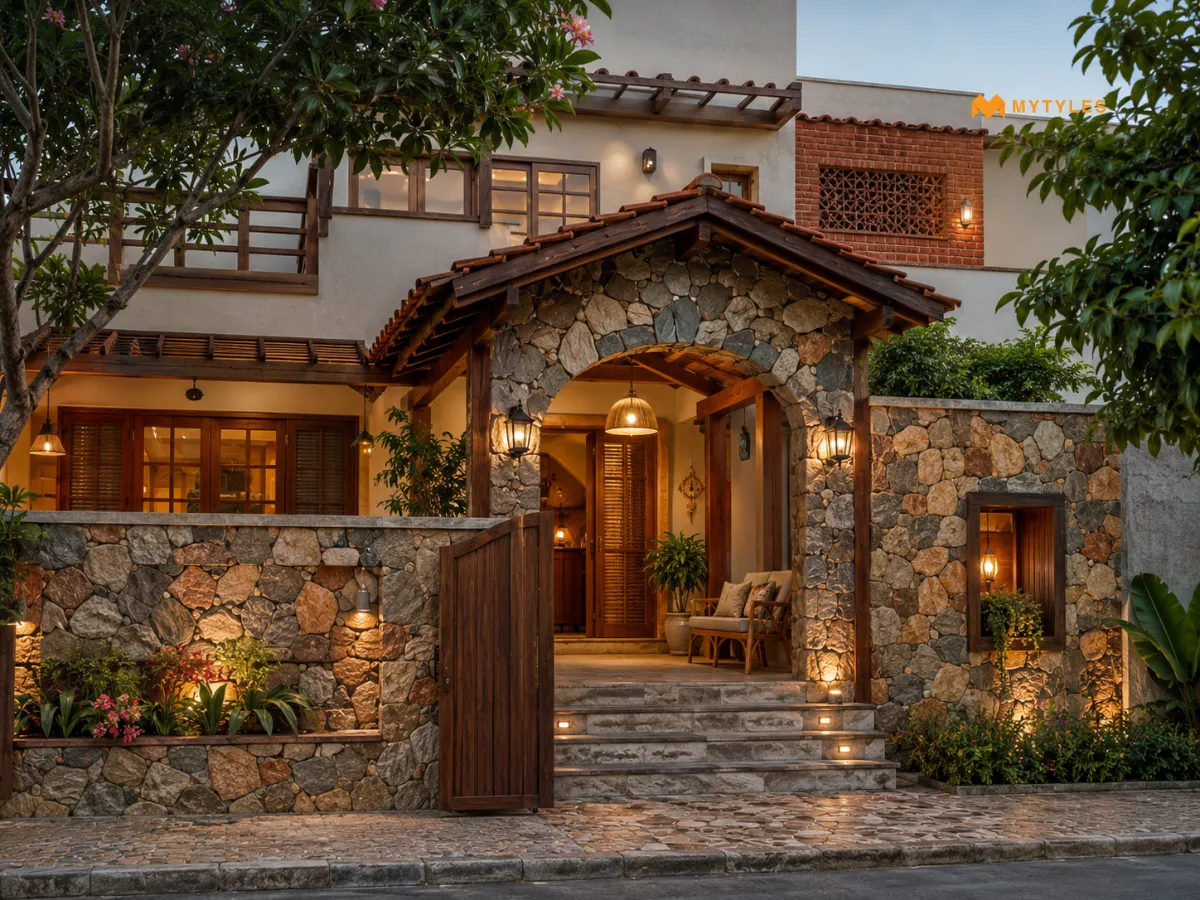
Not every home wants to look sharp. Some homes look better when they look a little worn in, a little rooted. Rustic stone cladding is built for exactly that. The stones are irregular, the layout does not follow a strict grid, and sometimes a bit of exposed brick or a wood panel gets mixed in. The result looks less like it was installed and more like it was always there.
For Indian homes with a traditional bent, especially in towns and smaller cities where that sensibility still runs strong, stone cladding style tends to land well. Additionally, if you add a warm light or two near the entrance, the whole front feels welcoming rather than just finished. The best areas for using this cladding style are compound walls, entrance arch or porch area, and garden-facing walls.
How to Choose the Right Stone Cladding for Your Home
Most people approach how to choose stone cladding for elevation by picking whatever looks good in a photo. Though, that works sometimes. But three things actually decide whether a stone looks right on a specific wall: the style of your home, your local climate, and how much surface you are actually working with.
Contemporary homes with clean lines tend to look best with stacked or slate stone cladding. Traditional homes call for sandstone or rustic stone cladding, which carry warmth that modern stone sometimes misses. On a small accent area where you need maximum visual punch in minimum space, split face stone cladding or 3D stone wall cladding earns its place far more than any flat, uniform tile finish.
Then there is colour, which people often leave as an afterthought. Grey and beige stone cladding read as clean and composed on a modern house front elevation. Earthy and brown stone cladding tones sit better on homes with a warmer, more grounded palette.
One thing most people forget to ask about: monsoon performance. If your front wall takes the full force of rain every year, check that you are picking weather-resistant wall cladding that is rated for outdoor use. Not all stone cladding products are made for heavy exposure, and it is worth confirming before you commit.
Give Your Home the Front Elevation It Deserves
Walk past a house with a well-finished front, and you notice. Walk past one that is bare and unfinished, and you notice that too, yet in a different way. Stone cladding is one of those upgrades that does not announce itself loudly but makes every other part of the elevation look more considered. The right stone cladding design does that. No demolition, no months of construction, and no major disruption to daily life.
At MyTyles, we carry a wide range of exterior wall cladding tiles designed specifically for Indian homes and climates. Whether you are looking for stone cladding tiles for elevation in a classic sandstone finish or a bold 3D stone cladding design for a feature wall, you will find it here. Visit MyTyles experience centre or explore the full collection online to find the perfect stone cladding for front elevation for your home. The best part? Pan-India delivery is available, giving special attention to your comfort.
Expert Reviewed by Biren Agrawalla
Biren Agrawalla, the Founder of MyTyles with over 10 years of experience across tile, retail, and home decor. Driven by a passion for tiles and a deep understanding of customer behaviour, he has spent his career transforming how people discover and buy tiles online. Biren combines practical retail insight with modern digital solutions to make tile shopping smarter, more intuitive, and design focused. At MyTyles, he champions a customer first approach, ensuring every experience from browsing to buying is reliable, seamless, and inspiring.

Which Stone Cladding Is Best for Exterior Walls?

Sandstone, slate, and granite are the most reliable choices for exterior walls in India. Sandstone handles humidity well. Slate gives a premium layered look. Granite is the toughest and suits high-exposure areas. For most homes, sandstone or slate offers the best balance of looks and durability.
Is Stone Cladding Good for Exterior Walls?
Yes. Stone cladding is one of the most durable exterior wall finishes available. It resists rain, heat, and humidity. It does not peel or crack the way paint or plaster can. And unlike most wall finishes, it actually improves with age, developing a natural patina over time.
How to Make a Small House Front Elevation Look Modern?
Focus on one or two zones. Add stone cladding around the entrance or on the boundary wall. Use grey or beige tones to keep it contemporary. Pair the cladding with clean door hardware and simple outdoor lighting. Less is more on a small facade.
Where to Use Stone Cladding on a House Front?
The most effective spots are around the main door, on gate pillars, along the boundary wall, and as a horizontal accent strip below the roofline. Covering the full front works on larger homes. For small houses, targeted placement creates more visual impact.
What Is the Difference Between Stacked Stone and Split Face Cladding?
Stacked stone uses cut strips laid in neat horizontal rows for a clean, modern look. Split face cladding has rough, fractured tile faces that create a bold, raw texture. Stacked stone looks refined; split face looks dramatic. Both suit exterior walls but create very different moods.
How to Choose Stone Cladding for Elevation?
Match the stone type to your home's style. Modern homes suit slate or stacked stone. Traditional homes suit sandstone or rustic mixed stone. Pick weather-resistant varieties for monsoon-heavy regions. Consider the wall size too: larger surfaces can handle bold textures, while smaller accent zones work better with simpler finishes.
Are Stone Cladding Tiles Low Maintenance?
Yes. Natural stone cladding tiles require very little upkeep. An occasional rinse with water keeps them looking clean. Some stones like slate or sandstone benefit from sealing every few years to protect against staining. Overall, stone cladding is far lower maintenance than painted or plastered walls.

ABOUT THE AUTHOR
Heena Dhiman
With a background in fashion design and over 5 years of writing experience, I bring a creative and detail-oriented eye to home and design content. My journey began with aesthetics, colours, and visual storytelling, which gradually led me to writing across lifestyle, finance, home improvement, and resource management. Over time, I discovered a strong interest in tiles and interiors, where my design background helps me understand how small choices can shape the feeling of a home. Through my content, I aim to make home design decisions easier, clearer, and more enjoyable for readers, helping them feel confident while creating spaces that reflect their style and everyday needs.