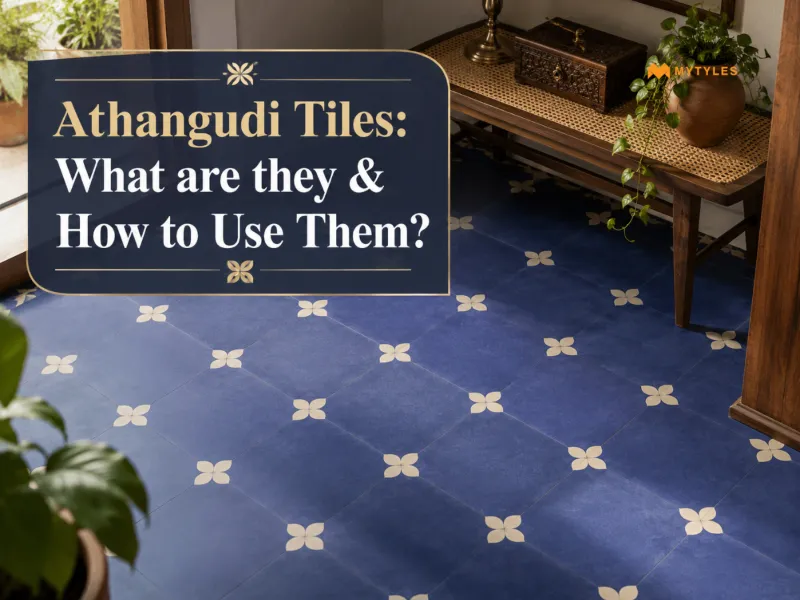
ByAditi Bardhan
Mon , Nov 23 , 2026
Read Time: 5 Min

In the weeks before Diwali, some homeowners start looking again at parts of the house they have been meaning to update. A worn entrance may need attention. The kitchen backsplash may feel dated, or the living room wall that was going to be changed “later” may move up the list.
That does not mean every room needs new tiles.
A better starting point is to pick one or two surfaces where the work is genuinely needed, then decide what can be completed properly within the available time. The six tile designs below cover different areas of the home, along with the details worth checking before any tile is ordered or removed.
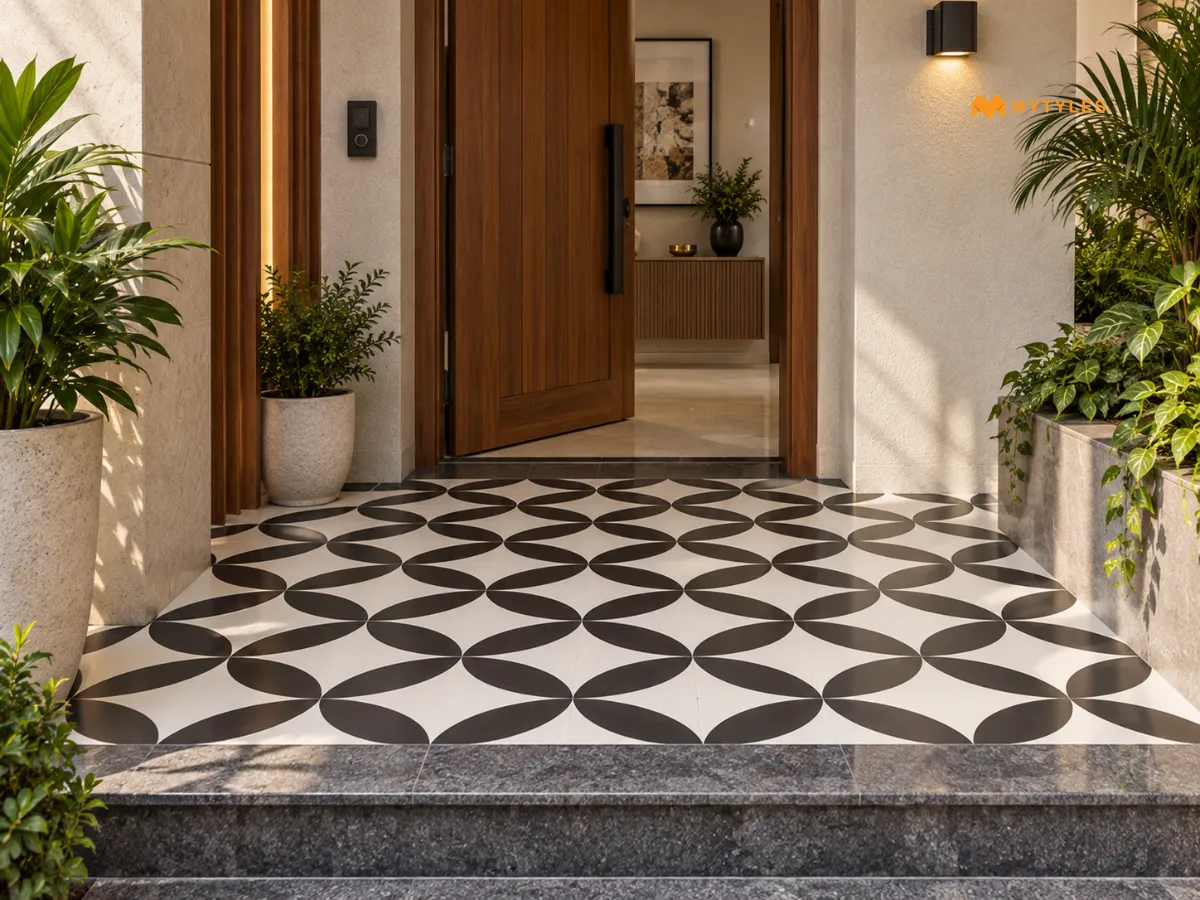
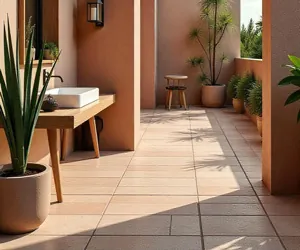
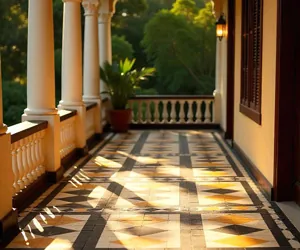
The entrance is one place where a more detailed pattern may make sense because the tiled section is often clearly defined. For an entrance tile design, first look at the size and shape of the floor. A repeated motif may read differently in a narrow entry than it does across a larger porch.
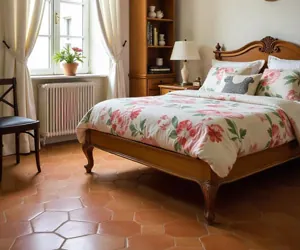
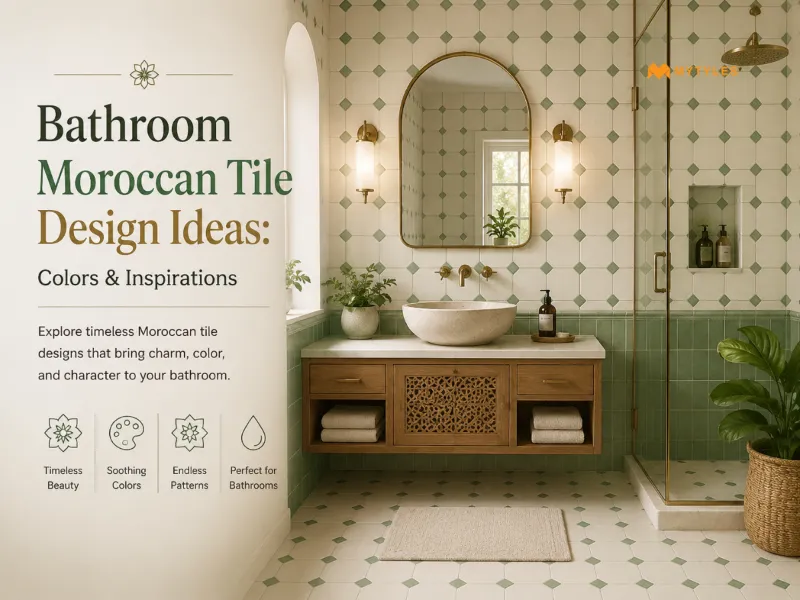
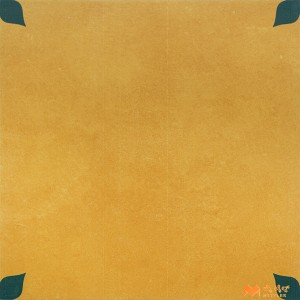
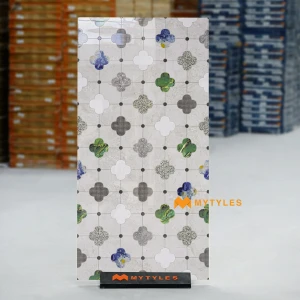
If you like stronger patterns, Moroccan floor tiles are one option to compare. Some designs use repeated geometric forms, while others combine several colours within the same tile. They do not have to cover the entire floor. Depending on the layout, the pattern could sit within a smaller section or work with a simpler surrounding tile.
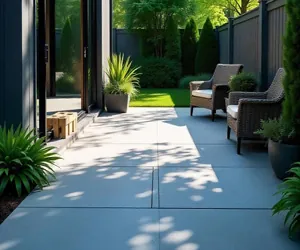
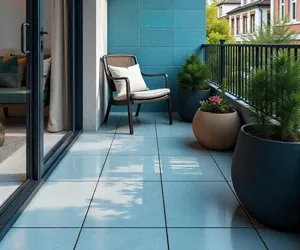
If you are choosing patterned floor tiles, lay several samples next to one another before deciding. One tile only shows part of the repeat. For a porch tile design, practical checks matter just as much:
Do not assume a tile is suitable outdoors simply because the pattern is commonly used at entrances.
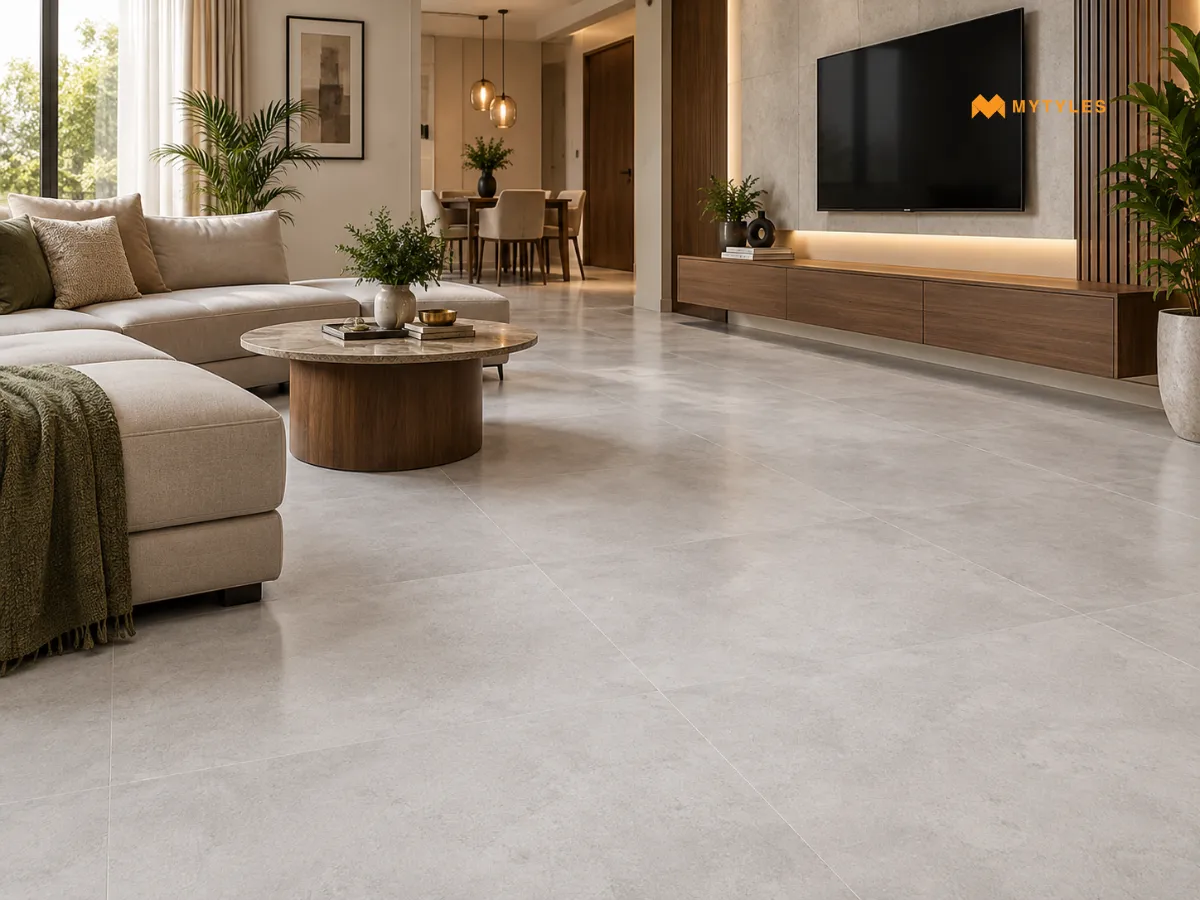
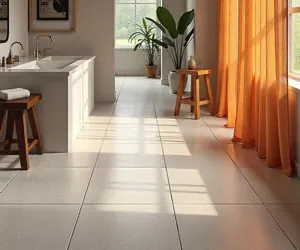
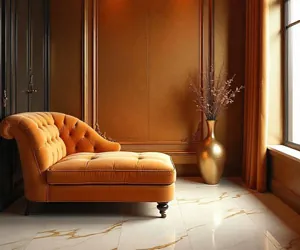
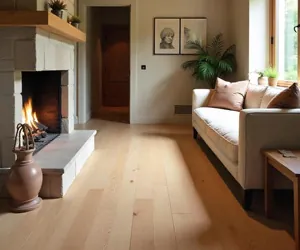
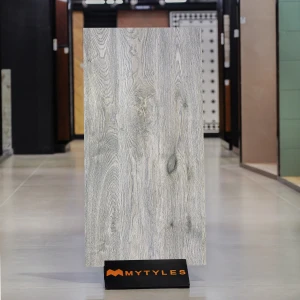
Living room flooring covers a large visible area, so a design that looks strong on a single sample can become much more noticeable once repeated. If your shortlist includes floor tiles for living room use, place a few pieces together where possible. Look at the pattern repeat, vein direction and shade variation before making the final choice.
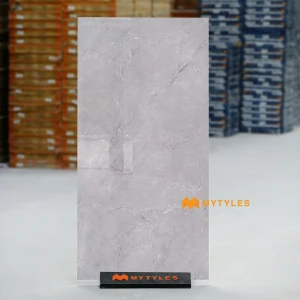
Stone-inspired surfaces are one route. Some stone look tiles have soft movement, while others use darker veins or stronger tonal changes. How noticeable those details become depends on the specific tile, floor area, lighting and furniture placement.
Large formats also appear often among modern living room floor tiles, but size should not be chosen on appearance alone. Room dimensions, base flatness, handling, joint planning and expected cuts all need attention.
While comparing floor tile design ideas, look at:
A floor tile design that works on a product image may look quite different after the same pattern is repeated across the full room.
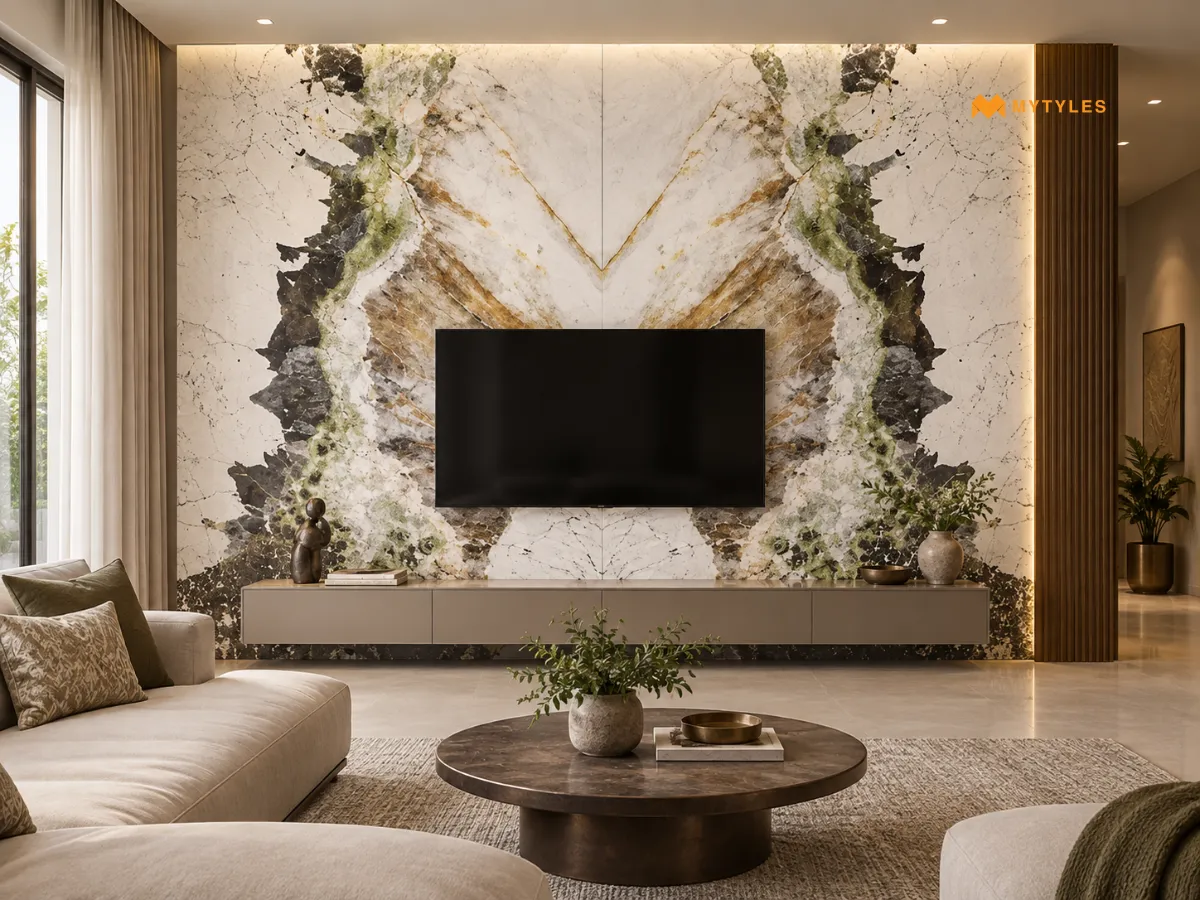
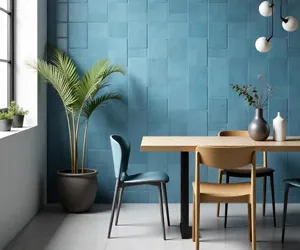
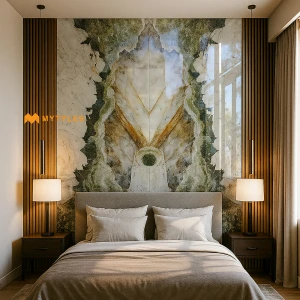
Sometimes the floor does not need touching at all. If the existing flooring still works, a single tiled wall may be a more contained renovation. TV walls, console walls and other defined sections are common places to compare wall tiles for living room use.
Texture is one option, but look at it in the actual room before deciding. With textured wall tiles, the raised or recessed details may appear stronger or softer depending on the direction of light. A sample viewed under showroom lighting may not look the same beside your existing lamps or windows.
The scale matters too. For a living room wall tile design, stand back and assess several pieces together. If a television, cabinet or shelving unit will cover part of the wall, mark those areas before choosing the pattern.
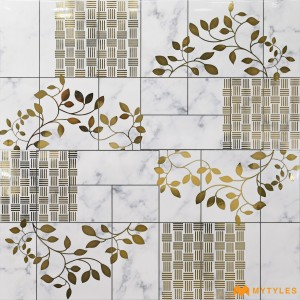
Some decorative wall tiles already carry a lot of detail. In that case, limiting them to one section may make more sense than repeating the same pattern around the room. A good living room tile design should be planned around the wall that will actually remain visible, not an empty-wall photograph.
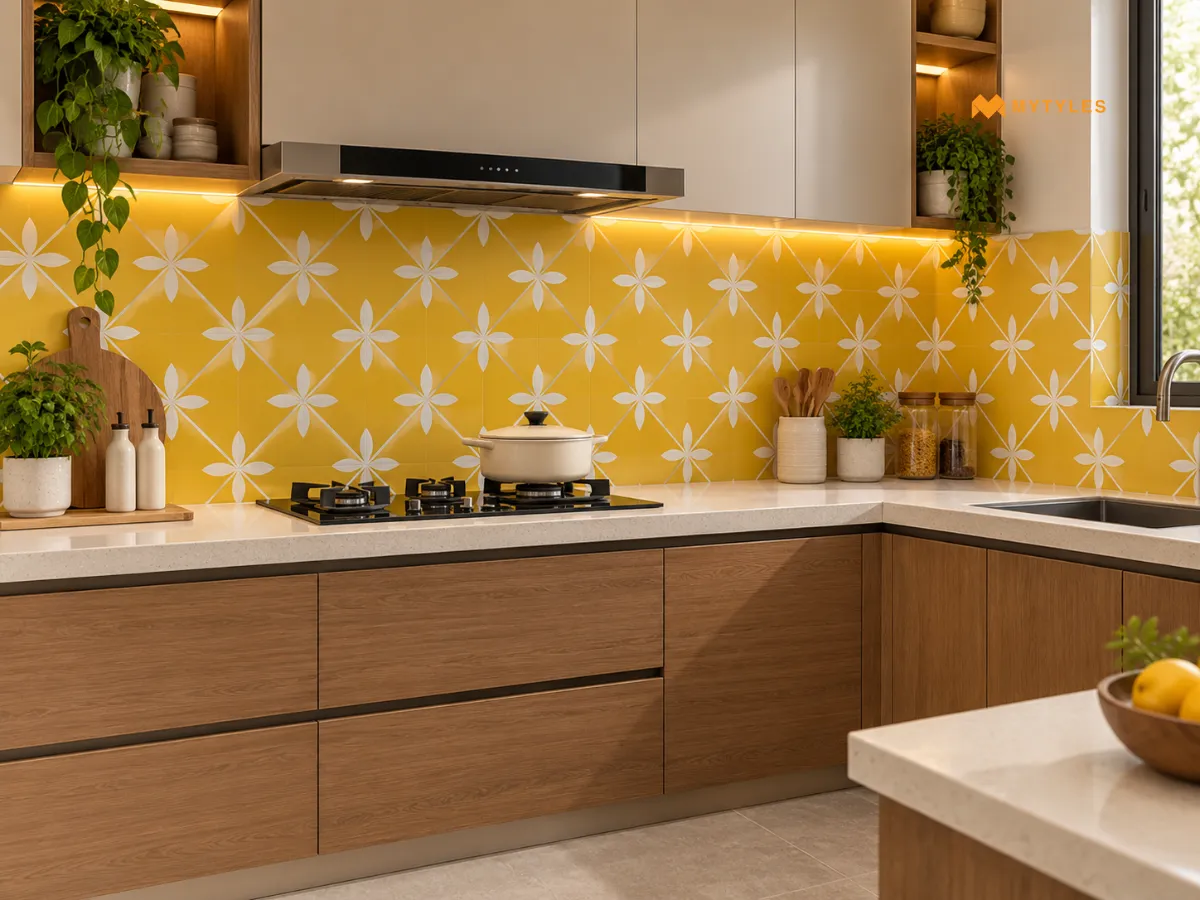
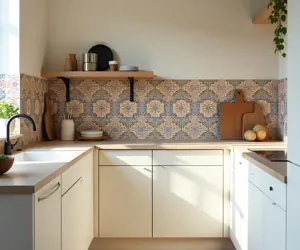
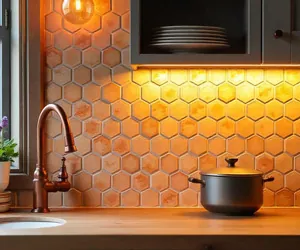
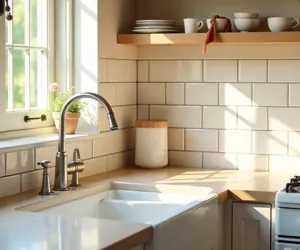
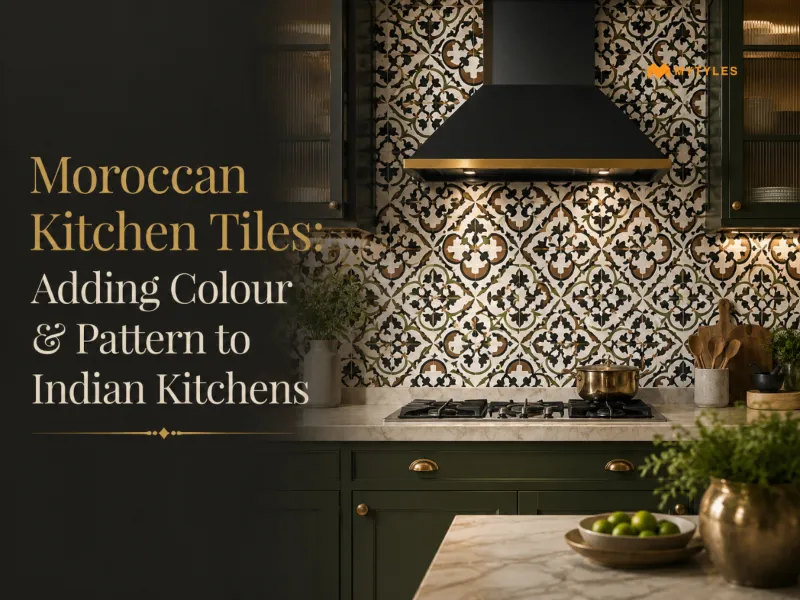
A kitchen update does not always require a new floor, cabinets and countertop at the same time. If those parts are staying, the backsplash gives you a smaller area to work on. The challenge is that it has plenty of interruptions: sockets, corners, cabinets, the hob and the sink.
For a kitchen backsplash tile design, measure the complete section before settling on the pattern. A motif that works neatly on a straight wall may need awkward cuts once it reaches a switch plate or corner.
Your kitchen wall tile design could use:
Cleaning also deserves attention here. Oil, food splashes and water can reach the wall, so look at the cleaning guidance supplied for the actual tile. Avoid choosing solely on the assumption that a certain finish will always be easier to clean. Surface texture, joints, grout and the type of mark all affect maintenance.
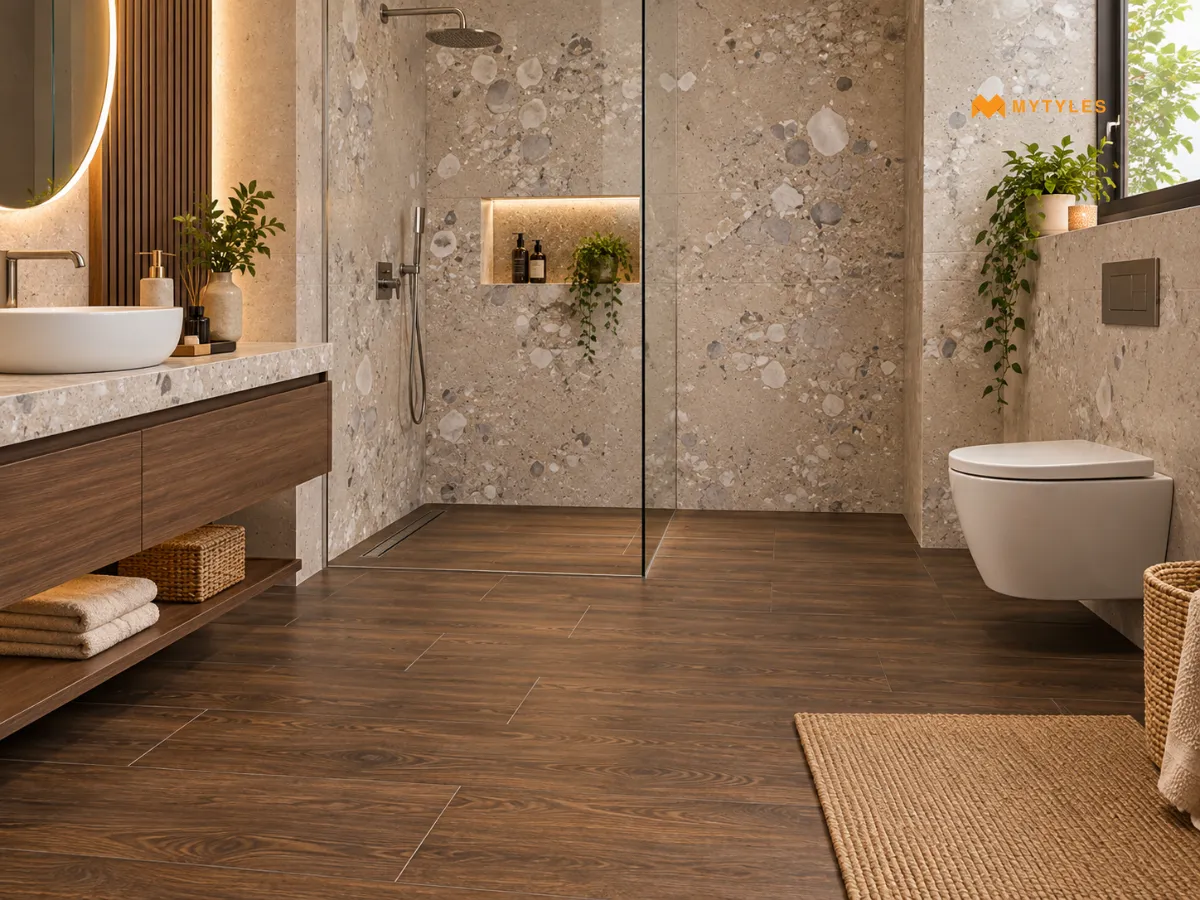
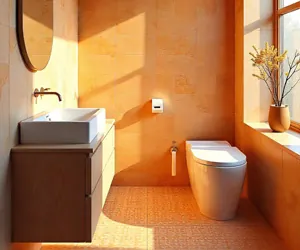
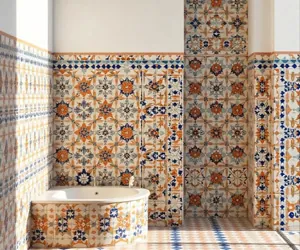
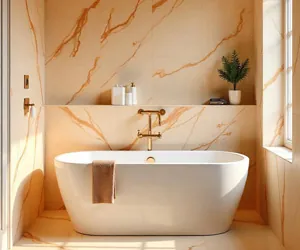
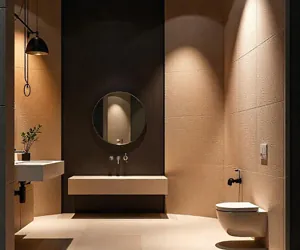
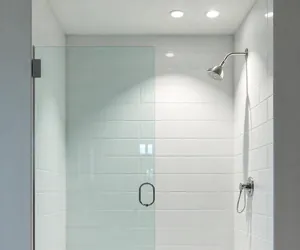
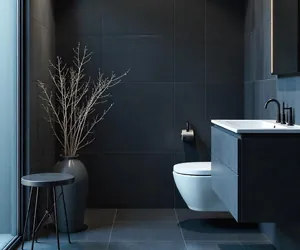
Bathrooms are where it is easiest to get distracted by pattern and forget what the floor actually has to deal with. Start with the application. When choosing a bathroom floor tile design, confirm that the product is intended for the floor, and review its available slip-resistance information. Do not use the word “matt” as a substitute for checking grip.
There is also no need to fit several strong designs into one small bathroom. A simple bathroom tile design may use one floor pattern with quieter walls or a restrained combination of two related surfaces.
If you are collecting bathroom floor tile ideas, possible directions include:
The final choice still depends on the actual product and bathroom layout. Good bathroom tile design ideas also account for what sits below and around the tile. Waterproofing, substrate preparation, slope, drainage, adhesive and grout are separate parts of the installation.
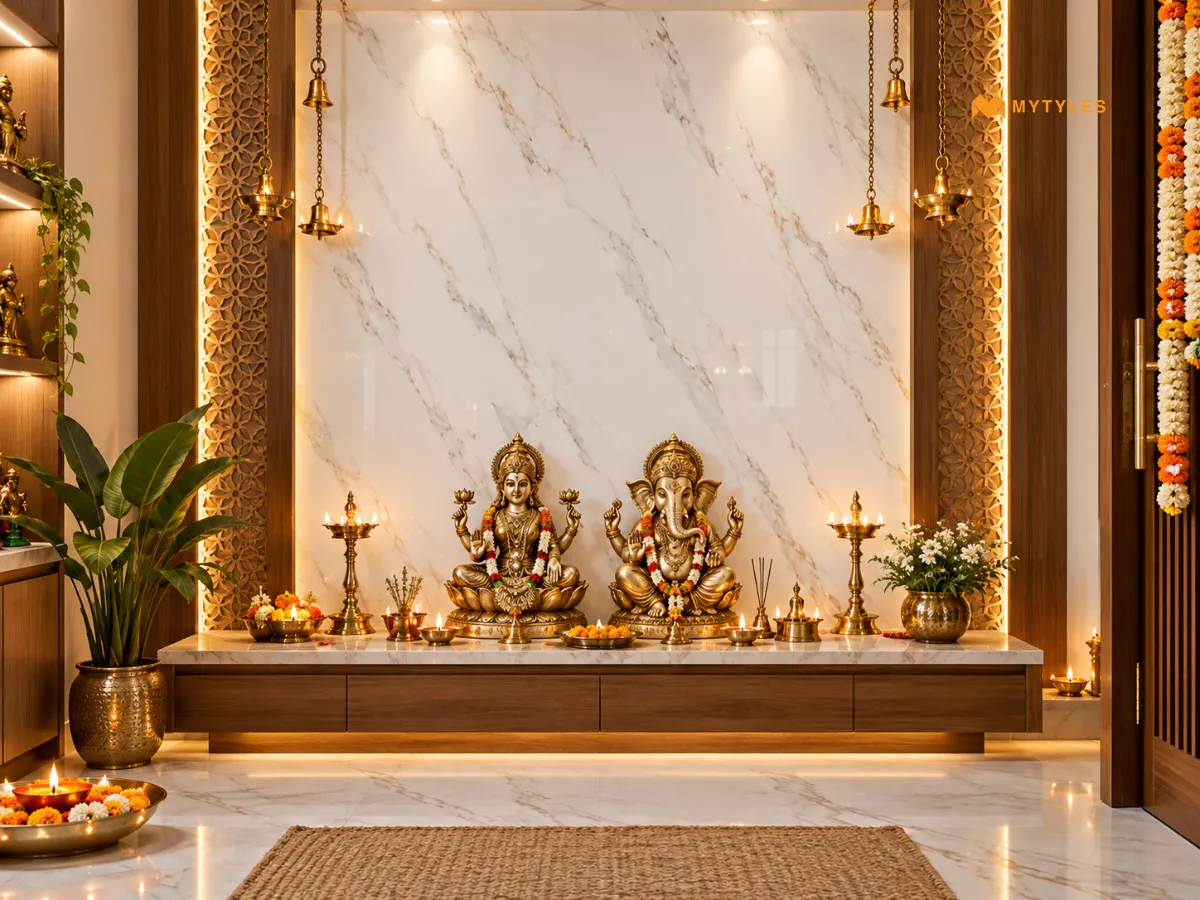
A pooja area usually has several elements competing for limited wall space: the mandir unit, shelves, lamps, idols and sometimes storage. That makes the visible wall area more important than the total wall size. When looking at modern tile designs for this space, mark out what will actually remain uncovered. A large central motif may not work as intended if most of it sits behind a shelf or mandir unit.
Possible directions include floral patterns, geometric forms, carved surfaces, marble-inspired patterns or quieter stone-style backgrounds. If you are searching for tile designs for home prayer spaces, compare the design at the size at which it will actually be installed rather than judging only from a close product shot.
It also helps to check:
Do not assume that the tile, adhesive or backing surface can tolerate direct heat. Follow the relevant product guidance for any material positioned near lamps.
A pre-Diwali renovation does not have to mean changing every floor and wall. Start with the entrance, living room, kitchen, bathroom or pooja area that genuinely needs attention, then choose the tile around that surface.
Turn your renovation plan into a shortlist you can actually use. Shop tile designs at MyTyles for entrances, living rooms, kitchens, bathrooms and pooja areas, and narrow your options by size, colour, finish and application before placing your order.
Start with the part of the house that actually needs work. A damaged floor, loose tile or unfinished surface deserves attention before a purely visual change. If everything is in usable condition, a smaller project such as an entrance section, backsplash or single wall may be easier to plan within the available time.
Begin with the surface being changed. For the floor, look at tile size, pattern repeat, finish, grout and the amount of cutting required. For a wall, account for furniture, the television and shelving. Samples are useful because lighting and repeated patterns may look different in the finished room.
They may be an option when the particular product is specified for the intended application. Do not decide from the Moroccan-style pattern alone. For floors, check floor suitability and available slip-resistance information. Exposed entrance or porch areas may also require confirmation of exterior suitability, drainage and installation requirements.
Measure around sockets, cabinets, corners, the hob and sink before finalising the layout. Patterned tiles may require more planning where several cuts are needed. Also check the manufacturer's cleaning guidance for the chosen surface, since kitchen walls may regularly come into contact with oil, food splashes and water.
No. Matt describes the surface appearance and level of reflection. It does not automatically confirm slip resistance. For bathroom flooring, review the slip-resistance information supplied for the specific tile and make the choice alongside proper slope, drainage, substrate preparation and waterproofing.
Not necessarily. Rooms can have different practical requirements and may not need the same surface. If several areas are visible together, related colours, patterns, scales, or material looks may help them sit together visually. The product chosen for each area should still suit its specific application.
Order your tiles once the measurements, design and quantity are finalised. Leave enough time for delivery, installation and any unexpected delays. Check stock availability before placing the order, especially if you need matching tiles for a larger area. It is also worth keeping a few extra tiles for cuts and possible replacements.
Aditi Bardhan
₹128.00 / Sq.Ft
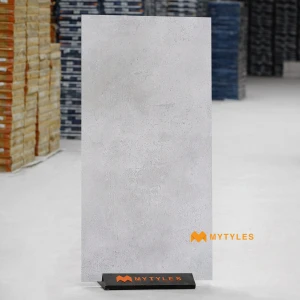
₹150.00 / Sq.Ft
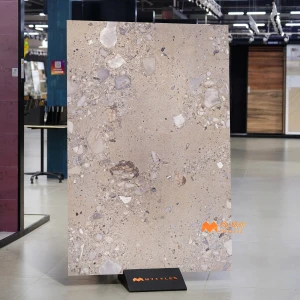
₹210.00 / Sq.Ft
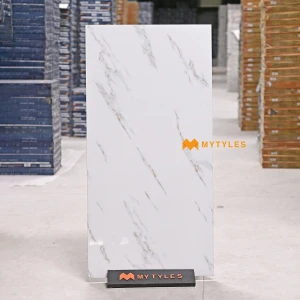
₹79.00 / Sq.Ft
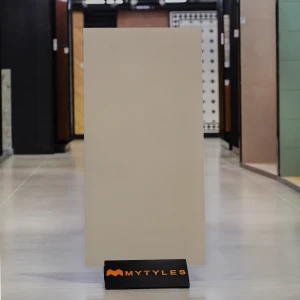
₹95.00 / Sq.Ft
₹75.00 / Sq.Ft
₹134.00 / Sq.Ft
₹495.00 / Sq.Ft
₹17,360.00 / Set

₹21,800.00 / Piece
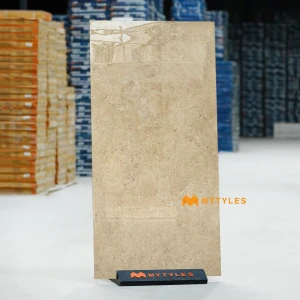
₹85.00 / Sq.Ft
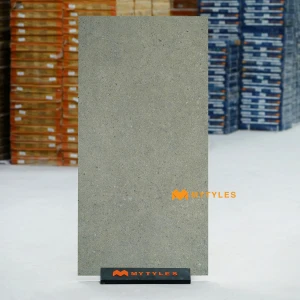
₹108.00 / Sq.Ft
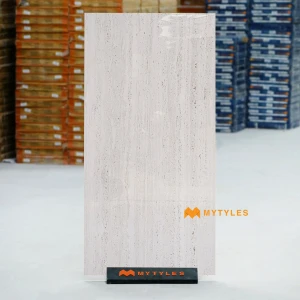
₹85.00 / Sq.Ft
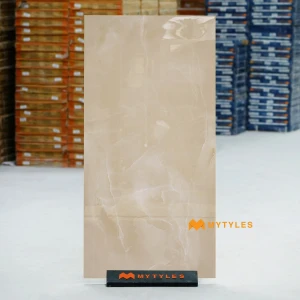
₹95.00 / Sq.Ft

₹165.00 / Sq.Ft
₹105.00 / Sq.Ft
₹105.00 / Sq.Ft
₹105.00 / Sq.Ft
₹110.00 / Sq.Ft
₹99.00 / Sq.Ft
₹99.00 / Sq.Ft
₹118.00 / Sq.Ft
₹118.00 / Sq.Ft
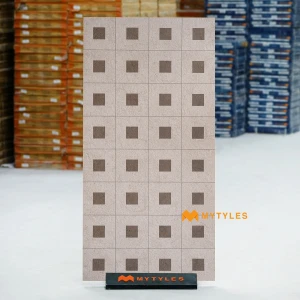
₹118.00 / Sq.Ft
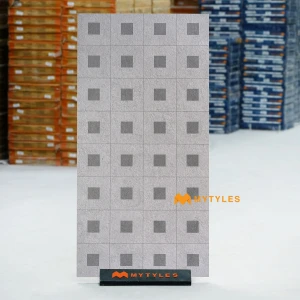
₹118.00 / Sq.Ft
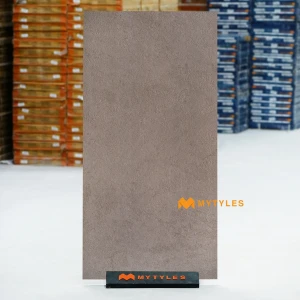
₹118.00 / Sq.Ft
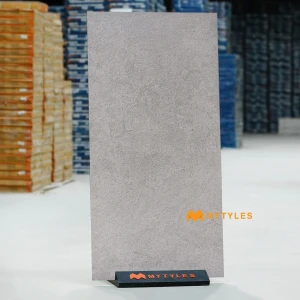
₹118.00 / Sq.Ft
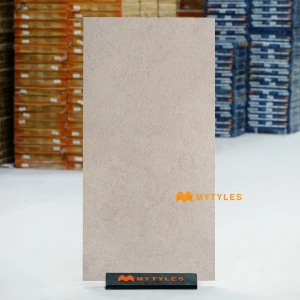
₹118.00 / Sq.Ft
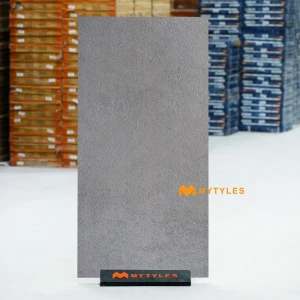
₹118.00 / Sq.Ft
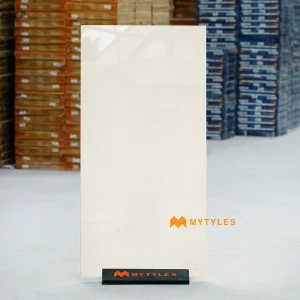
₹138.00 / Sq.Ft
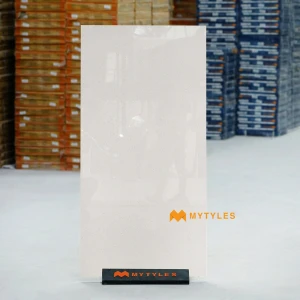
₹138.00 / Sq.Ft
₹105.00 / Sq.Ft
₹105.00 / Sq.Ft
₹98.00 / Sq.Ft

₹105.00 / Sq.Ft