.svg)


Matt vs Glossy Vitrified Tiles: Which Finish Works Where?
ByNabiya Naqvi

Mon , Sep 14 , 2026

Read Time: 5 Min


 Copied!
Walk into any tile showroom, and the first decision that grabs attention is not the color or the size. It is the finish. Matt or glossy? Both are available across vitrified tile collections. But choosing between them needs more than personal preference.
The vitrified tile finish is not just a visual choice. It can affect how the surface reads under different lighting, how much maintenance it needs in daily use, and whether it is appropriate for the specific floor or wall application. Getting it wrong does not always show up immediately. Here’s what both finishes are, where each performs, and how to choose between them before the tile goes down.
What Are Matt Finish Vitrified Tiles?
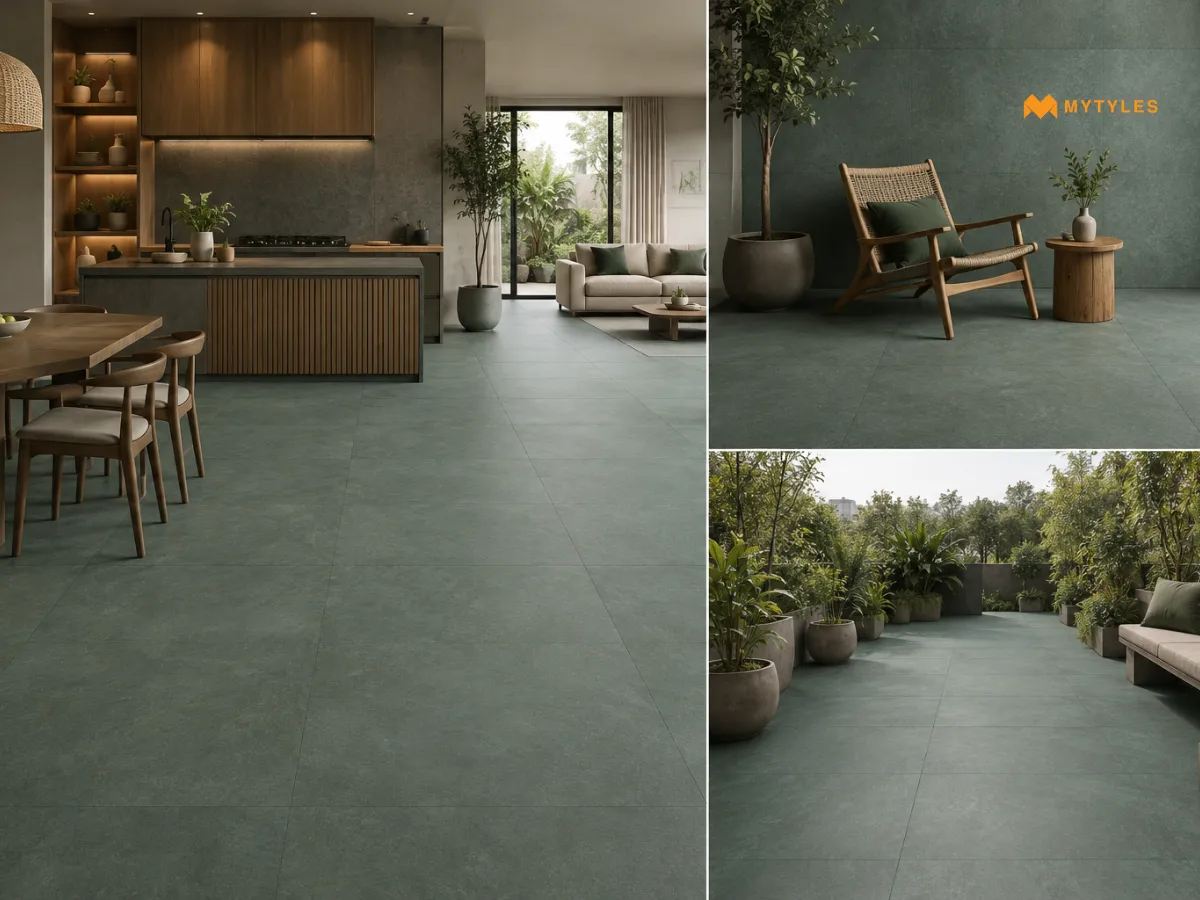
Matt-finished vitrified tiles have a less reflective surface produced during the manufacturing process. It diffuses light across different lighting conditions and times of day. These tiles can be considered for use in kitchens, living rooms, bedrooms and commercial spaces where the lighting conditions change significantly throughout the day. For floor applications, please check the floor suitability and slip resistance information.
Some of the matt tiles carry a slight surface texture that varies across products. So, these textured tiles can be used on walls or feature walls. There are several design options available in matt vitrified tiles.
What Are Glossy Vitrified Tiles?
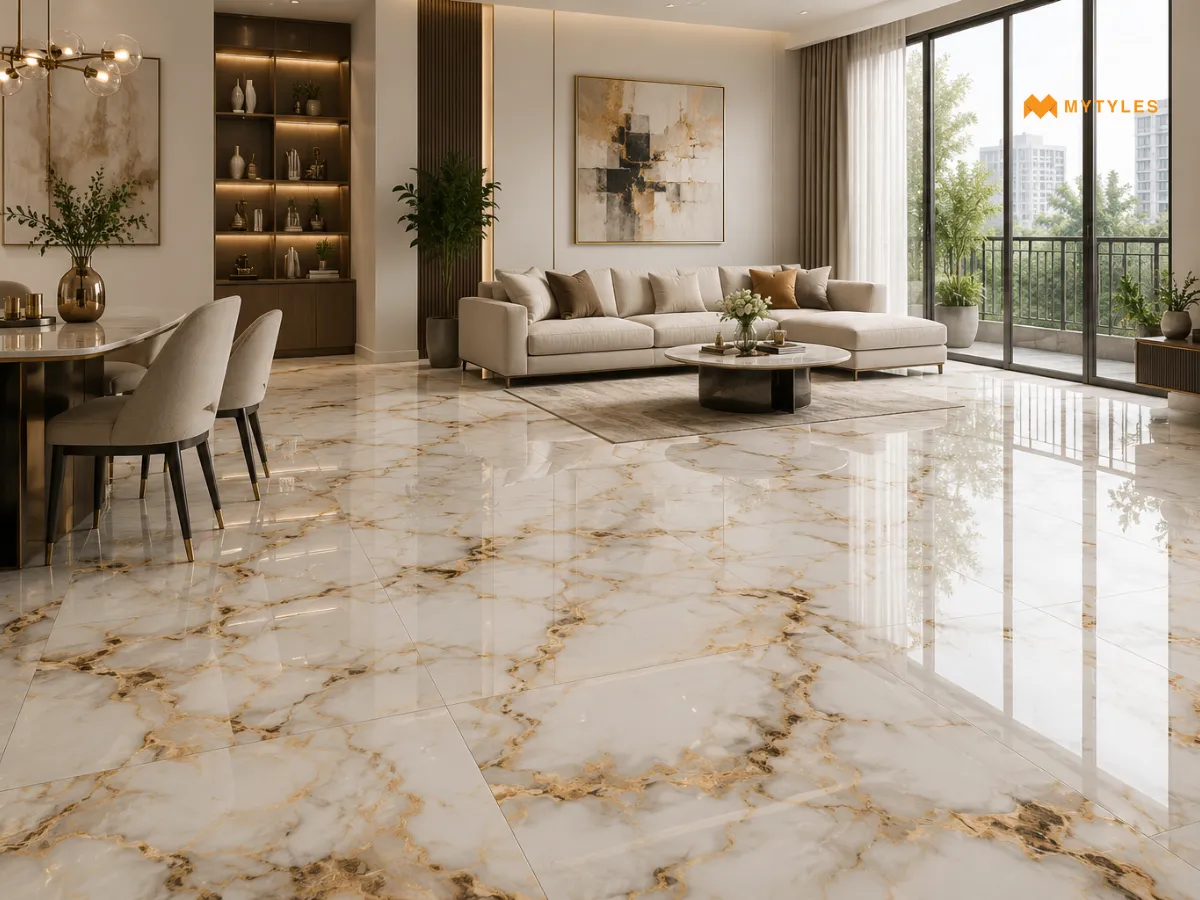
Glossy-finish vitrified tiles have a smooth, reflective surface. These reflective vitrified tiles look different at different times of day as the natural light shifts or under warm versus cool artificial lighting. This effect is what gives glossy tiles their visual depth. The surface is smooth to the touch; therefore, for floor application, the slip resistance rating for a particular product should always be checked.
Matt vs Glossy Vitrified Tiles: Key Differences
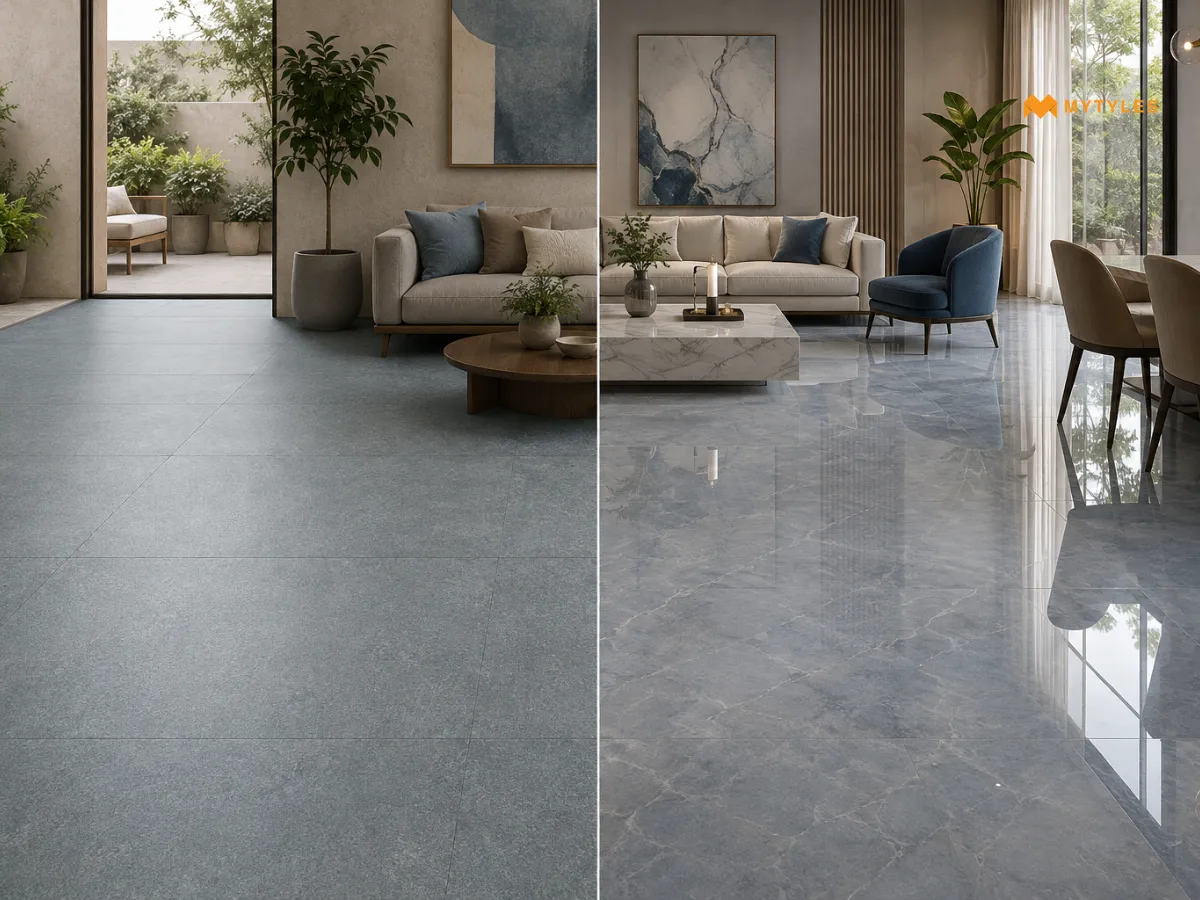
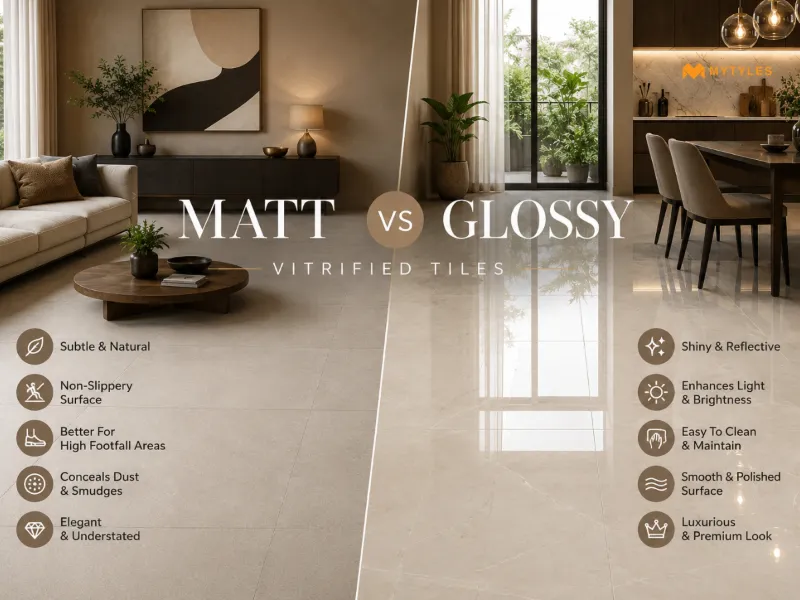
Modern vitrified tile designs are available in both matt and glossy finishes. Usually, tile design is the first thing people notice. But when someone touches the tile, it is the texture that is felt first. Both the finishes have visual and textural differences, so let’s have a brief look at the key differences between matt and glossy finishes.
Factor | Matt Finish | Glossy Finish |
Light Response | Diffuses light, gives fewer reflections | Reflects light, responds to light source |
Appearance | Low reflection and soft appearance | Reflective, bright, visually active |
Maintenance | Makes some everyday marks less noticeable | Shows watermarks and fingerprints more readily |
Slip Resistance |
Varies by product; check slip-resistant information | Varies by product; suitability should be verified before floor use |
Common Applications | Kitchens, passages, bedrooms, selected outdoor-rated applications | Living rooms, feature walls, entrance lobbies; check the suitability |
Color Reading | Fewer pronounced reflections in different lighting conditions | Reflections change with light source and time of day |
Disclaimer: For wet or high-risk areas, select tiles based on the manufacturer's specified application and slip-resistance information rather than finish name alone.
Matt or Glossy Tiles: Which Finish Works Where?
It is important to understand that, out of the two finishes, each has its own features and reads differently in the same lighting and interior settings. Let’s discuss in detail how a matt or glossy finish works across different spaces.
Living Rooms
Glossy vitrified tiles are commonly considered for living rooms when a reflective floor is part of the design intent. The glossy vitrified tiles catch light from windows and artificial sources and bounce it across the floor. Large-format glossy tiles in neutral tones on a living room floor can reduce the number of grout lines and add visual depth to the surface.
Matt vitrified tiles in the living room can be considered for a quieter and softer look, where a more grounded floor surface is the interior direction.
Kitchens
For kitchen floors, textured or matt vitrified tiles are often considered, as they deal with oil, water, and daily footfall that may make some of the splashes and stains less visible on a kitchen floor. Glossy vitrified tiles for kitchen walls and backsplashes can be considered because the smooth surface is easy to maintain with routine cleaning, and the reflective quality of these tiles can create a good visual effect in the kitchen.
Bathrooms
For bathroom floors, the slip resistance rating of the specific tile matters more than the finish preference. Textured matt tiles may be considered for wet bathroom floor areas but the finish alone doesn’t confirm the slip resistance. Vitrified tiles for bathroom walls in a glossy finish are a standard specification since the reflective surface adds brightness to a compact space and the vertical surface is sometimes easier to wipe.
Bedrooms
Vitrified tiles for bedrooms have more flexibility on finishes than kitchens or bathrooms since the surface conditions are less demanding. Matt tiles in warmer tones suit bedrooms where a quieter floor surface fits the interior direction. Glossy tiles may reflect the available light in the bedroom and add more character to the space.
Outdoor Areas
For covered outdoor areas, vitrified floor tile finishes in rustic and textured matt tiles are considered better than glossy options. But the outdoor floor suitability must be checked before making the final choice. For open outdoor spaces with direct rain exposure, the product page should be confirmed for outdoor suitability before ordering, regardless of the finish.
How To Choose Between Matt and Glossy Vitrified Tiles
Three questions help settle this before the tile is ordered.
Where is the tile going? Floors in wet areas or high-traffic zones need a confirmed slip resistance rating. Matt and textured finishes can be considered for those applications, depending on the product suitability. Walls and dry floor areas give more flexibility in choosing the finish.
How much light does the room get? Rooms with limited natural light benefit from the reflective quality of a glossy tile. In well-lit rooms, both finishes can work visually, but it may vary depending on the tile designs also.
How much maintenance is realistic? Glossy tiles may show watermarks, fingerprints, and everyday marks more readily than matt options. In a kitchen or high-use passage, that difference in maintenance adds up over time. In a bedroom or formal living room that sees lighter use, it matters less.
Can You Combine Matt and Glossy Tiles?
Yes, combining matt and glossy tiles can create useful contrast while allowing different surfaces to serve different purposes.
A glossy feature wall alongside matt floor tiles in the same room creates a contrast that gives each surface a distinct role. The floor stays grounded and practical. The wall adds reflective depth and visual interest.
In a bathroom, a glossy wall tile alongside a textured matt floor tile is one of the most practical combinations since each finish is doing the job that suits the surface it is on. The same principle applies in kitchens where a glossy backsplash alongside a matt floor tile can serve different visual and functional roles.
The grout becomes an additional consideration when mixing finishes in the same space. A grout tone that is similar to the tile color reads more continuous. On the other hand, contrasting grouts can also look interesting if the right color combinations are used.
Matt Vs Glossy Vitrified Tiles: Making The Right Choice For Your Space
Matt vs glossy vitrified tiles are not competing options where one is definitively better. They are the finishes with different properties, each suited to different surfaces and room conditions. The right finishes in an Indian home depend on the lighting and the maintenance reality of the specific space rather than a general preference for one over the other.
MyTyles carries vitrified tiles across matt, glossy, high-gloss, lappato, sugar, rustic, and carving finishes in multiple styles and sizes. Browse the full range, compare finish options against the room and application, and visit the MyTyles Experience Centre to see how each finish reads in a real setting before the order goes in.

Which Living Room Floor Tile Finish Should I Choose: Matt Or Glossy?

The right living room floor tile finish depends on the room’s lighting, design style, maintenance preferences, and the specifications of the selected tile. Glossy finishes reflect more light and can create a brighter appearance, while matt finishes provide a more understated, low-reflection look. Many modern vitrified tile designs are available in both finishes.
Which Kitchen Floor Tile Finish Is More Practical?
When choosing a kitchen floor tile finish, consider expected foot traffic, exposure to spills, cleaning requirements, and slip resistance. Matt or textured finishes can make some everyday marks less noticeable, while glossy surfaces may show footprints and splashes more readily. Always check whether the specific tile is recommended for kitchen flooring.
What Is A Suitable Bathroom Floor Tile Finish?
A suitable bathroom floor tile finish should be selected primarily according to the tile’s intended application and slip-resistance characteristics. Textured or matt options are commonly considered for bathroom floors, but a matt appearance alone does not guarantee better grip. Check the specifications of the individual product before selection.
Does The Finish Determine The Slip Resistance Of Vitrified Tiles?
No. The slip resistance of vitrified tiles cannot be determined from terms such as matt or glossy alone. Surface texture and the specifications of the individual product also matter. For wet areas and other locations where grip is important, check the manufacturer’s declared slip-resistance or application information.
What Should I Know About Cleaning Matt Vitrified Tiles?
For routine cleaning of matt vitrified tiles, remove loose dust and dirt before mopping with an appropriate tile-cleaning solution according to the tile manufacturer’s care instructions. Textured matt surfaces may require additional attention in their surface irregularities, depending on the particular tile.
Is Cleaning Glossy Vitrified Tiles Difficult?
Cleaning glossy vitrified tiles is generally straightforward because of their smooth surface, although fingerprints, footprints, watermarks, and similar marks can be more noticeable on reflective finishes. Cleaning requirements ultimately depend on the location, frequency of use, type of dirt, and specific tile.
How Do I Choose The Right Tile Finish For Indian Homes?
Choosing a tile finish for Indian homes should involve more than appearance. Consider where the tile will be installed, exposure to water and dirt, foot traffic, available light, maintenance preferences, and the product’s stated application. Matt and glossy finishes can both work well when the specific tile is suitable for the intended space.

ABOUT THE AUTHOR
Nabiya Naqvi
Nabiya Naqvi is a content writer with a postgraduate background in chemical sciences and a strong passion for creative expression. Her journey into writing began with a love for storytelling and gradually grew into a professional path focused on interiors, home decor, and design-led content. With a keen interest in beautiful living spaces, Nabiya enjoys simplifying design ideas and making them relatable for everyday readers. Through her writing, she blends creativity, research, and an eye for detail to help homeowners understand how tiles, textures, and thoughtful material choices can transform a space.