ByAditi Bardhan
Sun , Aug 23 , 2026
Read Time: 5 Min

A pooja room wall should feel calm, not crowded. The tile behind the mandir, around the niche or near the entrance can decide how complete the space looks. This article focuses on inlay tile ideas for pooja room walls using tiles that reproduce an inlay-style pattern, not traditional hand-cut stone inlay.
These tiles take inspiration from marble work, floral craft, lotus motifs and temple details. They can be used in small mandir corners, separate pooja rooms and modern apartments, depending on the tile design, finish, wall size and lighting.
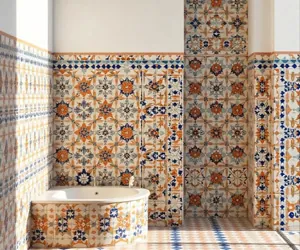
Inlay tiles for pooja room walls recreate the look of inlay work through printed, patterned or marble-inspired designs. They work best when the pattern feels calm. Good pooja room tile ideas should match the mandir material, wall color, floor finish and lighting. Below are 9 ideas that can work for both traditional and modern homes.
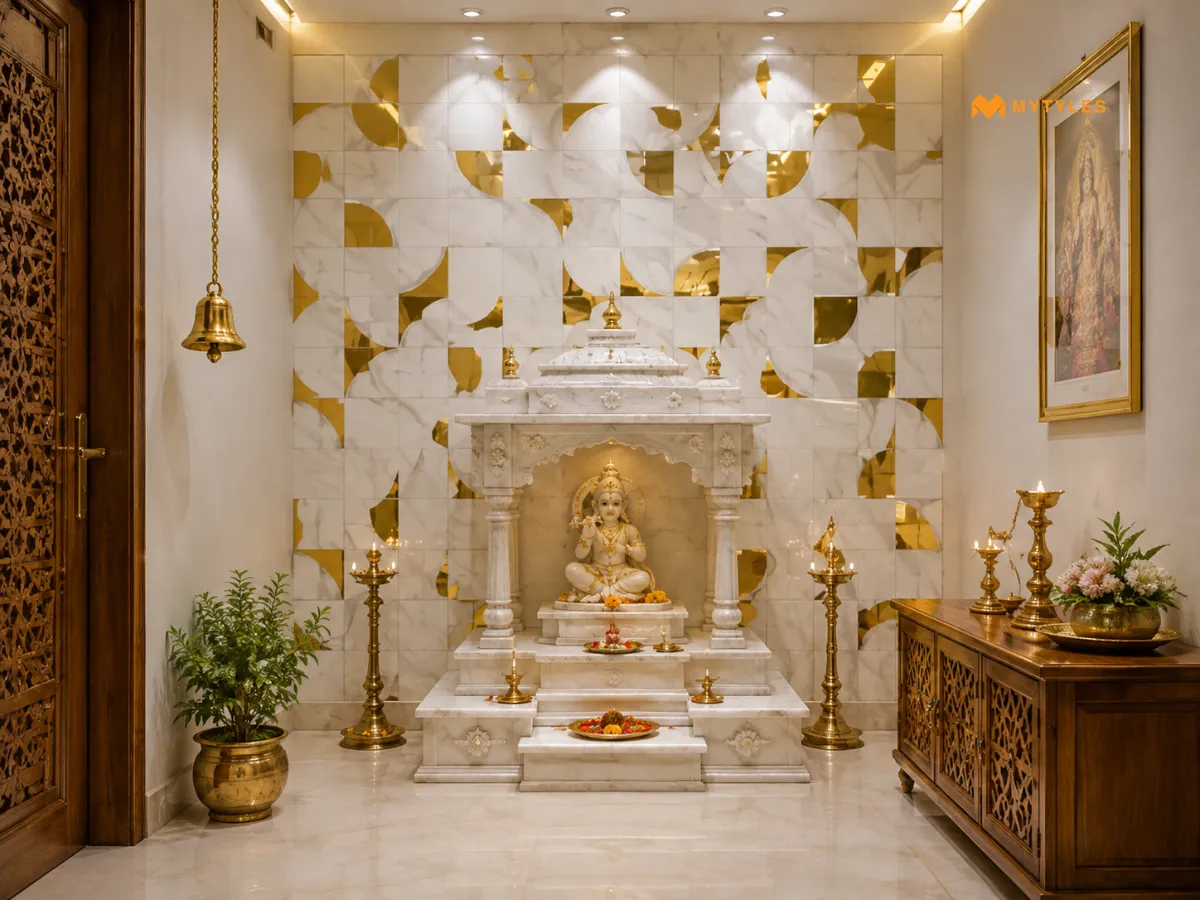
White and gold pooja room tiles are a good choice when you want the space to look bright and graceful. The white keeps the wall clean, while the gold detail adds a festive touch.
This style works well behind a white marble mandir, wooden mandir or cream-toned pooja cabinet. Keep the lighting warm so the gold does not look too sharp. Floral inlay tile designs also suit pooja corners where you want a soft Indian detail without using too many colors.
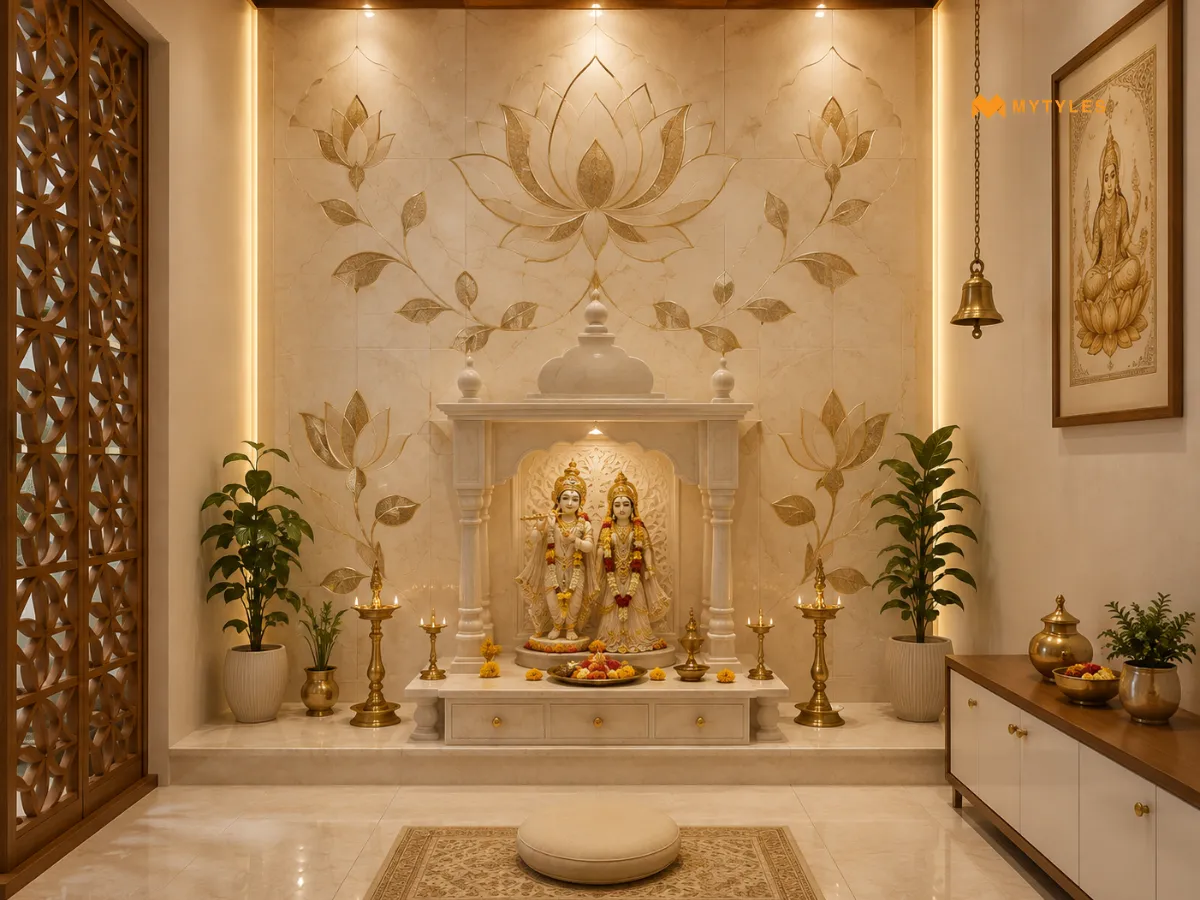
Lotus design tiles for pooja room walls feel natural because the lotus is already connected with worship and purity. A lotus pattern behind the mandir can become the main wall detail without needing extra artwork.
Use this idea on one wall only. If the lotus design is large, keep the side walls plain. It works well with white, beige, ivory and light gold finishes. This is one of the safest pooja room wall tile designs for homes that want a spiritual look without making the wall too heavy.
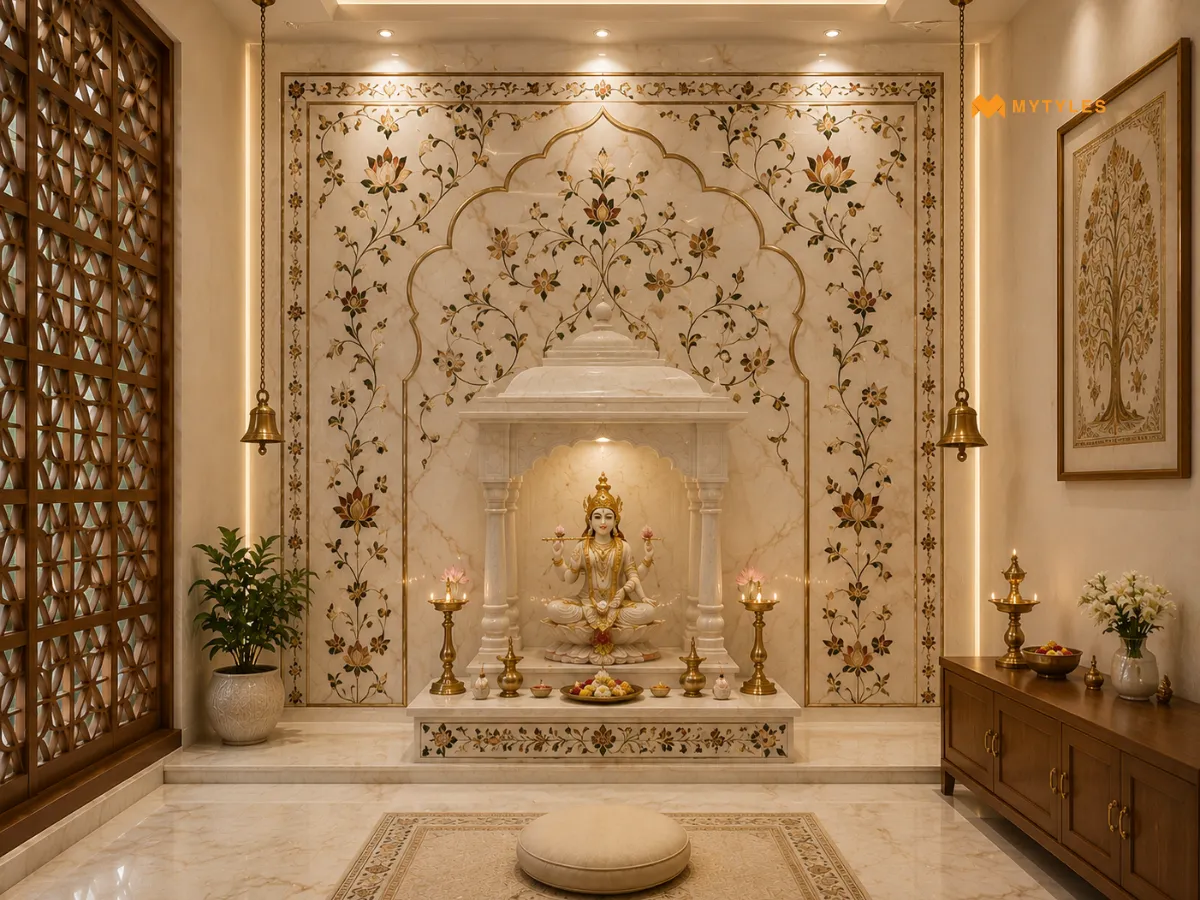
Mughal-inspired tile designs often use curved lines, floral patterns and fine borders. They work well when you want the pooja room to feel rich but still calm. Use this idea behind a larger mandir or on a full backdrop wall.
It pairs well with marble-look flooring, brass diyas and warm ceiling lights. These can work as a pooja room featuring wall tiles when the rest of the room is simple. Avoid mixing this wall with too many printed tiles. Let one Mughal-style wall do the work.
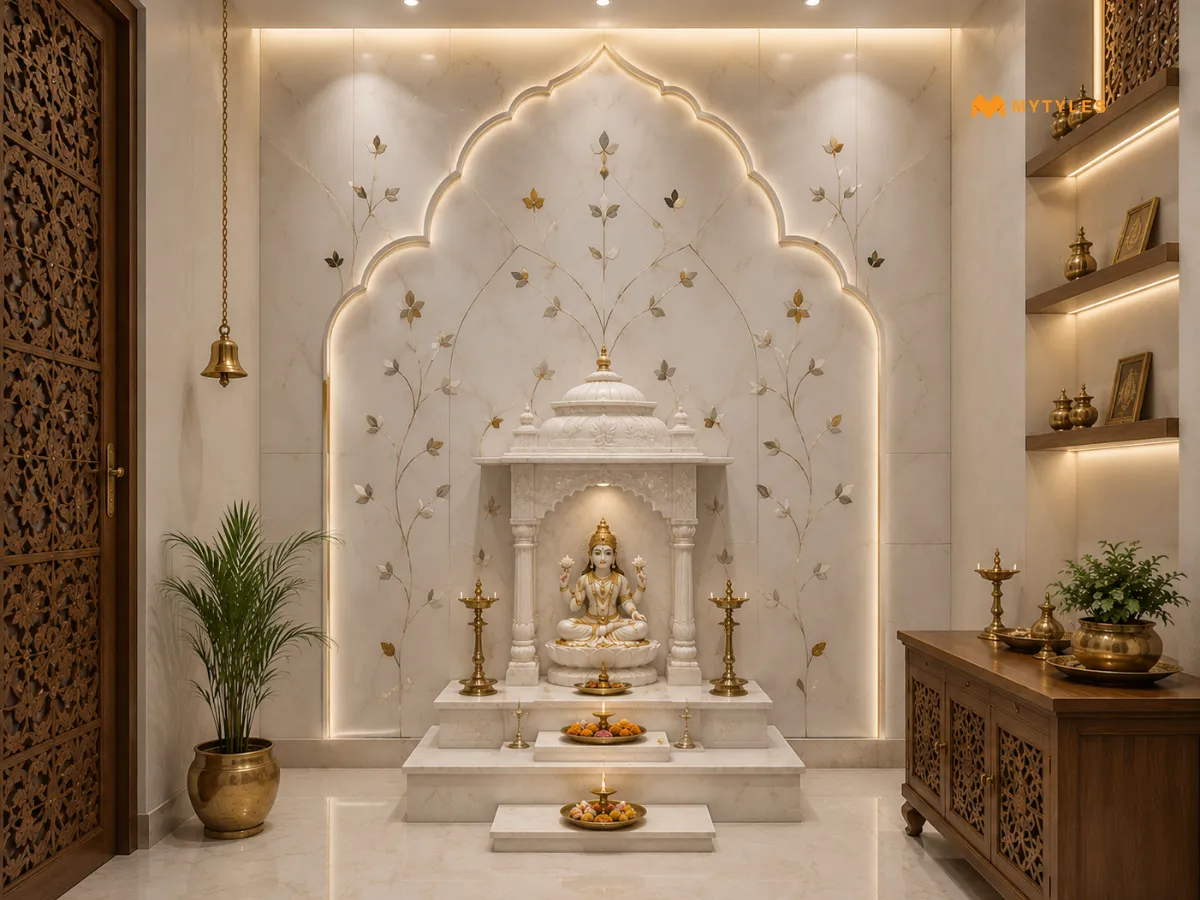
Marble inlay-look tiles are a good option when you like the feel of traditional marble work but do not want actual hand-cut stone inlay. They can bring a detailed look to the mandir wall in a tile format.
This idea works well in premium pooja room interiors where the mandir has a clean finish. White, ivory, beige and soft grey are safe base colors. Add brass or wooden details if the space feels too plain.
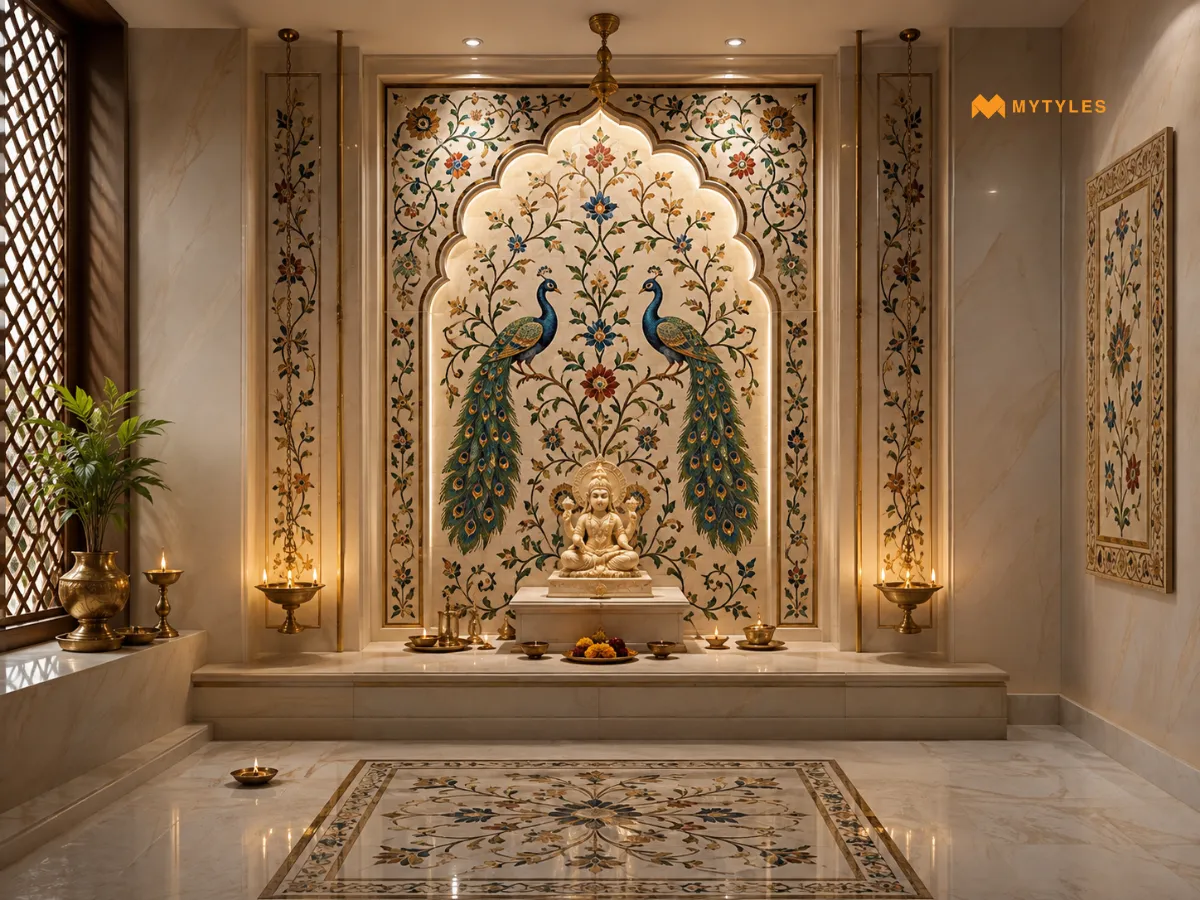
Peacock motifs are common in Indian craft and temple art. They bring color, movement and a traditional touch to the pooja wall. Indian motif wall tiles with peacock details work better in small sections.
Use them behind the idol, on a side panel or as a framed wall tile. Avoid covering every wall with the same pattern. This idea suits homes that want Indian-style pooja room tiles with a little more detail and color.
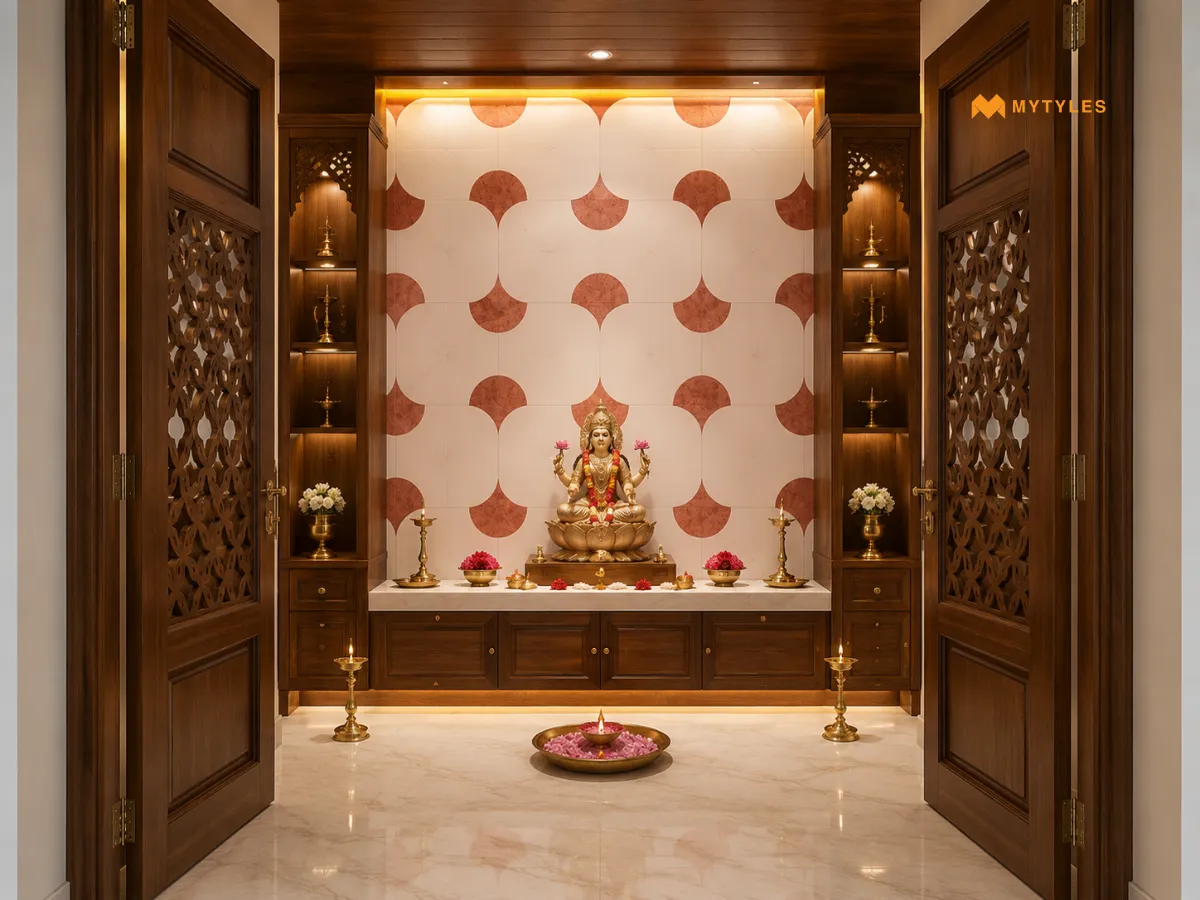
Geometric inlay tile patterns are a good choice when the home has a modern style. They look cleaner than floral or peacock designs, but still give the wall a crafted feel. Use this idea with floating mandirs, simple wooden shelves or compact pooja cabinets.
It works well in apartments where the pooja space is part of the living room. Modern pooja room tile designs should stay simple, especially when the mandir is small. Choose soft lines, light shades and neat grout.
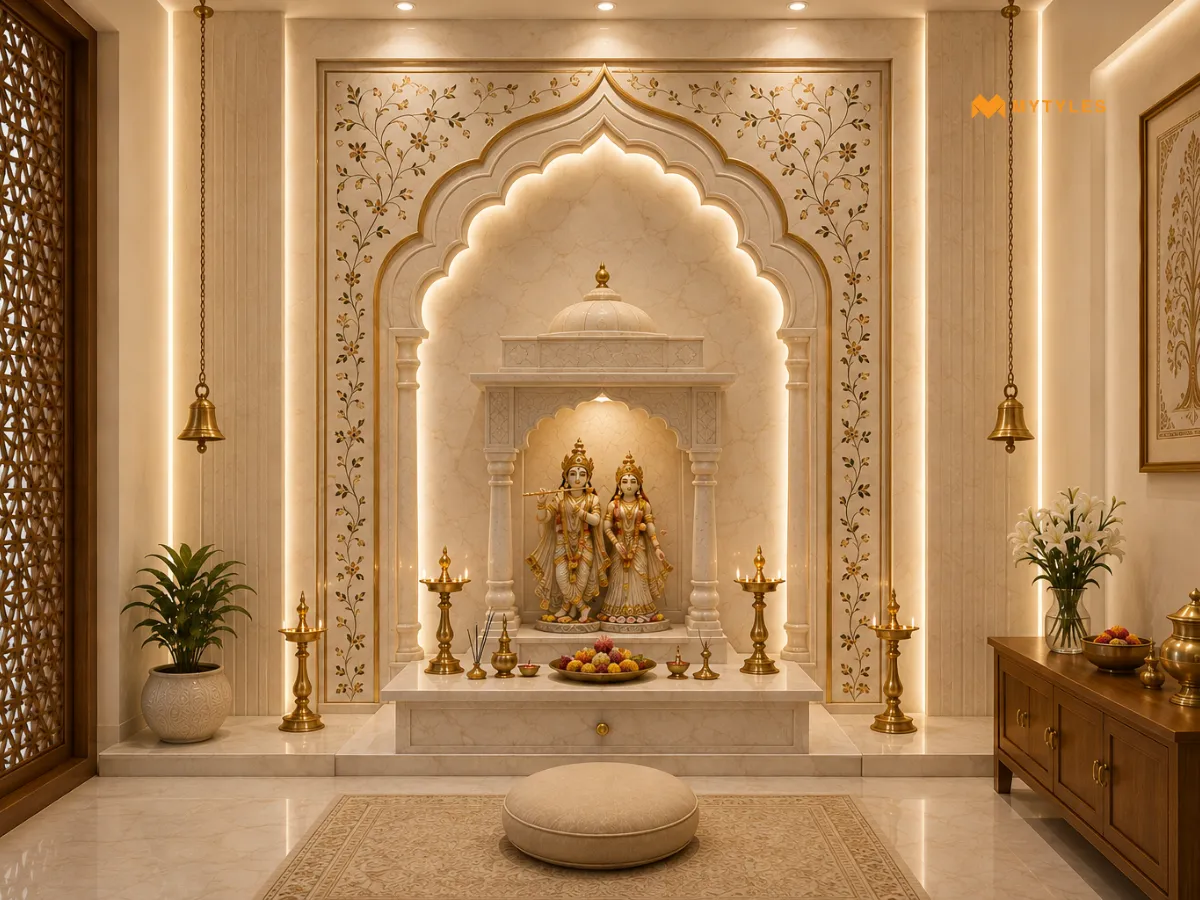
A temple arch design can frame the mandir beautifully. It gives the wall a clear centre and makes the idol area feel more defined. Temple wall tile designs work well behind wall-mounted mandirs or small floor mandirs.
The arch can be printed, carved-look or inlay-style, depending on the tile design. This idea suits homes that like traditional mandir wall designs but do not want a heavy wooden or stone backdrop.
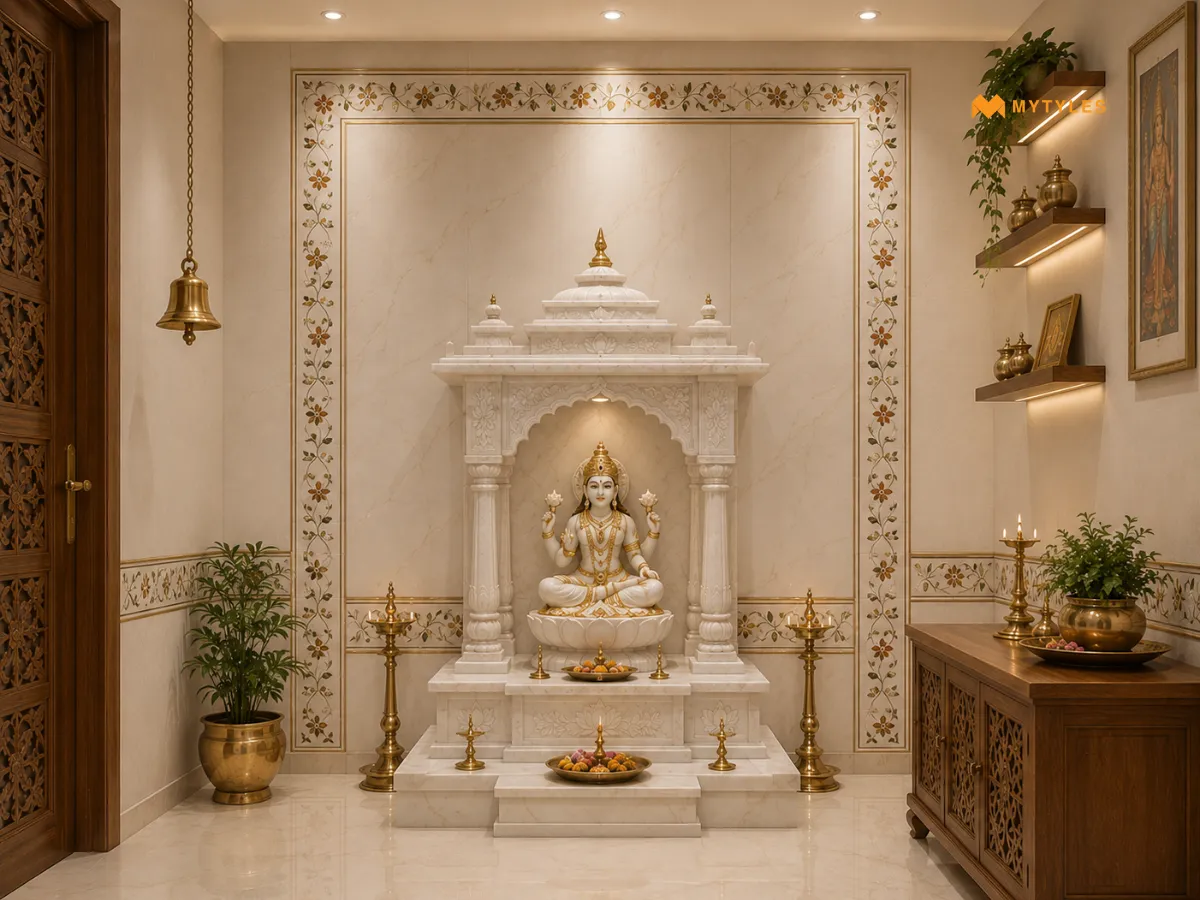
A border can add detail without covering the whole wall. Pooja room tile border designs are useful when the mandir already has a strong design and the wall only needs a finishing line. Use a floral border around the mandir frame, niche or platform.
It can also run along the lower wall if the pooja room is separate. Decorative tiles for pooja room borders should be used carefully. A thin border often looks better than a thick one in small spaces.
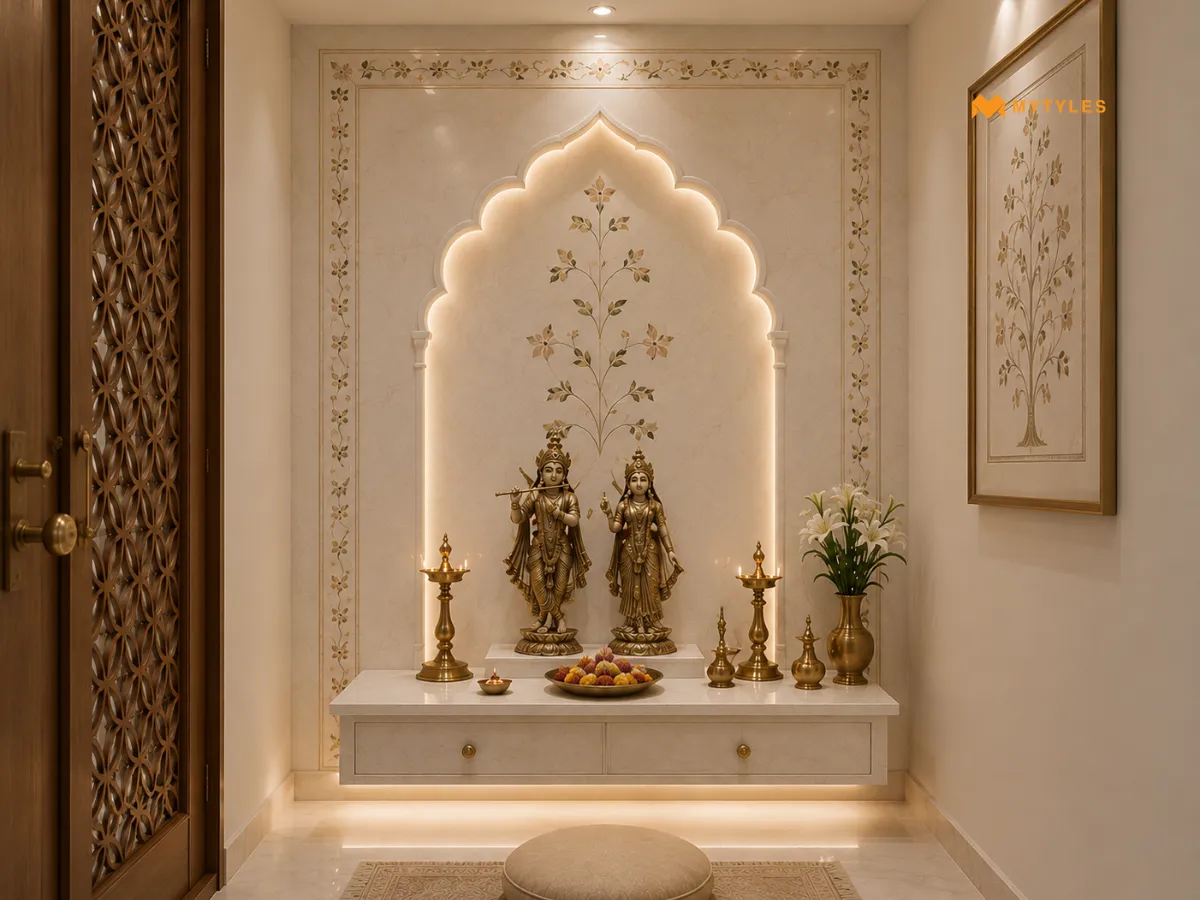
Small pooja rooms need calm tile choices. Minimal inlay designs work better than large, detailed patterns because they do not make the wall look crowded. Small pooja room tile designs can include soft floral lines, light geometric borders or simple marble inlay effects.
Keep the color palette close to white, cream, beige or light grey. Handcrafted-look tile patterns are also a good choice if you want a quiet handmade feel without making the space look old.
Inlay-style tiles do not have to cover the whole pooja room. In most homes, they look better when used in selected spots. These placements work well for both compact and separate pooja spaces.
The wall behind the mandir is one of the best places to use inlay-style tiles. It becomes the main background for the idols, lamps and flowers. Mandir wall tile designs should not be too dark or busy. A soft inlay wall will make the mandir stand out without making the space feel packed.
If the pooja room has a niche, inlay tiles can frame it nicely. Use them inside the niche or around the outer edge. This works well when the niche holds idols, diyas or small decor pieces. Spiritual wall tile designs should stay simple here because the niche already has depth.
A tile border around the mandir can make the setup look more finished. It works especially well for wall-mounted mandirs and compact pooja corners. Use one border design and repeat it neatly. Too many border styles can break the look.
The entrance is a good place for a small tile detail. A floral or geometric inlay strip near the doorway can make the pooja room feel more special before you step in. Keep the entrance tile design connected to the inside wall or floor so it does not look random.
Inlay-style floor tiles can be used around the mandir base or as a small frame. This works well when the wall is plain and the floor needs a little detail. For tile designs for home mandir floors, check the finish and cleaning instructions before choosing. This area may get oil drops, flowers, kumkum or water during daily pooja.
Inlay tiles can make a pooja room look detailed without filling it with too many extra items. The right pattern can bring in Indian craft, floral work, temple shapes or a soft marble inlay look. For a small pooja room, keep the design light. For a larger mandir wall, you can use lotus, Mughal, floral or arch-style tiles. The best tile is the one that suits the mandir, lighting, floor and daily cleaning routine.
You can check MyTyles for inlay-style tiles for pooja rooms, marble-look tiles, floral tiles, motif tiles and other wall designs that suit Indian mandir spaces. Pick the design slowly, because this is one wall you will look at every day.
The right inlay tile for the pooja room depends on the mandir design, room layout and the area being tiled. Marble-look, floral, lotus, inlay-look and geometric designs are commonly considered for pooja rooms. Before selecting one, check its intended wall or floor application, finish, size and care instructions.
White, ivory, cream, beige and soft gold are commonly used in pooja rooms because they pair easily with wooden mandirs, brass accessories and marble idols. However, the final color should suit the room’s lighting and surrounding materials. Detailed colors can also be introduced through borders or a feature wall.
In a compact pooja room, consider using detailed tiles on one selected surface rather than across every wall. Small floral borders, lotus motifs, minimal inlay patterns and marble-look designs may suit such layouts. Check the pattern scale against the wall dimensions before finalising the design.
Inlay tile for the pooja room can be installed behind a home mandir when the product is approved for wall application. Marble-look, floral, lotus, geometric and temple-inspired tiles can create a defined backdrop. Consider the mandir’s width, lighting and placement before choosing the tile size, pattern and finish.
Marble-look tiles can suit pooja rooms where a stone-inspired surface is preferred. They may be used behind the mandir, around a niche or on selected side walls. The result will depend on the tile’s pattern, vein scale, finish and how it coordinates with the mandir and flooring.
Some inlay tiles may be used on pooja room floors, but suitability must be confirmed from the product specifications. A tile designed only for walls should not be installed on the floor. Check the recommended application, surface finish, strength and slip-resistance information before selection.
Follow the cleaning instructions provided by the tile manufacturer or seller. A soft cloth and a cleaner approved for the tile finish may be used for routine care. Avoid harsh chemicals or abrasive tools unless the product instructions allow them, particularly on printed, metallic or textured decorative surfaces.
Nabiya Naqvi
₹125.00 / Sq.Ft

₹125.00 / Sq.Ft
₹99.00 / Sq.Ft
₹115.00 / Sq.Ft
₹115.00 / Sq.Ft
₹115.00 / Sq.Ft
₹138.00 / Sq.Ft
₹138.00 / Sq.Ft
₹95.00 / Sq.Ft
₹98.00 / Sq.Ft
₹98.00 / Sq.Ft
₹98.00 / Sq.Ft
₹96.00 / Sq.Ft

₹96.00 / Sq.Ft
₹96.00 / Sq.Ft
₹96.00 / Sq.Ft
₹96.00 / Sq.Ft
₹96.00 / Sq.Ft

₹115.00 / Sq.Ft
₹115.00 / Sq.Ft

₹115.00 / Sq.Ft
₹115.00 / Sq.Ft
₹105.00 / Sq.Ft
₹105.00 / Sq.Ft
₹115.00 / Sq.Ft
₹118.00 / Sq.Ft
₹128.00 / Sq.Ft
₹108.00 / Sq.Ft
₹108.00 / Sq.Ft
₹128.00 / Sq.Ft
₹128.00 / Sq.Ft
₹128.00 / Sq.Ft
₹128.00 / Sq.Ft
₹182.00 / Sq.Ft
₹182.00 / Sq.Ft
₹182.00 / Sq.Ft
₹182.00 / Sq.Ft
₹185.00 / Sq.Ft
₹185.00 / Sq.Ft
₹170.00 / Sq.Ft
₹170.00 / Sq.Ft
₹170.00 / Sq.Ft
₹98.00 / Sq.Ft
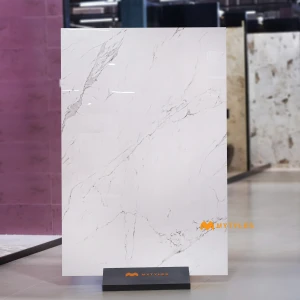
₹98.00 / Sq.Ft
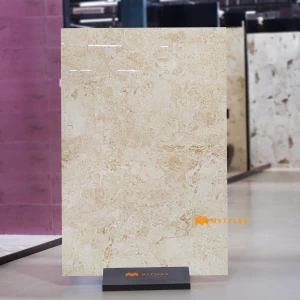
₹170.00 / Sq.Ft
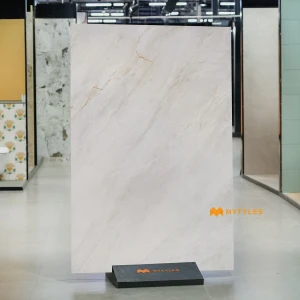
₹135.00 / Sq.Ft
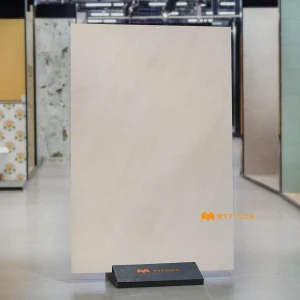
₹118.00 / Sq.Ft
₹118.00 / Sq.Ft
₹118.00 / Sq.Ft
₹118.00 / Sq.Ft