.svg)


Marble-Look Tiles for Living Rooms: Luxury Without the Maintenance
ByHeena Dhiman

Tue , Jun 09 , 2026

Read Time: 5 Min


 Copied!
There is something about a marble floor that just stops you. The veining, the light catching the surface, and the sense that the room has been designed with intention. But natural marble comes with a complicated back story: acid etching, annual sealing, scratch marks from a chair leg, and the constant worry about spills.
For most households, that trade-off simply does not make sense. That is exactly where marble-look tiles for living rooms come in. They carry the same visual richness as natural stone, without any of the upkeep. The floor looks expensive, but the maintenance does not.
What Exactly are Marble-Look Tiles?
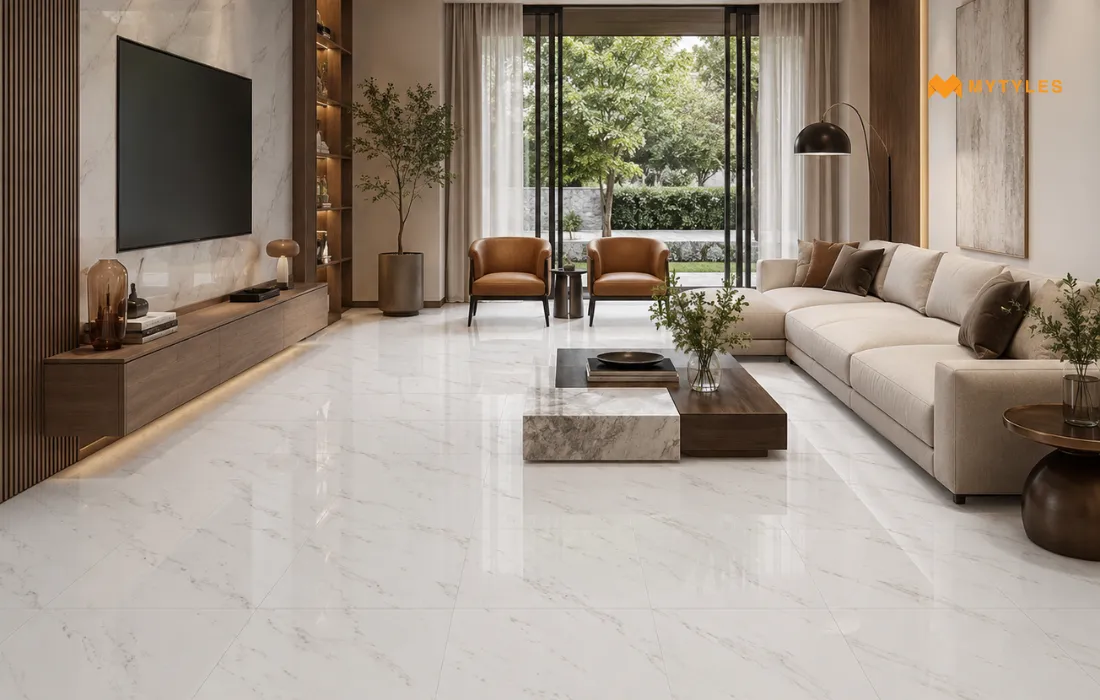
Marble-look tiles for living rooms are engineered tiles, usually in vitrified or porcelain materials, printed with high-definition digital technology to replicate the exact veining, depth, and variation of natural stone. The result is a tile that, to most eyes, is indistinguishable from real marble.
They are made from compressed clay and minerals fired at extreme temperatures. That process makes them dense, non-porous, and highly durable. Natural marble, on the other hand, is porous by nature, which is why it needs sealing and careful handling. Marble-look floor tiles skip all of that entirely.
Also, these are not just budget alternatives. Today, premium living room floor tiles in marble finishes are available in large slab formats, thin-body profiles, and surface treatments like polished, matt, satin, and carving. Many are genuinely stunning pieces of design in their own right.
Types of Marble-Look Tiles Worth Knowing About
Not all marble-look living room tiles are the same. The type you choose will shape how the room looks and feels.
Statuario Marble-Look Tiles
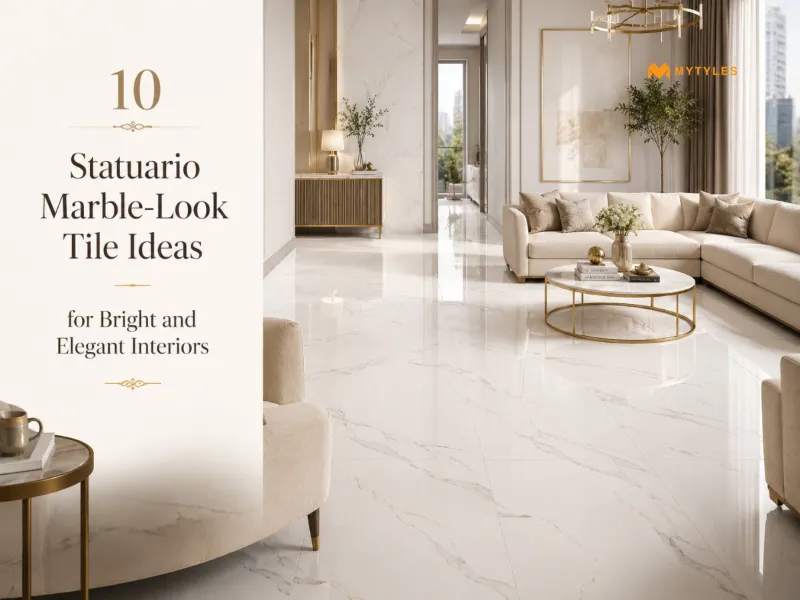
Statuario marble-look tiles are among the most sought-after. Inspired by the famous Italian quarry stone, they feature a crisp white base with bold grey veining that moves dramatically across the surface. The result is striking without being loud. These work particularly well in living rooms that lean modern or minimal, where the tile becomes the centrepiece of the space.
White and Grey Marble-Look Tiles
White marble-look tiles and grey marble-look tiles are the most versatile choices for living rooms. White keeps the space feeling open and airy, whereas grey adds depth while staying neutral enough to pair with almost any furniture. Both are available in glossy and matt formats, giving you control over how much light the floor reflects.
Beige and Warm-Toned Marble-Look Tiles
Beige marble-look tiles are the go-to choice for living rooms that want warmth without going rustic. The undertones are soft and inviting. They age well visually and tend to hide everyday dust and light footprints better than very dark or very bright tiles.
Italian Marble-Look Tiles
Italian marble-look tiles draw from well-known stone varieties like Carrara, Calacatta, and Botticino. These are the tiles you reach for when the living room needs to feel genuinely high-end. The veining tends to be more elaborate, and large-format marble-look tiles in these finishes can transform a space entirely.
Finishes That Change Everything
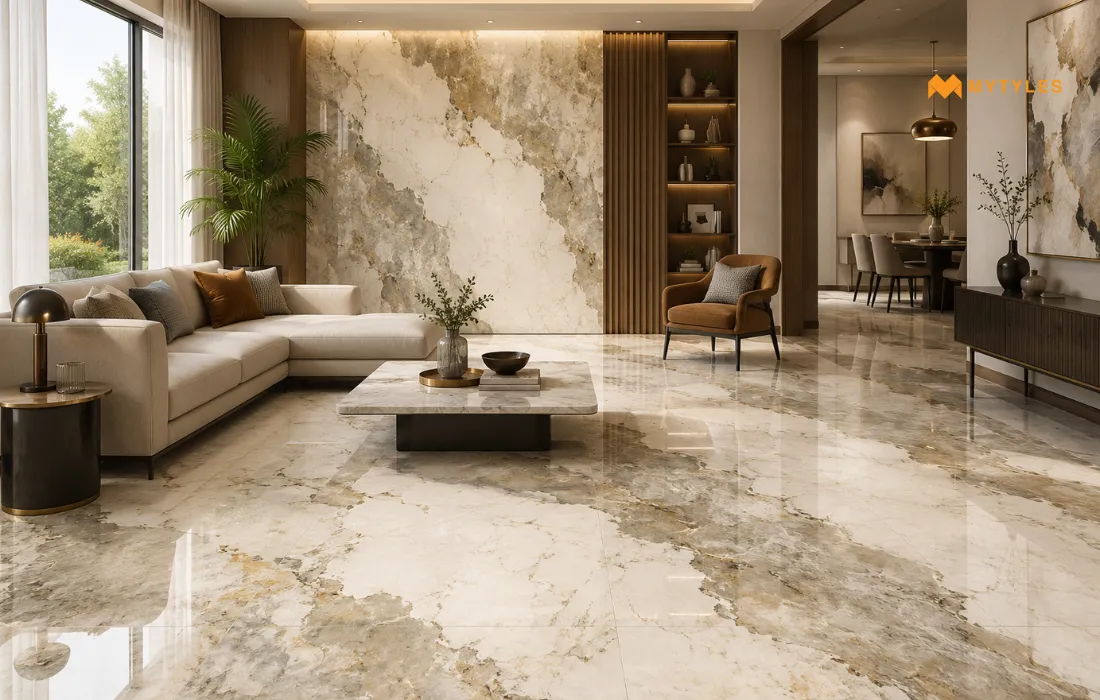
The surface finish on marble design tiles for living room use is not a cosmetic detail. It decides the mood of the entire room.
- Glossy and high-gloss marble-look tiles reflect light beautifully and give the floor a polished, hotel-like feel. They are ideal for formal living rooms or spaces with limited natural light, since they amplify whatever brightness exists in the room.
- Matt marble-look tiles go in a quieter direction. They are contemporary, understated, and suit rooms with lots of natural light. They also tend to be better for households with children or pets, since they show fewer watermarks and are less slippery underfoot.
- Polished marble-look tiles and polished glazed vitrified marble-look tiles sit somewhere between the two. The sheen is refined rather than flashy, and the veining tends to pop beautifully against this kind of surface.
- Satin finish marble-look tiles offer a soft, silky quality that reads as luxurious without being overtly shiny. They work wonderfully in living rooms that aim for warmth and elegance together.
Marble-Look Tiles Vs. Natural Marble: Why It Matters
This comparison comes up for good reason. If you are choosing marble tiles for living room spaces and wondering whether to go natural or engineered, the differences are real:
Factor | Natural Marble | Marble-Look Tiles |
|---|---|---|
| Maintenance | Needs regular sealing | None required |
| Stain Resistance | Porous, stains easily | Non-porous, highly resistant |
| Consistency | Natural variation, unpredictable | Uniform finish, easy to plan |
| Finish Options | Limited to stone finish | Glossy, matt, satin, polished |
| Scratch Resistance | Can scratch and chip | Scratch-resistant surface |
Design Ideas for Living Rooms
.webp)
Getting the look right is not just about picking a tile. It is about knowing how to use it.
Go Large-Format for a Seamless Look
Large-format tiles, such as 600x1200 mm marble-look tiles or even larger slab sizes, create fewer grout lines. Less grout means a more continuous, open surface. In a living room, this translates to a floor that feels expansive and polished. Seamless living room flooring with large tiles is one of the most effective ways to make a medium-sized room feel significantly bigger.
Try Bookmatching for a Statement Floor
Bookmatch marble-look tiles are laid so that adjacent tiles mirror each other, like a book opened flat. The veining pattern flows symmetrically across the surface. It is a design technique borrowed from high-end stone installations, and when done well, the effect is genuinely spectacular. Use it in the main seating area or around a central coffee table to create a natural focal point.
Use Accent Walls to Add Depth
Marble-look wall tiles work equally well on a feature wall behind the sofa or television. Floor-to-ceiling marble-finish tiles for a living room wall in a large-format glossy tile create a backdrop that feels architectural. Consider keeping the flooring simpler if the wall is doing the talking, so the two do not compete.
Balance with Warm Furniture Tones
Very light marble-look floor tiles, especially white or pale grey, show the most impact when paired with warm wood tones in the furniture. The contrast is clean but not cold. Dark marble-look options work differently: they add drama and suit spaces with lighter walls, metal accents, and stripped-back furniture.
How to Choose the Right Marble-Look Tile for Your Living Room
Here are a few factors that are worth thinking through before you decide on the best tiles for the living room floor:
Consider the Light
Bright rooms can handle matt finishes and darker tones without feeling heavy. Rooms with limited natural light benefit from glossy marble-look tiles that bounce whatever brightness exists around the space. It is an easy way to make a room feel more open without changing a single wall.
Think About Room Size
Smaller living rooms do better with lighter shades and fewer grout lines. Large-format marble-look tiles in white or beige can visually expand the floor area. The fewer the joints, the more the floor reads as one continuous, generous surface.
Factor in How the Space Gets Used
Families with young children or pets should lean toward scratch-resistant living room tiles in matt or satin finishes. They hide daily wear far better than high-gloss surfaces, which tend to show every scuff and watermark. A finish that looks good on day one and still looks good three years later is the right finish.
Match the Tile to Your Interior Style
Contemporary interiors suit grey marble-look tiles or crisp white Statuario finishes. Traditional and warmer spaces feel more at home with beige tones or Italian marble-inspired variants that carry softer, more organic veining. Neither is wrong. The tile just needs to feel like it belongs.
Why Low-Maintenance Matters More Than You Think
Most homeowners underestimate how much effort natural stone actually demands. It needs professional sealing once a year at minimum. Acidic spills, like lemon juice, coffee, or cleaning fluids, can etch the surface permanently. Scratches from furniture feet or abrasive mops build up over time.
Low-maintenance marble-look tiles remove all of that from the equation. Being non-porous, stain-resistant floor tiles in this category do not absorb liquids. They do not need sealing. A damp mop is genuinely all it takes to keep them looking good. For busy households, that is not a minor convenience. It is a significant quality of life improvement.
They are also far more consistent in colour and pattern than natural stone. When you order a batch of vitrified marble-look tiles or glazed vitrified marble-look tiles, what you see in the sample is what you get across the entire floor. With natural marble, every slab is different, and matching across rooms or replacing damaged tiles later is genuinely difficult.
Bring That Luxury Look Home, Without the Fuss
Your living room deserves a floor that works as hard as it looks. Marble-look tiles for living rooms give you the elegance of natural stone, the practicality of easy-to-clean living room tiles, and the creative flexibility to choose the exact finish, colour, and format that suits your space.
At MyTyles, we have a carefully selected range of modern living room floor tiles in marble finishes. From the Statuario marble-look tiles that suit contemporary homes to warm Italian-inspired beige marble-look tiles for spaces that want personality, we have the right tile for every vision. Visit a MyTyles experience centre near you or explore our full collection online to find your perfect match.

What are Marble-Look Tiles Made Of?

Most marble-look tiles are made from vitrified or porcelain material, fired at high temperatures to create a dense, non-porous surface. A high-definition digital print layer replicates the veining and depth of natural stone. They contain no actual marble.
Are Marble-Look Tiles Suitable for Living Room Floors?
Yes. Marble-look vitrified tiles are scratch-resistant, stain-resistant, and easy to clean, which makes them well suited for living rooms. They handle regular foot traffic without showing wear and do not need sealing like natural stone does.
What is the Difference Between Glossy and Matt Marble-Look Tiles?
Glossy tiles reflect more light and give a polished, formal feel. Matt tiles absorb light and suit contemporary or casual interiors. Glossy works well in low-light rooms; matt is more practical in busy spaces or homes with children and pets.
What Size Marble-Look Tiles Work Best in a Living Room?
Large-format tiles, like 600x1200 mm or bigger, create fewer grout lines and make the room feel more open. Medium rooms benefit from this approach. Very small tiles can look busy in large living spaces unless used deliberately as a design feature.
How Do I Clean and Maintain Marble-Look Tiles?
Regular sweeping and a damp mop with a mild floor cleaner is all that is needed. Unlike natural marble, these tiles do not need sealing, polishing, or specialist products. Avoid harsh abrasives, but routine cleaning is genuinely simple.
Can Marble-Look Tiles Be Used on Walls in Living Rooms?
Absolutely. Marble-look wall tiles work well on feature walls, TV walls, and accent panels. Large-format versions in glossy finishes create a dramatic architectural effect. Keep the floor simpler if the wall tile is the focal point.
What is the Difference Between Ceramic and Vitrified Marble-Look Tiles?
Ceramic tiles are fired at lower temperatures and are more porous, making them better suited for walls. Vitrified tiles are fired at higher temperatures, making them denser, harder, and more water-resistant. For living room floors, vitrified is always the stronger choice.

ABOUT THE AUTHOR
Heena Dhiman
With a background in fashion design and over 5 years of writing experience, I bring a creative and detail-oriented eye to home and design content. My journey began with aesthetics, colours, and visual storytelling, which gradually led me to writing across lifestyle, finance, home improvement, and resource management. Over time, I discovered a strong interest in tiles and interiors, where my design background helps me understand how small choices can shape the feeling of a home. Through my content, I aim to make home design decisions easier, clearer, and more enjoyable for readers, helping them feel confident while creating spaces that reflect their style and everyday needs.